

Germany Backs Sierra Leone’s School Feeding Drive, Youth Development Agenda
 Sia Lucy Kannah
 The Government of Sierra Leone, in partnership with the Government of the Federal Republic of Germany, has reaffirmed its strong commitment to food security, human capital development, and youth empowerment during a high-level field visit to Karene District.
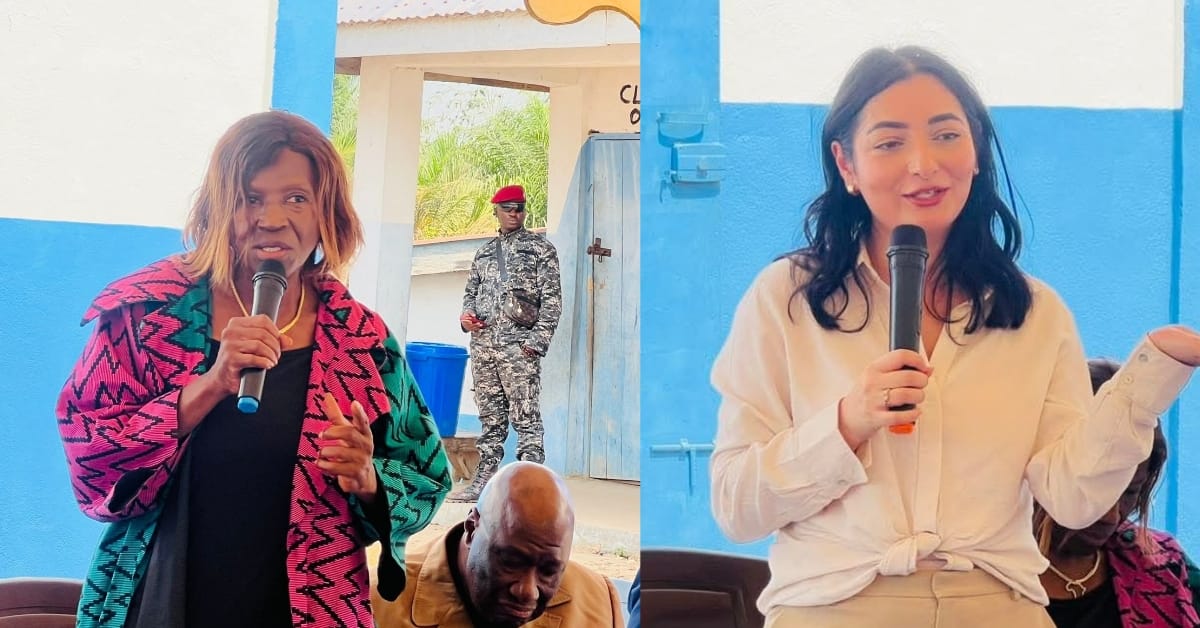
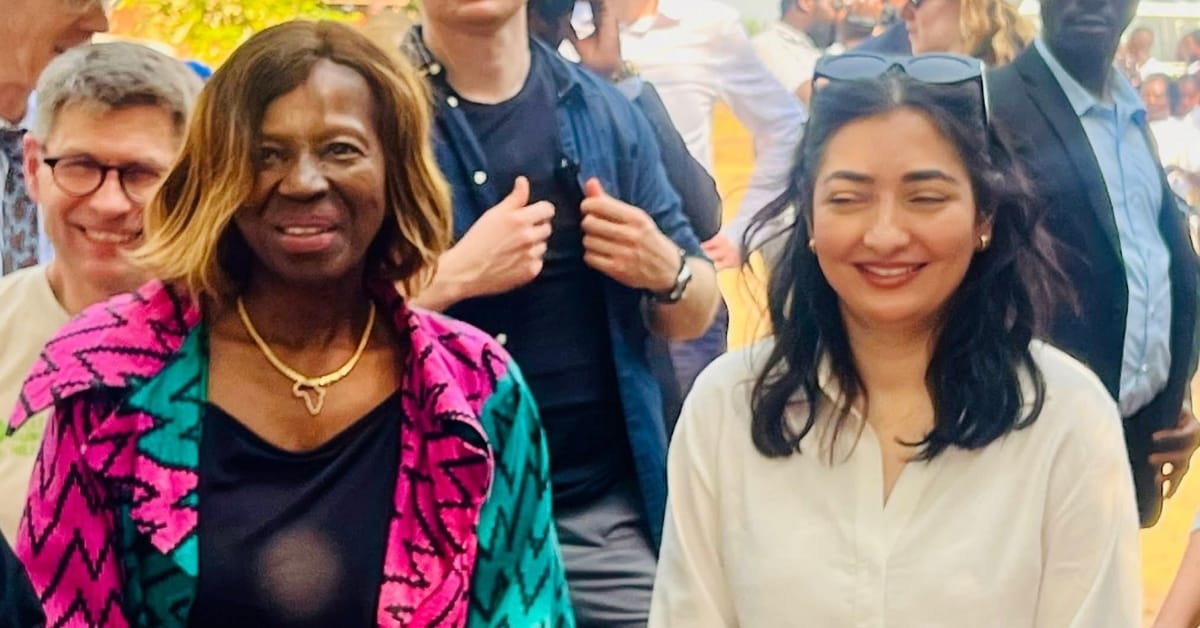
Minister of Planning and Economic Development, Kenyeh Barlay, accompanied Germany’s Federal Minister for Economic Cooperation and Development (BMZ), Ms. Reem Alabali-Radovan, on a two-day official visit to Sierra Leone.
As part of the visit, the delegation toured Roman Catholic (RC) Primary School in Gbinti, Dibia Chiefdom, where they observed the Home-Grown School Feeding Programme implemented by the World Food Programme (WFP) with financial support from Germany.


The visit was held in connection with the launch of the School Meals Accelerator, a global initiative aimed at strengthening national school feeding systems, with a particular focus on food security for children and youth. The initiative aligns strongly with Sierra Leone’s national development priorities and the Government’s Big Five Game Changers Agenda.
Delivering remarks during the visit, the Minister of Basic and Senior Secondary Education, Conrad Sackey, emphasized the central role of school feeding in improving learning outcomes.
“Education cannot succeed on an empty stomach,” Minister Sackey said.
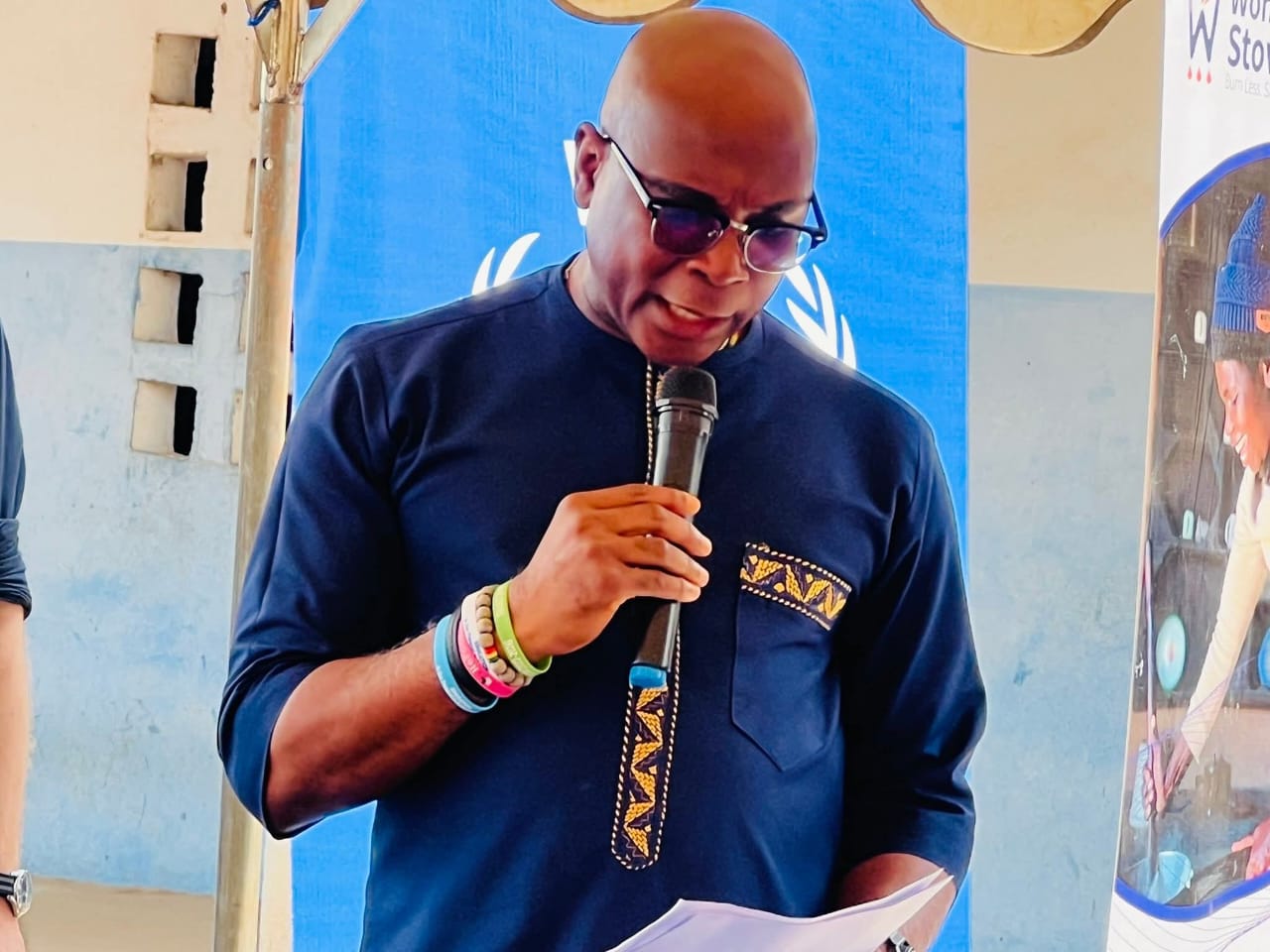
“School feeding is not an add-on to education; it is a prerequisite for learning. A well-fed child learns better, stays in school, and achieves better outcomes. This programme demonstrates how education, nutrition, and agriculture come together to secure the future of our children.”
Germany’s Federal Minister for Economic Cooperation and Development, Reem Alabali-Radovan, described the visit as inspiring and reaffirmed Germany’s commitment to food security and youth development.
“Being here today, especially at this school, has been truly impressive,” she said.
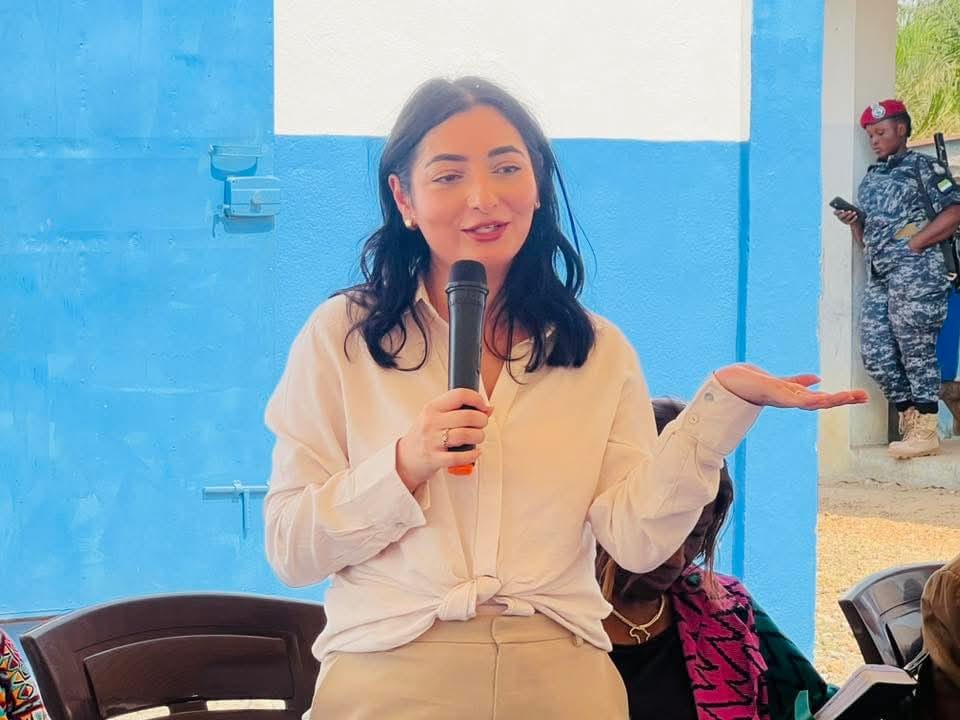
“What we are seeing clearly shows how important it is to focus on food security and school meal programmes. When children receive nutritious meals, they have the energy to attend school every day and pursue their dreams—whether to become doctors, pilots, lawyers, or leaders.”
She added that Germany recently launched a new agenda with a strong focus on food security, children, and youth.
“Nearly all the food used here is locally sourced, which makes this programme both sustainable and impactful. This model, already implemented in more than 150 schools across Sierra Leone, is one we are proud to support and expand,” she said.
The delegation later visited Newton Village, where Welthungerhilfe (WHH) and partners showcased initiatives supporting smallholder farmers, agri-business development, renewable energy solutions, land governance reforms, and youth skills training. WHH highlighted its support for the implementation of the Customary Land Rights Act, which promotes equitable access to land for women and youth and strengthens food security at the community level.
The visit concluded with renewed commitments from both governments and development partners to deepen cooperation in food security, education, agriculture, and youth empowerment—reinforcing a shared vision that feeding children today secures the nation’s future tomorrow.