

Government Inspects Baomahun Gold Project as Commercial Production Nears
 Osman Tolo Sesay
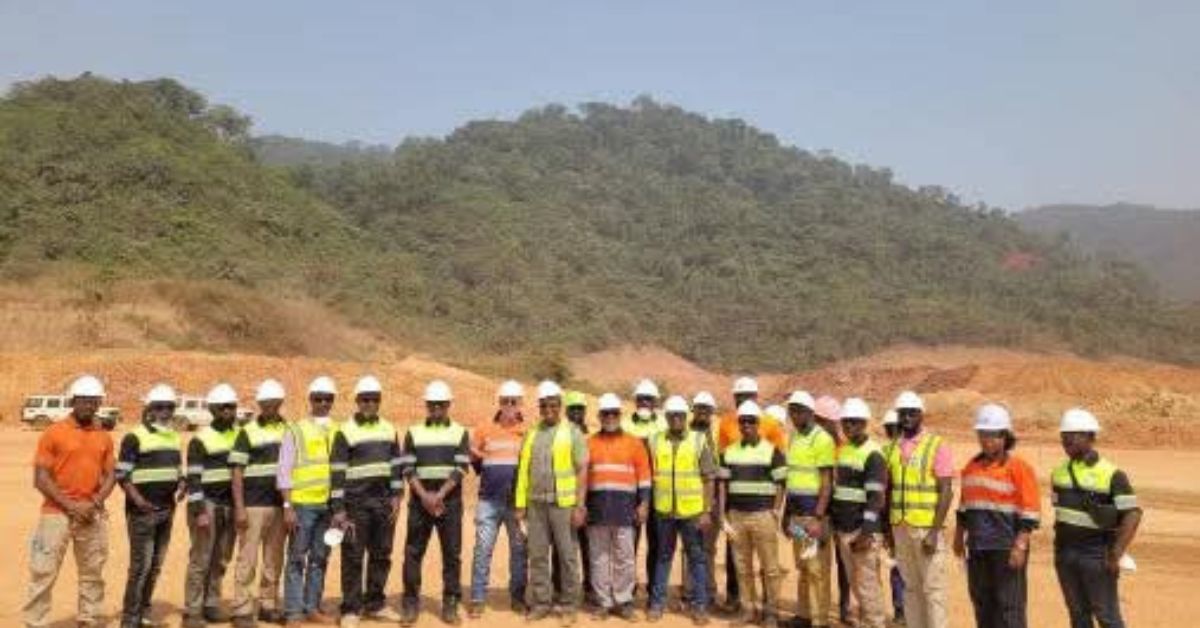
 The Ministry of Mines and Mineral Resources, in collaboration with the National Minerals Agency (NMA), has conducted an inspection visit to the Baomahun Gold Project to assess progress toward full-scale mining and commercial gold production expected later in 2026.
The inspection took place in Valunia and Kunike Barina Chiefdoms, spanning Bo and Tonkolili Districts, and was led by the Minister of Mines and Mineral Resources, Julius D. Mattia, alongside senior officials and technical experts from the NMA.
The visit formed part of Government’s routine oversight of large-scale mining developments and its broader objective of ensuring compliance with national mining regulations and standards.

During the visit, the Project Director of FG Gold Mining Company, Bolaji Okubajo, presented an overview of the company’s development activities, operational plans and approach to sustainable mining. He stated that a substantial portion of the company’s procurement and construction work is being carried out by locally registered and Sierra Leonean-owned firms, with more than half of FG Gold’s annual expenditure on goods and services reportedly retained within the country.



Okubajo further noted that the project is utilising modern processing plant technology, supported by international engineering and equipment partners.
According to the company, the technology selection is intended to improve operational efficiency, enhance safety and reduce project risks during construction and production.
On employment, FG Gold reported having about 300 direct employees, with expectations to exceed 500 as operations expand. The total workforce, including contractors, is estimated at approximately 1,400, with projections of up to 2,000 workers at peak construction. The company also indicated that it has reduced its expatriate workforce share from 11 percent to 9 percent, while increasing opportunities for Sierra Leoneans and promoting female participation.
The company highlighted several community-related initiatives, including skills training programmes, support for youth and former artisanal miners, and infrastructure projects such as school construction, health centre renovation, borehole drilling and road rehabilitation.
Scholarships and vocational training were also cited as part of ongoing social investment efforts in host communities.
Addressing the delegation, Minister Julius D. Mattia described Baomahun as one of Sierra Leone’s highly prospective gold zones, noting that exploration work conducted prior to the Ebola outbreak had confirmed significant mineral potential. He explained that Government’s decision to grant a mining licence to FG Gold was informed by the need to transition from predominantly artisanal mining to a more structured large-scale operation capable of delivering greater economic returns.
The Minister disclosed that FG Gold has mobilised over US$600 million in financing for mine development. He expressed optimism that first commercial gold production could be achieved by December 2026, citing company estimates of approximately 4.6 million ounces of gold mineralisation, with reserves exceeding 2.1 million ounces.
Members of the inspection team toured key facilities at the site, including workers’ accommodation, processing plant areas and major components such as the SAG mill, ball mill, carbon-in-leach plant and energy systems. The visit, according to the Minister, was intended to provide Government with a direct view of how a greenfield mining project is being developed.
The Ministry of Mines reaffirmed Government’s commitment to maintaining a clear and predictable legal and regulatory framework for the mining sector, while ensuring that mining operations contribute to national development through royalties, taxes, employment and local content participation.
If developed as planned, the Baomahun Gold Project is expected to become one of Sierra Leone’s major large-scale gold operations, with potential long-term economic and social benefits for host communities and the wider national economy.