

Sierra Leone Generates $9 Million From Passports Every Year, But Government Receives Nothing
 Deborah Sorie
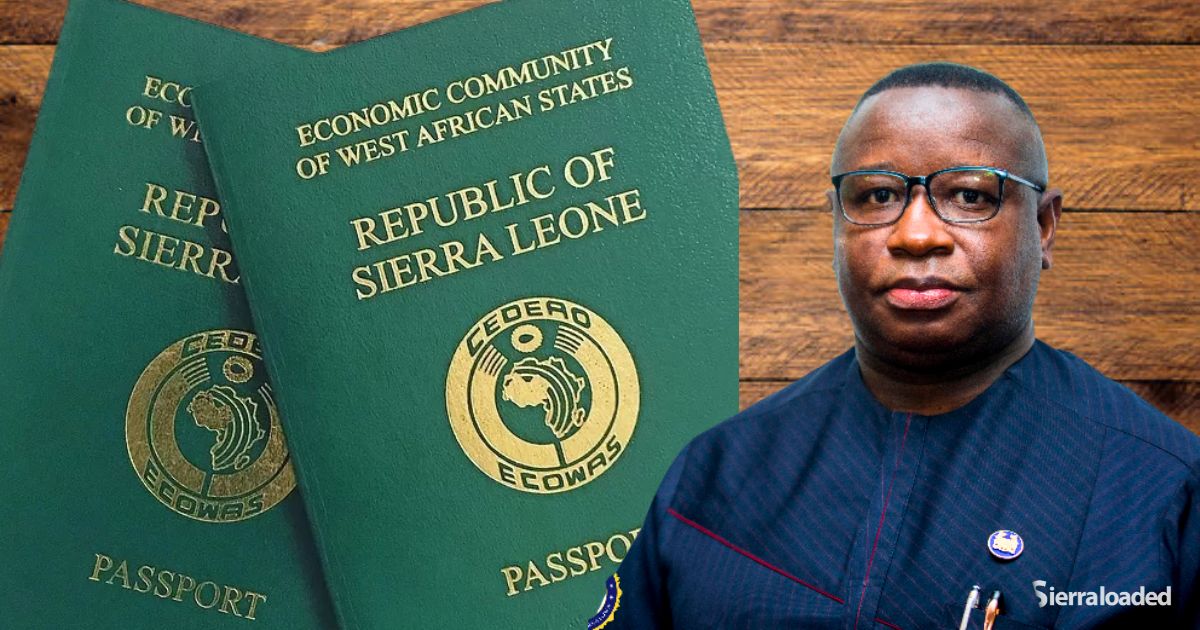
 Despite Sierra Leoneans paying some of the highest fees in West Africa for travel documents, the government has received little to no revenue from its lucrative e-passport contract, a new investigation has found.
The Institute for Governance Reform (IGR), in its January 2026 report Politics and Revenue Failures in Sierra Leone, revealed that while the passport system generates between $7 million and $9 million annually, there is “no evidence” of royalty payments reaching the Consolidated Revenue Fund.
The report highlights a stark disparity between the burden on citizens and the benefit to the state. Sierra Leoneans are currently charged between $100 and $180 for an e-passport, a rate the IGR classifies as one of the most expensive in the sub-region.

With an estimated 60,000 to 70,000 passports printed and sold every year, the system is a significant cash cow. However, IGR researchers found that these funds appear to be captured almost entirely by the private service provider.

“Despite these significant annual earnings, we found no evidence of royalty payments from the service provider to the Government of Sierra Leone,” the report states.
The investigation raises serious concerns about procurement governance. According to the IGR, the e-passport contract has been renewed at least three times without going through a competitive bidding process.
“The contract has been renewed without rebidding or fresh value-for-money assessments,” the report noted, raising red flags regarding transparency and compliance with the country’s procurement laws.
IGR Executive Director Andrew Lavalie described the arrangement as part of a broader pattern of “extractive contracting” where business elites maintain control over major revenue sectors regardless of which political party holds power. The report emphasized that these contract irregularities span both the previous APC administration and the current SLPP government.
The IGR is urging the government to immediately publish income flows related to the passport deal and calling on the Anti-Corruption Commission (ACC) and National Public Procurement Authority (NPPA) to intervene.
The report recommends a cross-party consensus to renegotiate the contract, ensuring that state revenues are protected and that the high cost of acquiring a passport is justified by tangible returns to the public purse.
Let the commissioner give account and the director
How can the government received something for passports while Lebanese are the main agents for middle east Sierra Leone passports holders? Some are getting G-wagend, Nissan part finders, Toyota Fortuner and Cash for their pockets. Let ACC tell us about it’s transparency doe ya Papa government. Salone just dae go behind everyday, too much youky youky don pasmak dan the 90s