

Civil Society Consortium Presents Position Paper on Sierra Leone Constitution Amendment
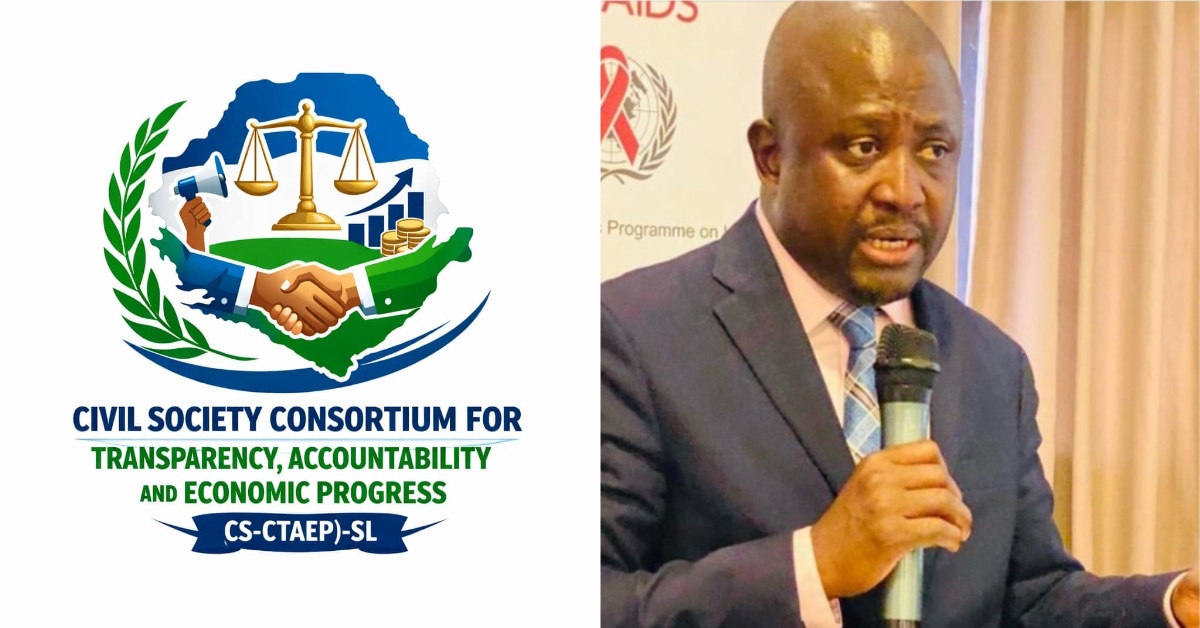
Coalition of civil society organizations, the Civil Society Consortium for Transparency, Accountability and Economic Progress Sierra Leone (CS-CTAEP-SL), has released a position paper on the Constitution of Sierra Leone (Amendment) Bill, 2025, emphasizing the need for inclusive, transparent, and citizen-driven constitutional reform.
The consortium highlighted that the 1991 Constitution, as the supreme law of the Republic, forms the legal, moral, and political foundation of governance, rights, and national unity. Any amendments, it argued, must be guided by patriotism, restraint, and democratic principles.
In its statement, CS-CTAEP-SL welcomed Parliament’s call for submissions from the public, civil society organizations, and other stakeholders, noting that constitutional reform cannot be effective or legitimate without meaningful public participation. The group warned that amendments made without citizen engagement may be lawful but would lack the moral authority required to foster national trust and unity.

The consortium emphasized that key principles—including constitutional supremacy, separation of powers, rule of law, human rights, social justice, inclusion, and national cohesion—must remain protected in the amendment process. It urged particular attention to provisions relating to executive authority and presidential tenure, stating that the two-term limit for the presidency is central to democratic stability and must be clearly reaffirmed.



CS-CTAEP-SL also highlighted the importance of maintaining judicial independence, calling for safeguards against political interference in judicial appointments, discipline, and administration, while ensuring adequate financing and expanded access to justice, especially in rural and marginalized communities.
The consortium further stressed that the integrity of the electoral system must be constitutionally protected, with measures to strengthen the independence of the Electoral Commission, clarify electoral timelines, and ensure credible dispute resolution mechanisms.
On decentralization and local governance, CS-CTAEP-SL recommended entrenching fiscal decentralization and predictable resource allocation to local councils to enhance service delivery and citizen participation.
The group also raised concerns regarding citizenship and national inclusion, urging the removal of discriminatory provisions and the reinforcement of unity among Sierra Leoneans at home and abroad.
Additionally, CS-CTAEP-SL called for constitutional backing for anti-corruption institutions, stating that public office should be treated as a public trust, and mechanisms for transparency, asset declaration, and accountability must be reinforced.
The consortium underscored the importance of socio-economic rights, including education, health, social protection, youth empowerment, and gender equity, arguing that the Constitution must protect human dignity and promote equitable development.
Finally, CS-CTAEP-SL stressed that the amendment process itself must be inclusive, involving broad consultations, civic education, public hearings, and engagement with civil society, traditional leaders, women, youth, persons with disabilities, faith-based organizations, and rural communities.
In conclusion, the consortium urged Parliament and citizens to engage responsibly, placing national interest above partisan politics, and called for the amendment process to be remembered as a defining moment of democratic maturity, national unity, and patriotic responsibility.