


 Post a comment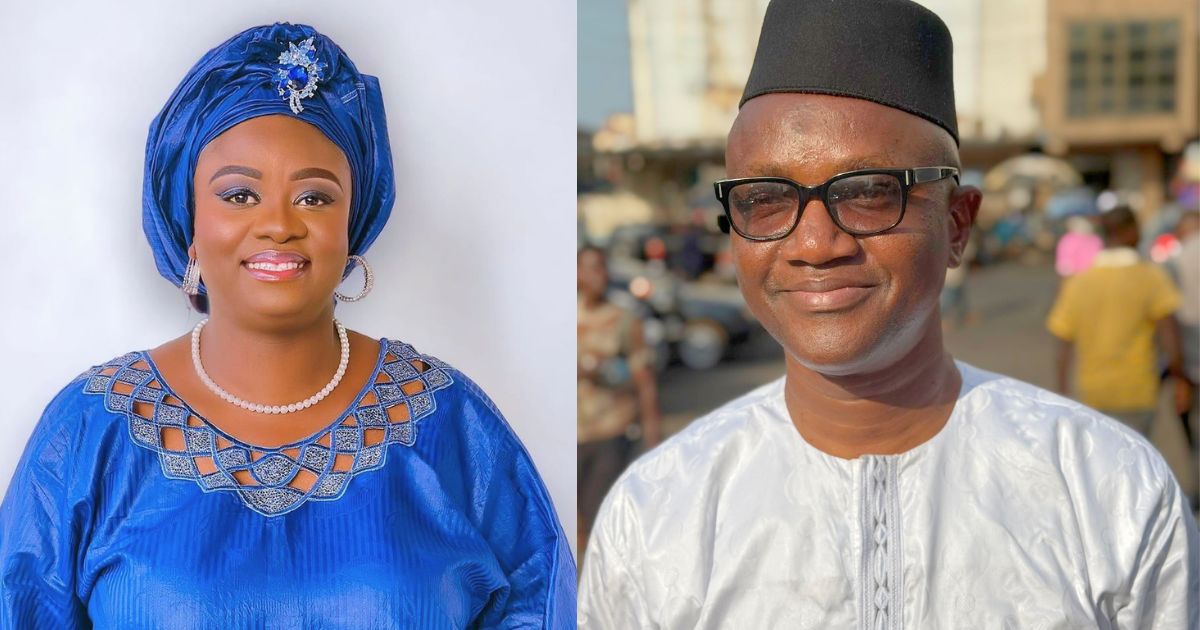
Veteran Sierra Leonean journalist Dr. Sylvia Olayinka Blyden has publicly challenged recent claims made by prominent broadcaster Umaru Fofana regarding his professional conduct, accusing him of past harassment and of rewriting his professional history.
The public exchange began earlier this week when Fofana released a lengthy statement addressing accusations from political figures and the public regarding his recent “silence” on the BBC concerning national issues in Sierra Leone.
In his statement, Fofana attributed his reduced presence on international airwaves to significant financial restructuring within the BBC, the cancellation of the live Focus on Africa broadcast, and the economic realities of his current status as a freelance journalist pitching stories in a crowded global news cycle.

Defending his 30-year career, Fofana emphasized his calm demeanor under intense public scrutiny, stating: “No quarrels. No insults. No arrogance.”
It was this specific assertion that prompted a sharp rebuttal from Dr. Blyden on Wednesday, April 1. In an open letter addressed to Fofana, Blyden stated that his claim of a conflict-free career “does not align with documented reality.”
Blyden, a prominent media figure and former government minister, accused Fofana of subjecting her to “sustained bullying, harassment and professional targeting” during a time when she was navigating a heavily male-dominated media landscape in Sierra Leone.
To support her claims, Blyden pointed to a specific incident in October 2012 during Fofana’s tenure as President of the Sierra Leone Association of Journalists (SLAJ). According to Blyden, Fofana unilaterally issued a public statement expelling her from the association—an action she noted bypassed the SLAJ Constitution and established disciplinary procedures.
Blyden highlighted the internal institutional fallout from the 2012 incident, noting that Fofana’s actions led to the immediate resignation of the acting SLAJ Secretary-General, Ismail Koroma, and drew sharp criticism from the substantive SLAJ Scribe, Mustapha M. K. Sesay.
“When you now present a narrative of a career devoid of conflict or injury to others, I am compelled – respectfully but firmly – to correct the record,” Blyden wrote. She framed her experience not as an isolated incident, but as indicative of broader systemic hostility toward independent women asserting themselves in mainstream African journalism at the time.
While Fofana’s original post focused heavily on the logistics of modern international journalism—noting that Sierra Leonean stories now have to compete with global crises like those in Ukraine, Gaza, and Sudan for limited freelance budgets—Blyden acknowledged these modern constraints but refused to let his reflection on the past go unchallenged.
Blyden concluded her statement by noting she had personally forgiven Fofana long ago, but added that forgiveness does not require silence when facts are selectively omitted.
“Posterity is judging us all – not only by what we say about ourselves, but by what others can credibly say about us,” Blyden stated, closing her letter with a stark reminder: “Karma is real.”


