

Opposition APC Leader Abdul Kargbo Warns SLPP Chairman Against ‘Dangerous Pattern’ in Sierra Leone Politics
 Daniel Amara
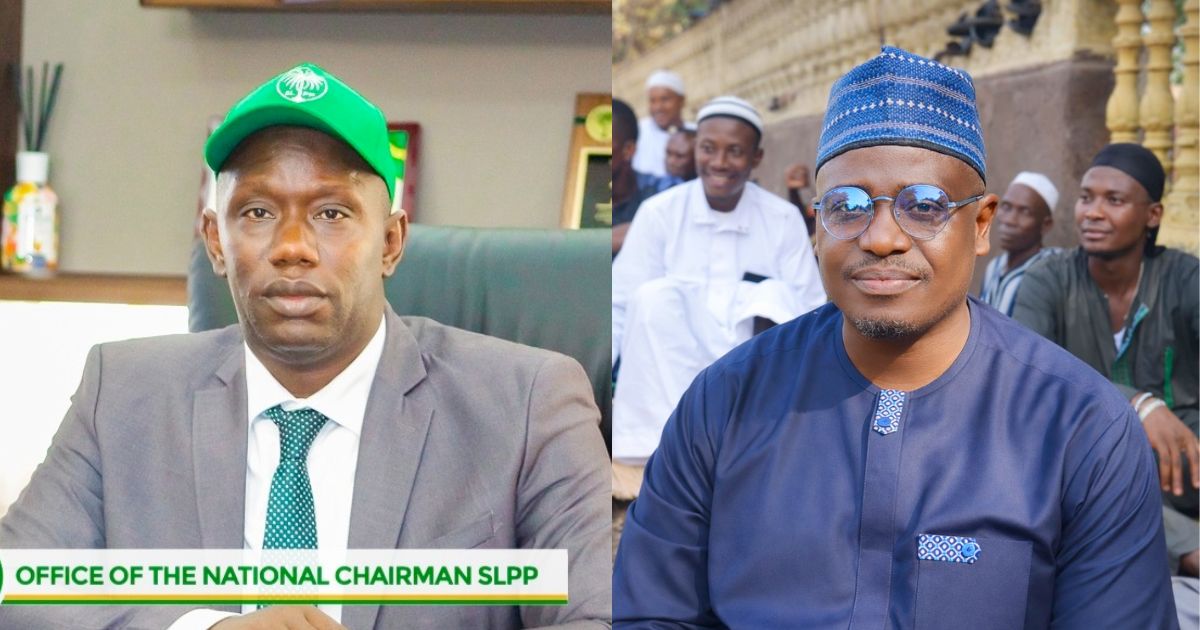
 Hon. Abdul Kargbo, Leader of the Opposition All People’s Congress (APC) in Parliament, has issued a strong public rebuke against recent comments allegedly made by the Chairman of the ruling Sierra Leone People’s Party (SLPP), Jimmy Batilo Songa warning of a “dangerous pattern” in the country’s political discourse.
The controversy stems from rhetoric by the SLPP Chairman, who reportedly suggested that the APC should be “killed” or made to no longer exist. In a written statement, Kargbo firmly condemned the remarks, declaring that such language has no place in a democratic society.
“Political parties are not enemies to be destroyed; they are representatives of the people, protected by the very principles of democracy,” Kargbo stated, emphasizing that threats and intimidation should not dictate the nation’s political future.

The opposition leader drew historical parallels to the 1960s, noting that attempts by then-Prime Minister Sir Albert Margai to suppress the APC using state power, intimidation, and moves toward a one-party state ultimately failed.
“Despite those efforts, the APC did not die. Instead, it grew stronger, more resilient, and ultimately gained the confidence of the people,” Kargbo noted. “The lesson is simple: you cannot eliminate an idea whose time has come. You cannot silence a people determined to be heard.”
Kargbo’s warning comes against the backdrop of an ongoing opposition boycott of parliamentary and governance processes. APC members of Parliament have suspended their legislative duties over concerns about the appointment of Edmond Alpha as Chief Electoral Commissioner, insisting that Alpha must not play any role in supervising the 2028 elections.
On March 25, 2026, Speaker of Parliament Segepoh Solomon Thomas held high-level talks with opposition leadership in a bid to resolve the impasse. Thomas urged the opposition to set aside partisan differences and resume legislative duties, emphasizing that Parliament operates as an independent branch of government.
However, the APC has maintained its boycott stance. The party also recently rejected a government directive introducing an “interim political head” to oversee APC-led local councils, describing the move as unlawful and without statutory backing.
The Electoral Commission for Sierra Leone has continued its strategic engagements with political parties ahead of the 2028 elections, though the absence of the APC has cast a shadow over the consultations.
Kargbo urged that rather than repeating the mistakes of the past, Sierra Leone should be strengthening democratic tolerance, respecting political diversity, and allowing the will of the people — not threats or intimidation — to decide the future.
“Sierra Leone belongs to all of us,” he said.