

Activist Edmond Abu Challenges NPRA Over Fuel Pricing and Subsidy Claims
 Sahid Bangura
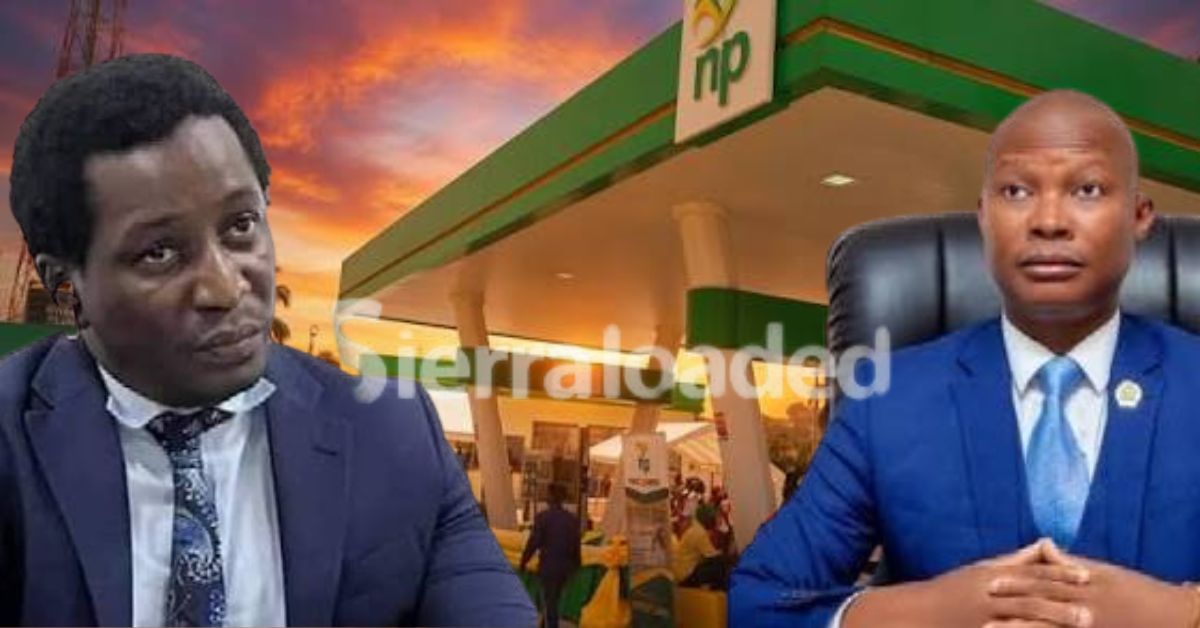
 A civil society activist, Edmond Abu of the Native Consortium, has publicly criticized the National Petroleum Regulatory Authority (NPRA) over its recent explanation of rising fuel prices and the government’s reported subsidy measures.
In a strongly worded response to an NPRA statement, Abu accused the regulator of failing to act fairly when global fuel prices declined, while quickly responding with price increases when costs rise.
His remarks come after the NPRA stated that fuel prices are increasing globally due to disruptions in Middle East trade routes, rising insurance costs, and uncertainty in oil supply chains.

Reacting to this, Abu said, “NPRA let me react to this your shadow boxing. I won’t allow it to fly over the media or Sierraloaded.” He questioned why pump prices were not reduced when global oil prices dropped from $110 to $88 per barrel during a recent two-week ceasefire between Iran and the United States.

“Did U reduce the pump price with the energy and speed the OMC pressure U to hike the price? That was an egregious assault on Sierra Leoneans but we still let go,” he added.
The activist further criticized the timing of the government’s reported subsidy, which NPRA says is projected at $2 million monthly to cushion fuel costs. “Now that global price has hit $100 back per barrel by today, that is the time U talking of the $2 Mil Govt monthly subsidy?” Abu questioned.
In its statement, the NPRA indicated that without the subsidy, fuel prices would have been significantly higher, with petrol projected at NLe37 per litre, diesel at NLe44 per litre, and kerosene at NLe44.3 per litre.
However, Abu raised concerns about accountability within the fuel sector, referencing the 2023/24 Auditor General’s Report. He alleged that oil marketing companies (OMCs) had failed to meet tax obligations and infrastructure fee payments.
“Have you collected those corrupt missing funds before talking about subsidy loss, or you making a cover up for the OMCs to justify price increment?” he asked.
He also argued that citizens do not benefit when global prices fall, saying, “Citizens sacrifice too when the world price drop but U not talking about that.”
Abu concluded by urging the NPRA to maintain subsidies until global prices rise beyond $110 per barrel. “U will only increase when global price jump above the $110 per barrel, till then keep the Ronsho subsidy active. U not doing it for Monkeys, that is what governments all over the world are doing,” he stated.
The exchange highlights growing public scrutiny over fuel pricing mechanisms and subsidy policies in Sierra Leone, as global oil market fluctuations continue to impact domestic economies.
Ooo Abu nothing but the hard when price go up the government is quick to respond but when it drops nobody speaks hmmm
God will surely punish them and their generations. strangers and their enemies shall eat their wealth. for punishing the mercies for the sake of their own families. we rest our case to God Almighty.
Thank you Edmond for standing with the poor citizens. This people still dreaming that we are in the stone age where information is not available/hard to get in today’s world we have everything in our hands so stop fooling yourselves by bring lies to us but all we say we rest our case to God for judgment.