

Sierra Leone Meteorological Agency Forecasts Strong Winds and Variable Rainfall for 2026 Rainy Season
 Deborah Sorie
 The Sierra Leone Meteorological Agency (SLMET) has released its 2026 National Seasonal Outlook/Forecast, warning residents of strong winds and forecasting normal to below-average rainfall across the country, compared to last year’s heavy downpours.
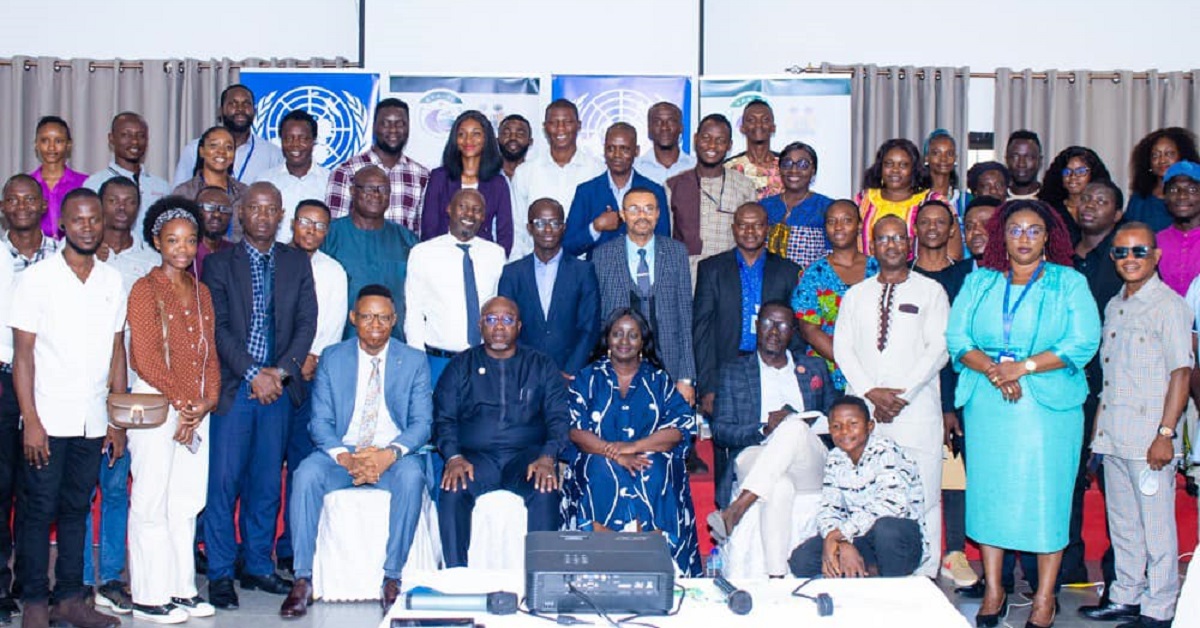
During a press briefing last Thursday at the agency’s National Forecasting Centre on Tower Hill, Gabriel Kpaka, Deputy Director-General of Operations, presented the findings. The forecast, which aims to guide agriculture, disaster preparedness, and public safety, predicts that the strongest winds will hit the country during July, August, and September.
Kpaka noted that while the overall national average is expected to be lower than the 3,000mm recorded in 2025, regional variations will be significant.

Normal to Below Average (June – August): Districts including Bombali, Koinadugu, Karene, Falaba, and Tonkolili are projected to receive below their cumulative average rainfall.

Normal to Average: Areas such as Bo, Kono, Bonthe, Kenema, Pujehun, Freetown, and Kailahun can expect closer to normal rainfall.
Specific Estimates: Between May and July, Bo is expected to receive 1,240-1,290mm; Freetown between 1,340-1,390mm; and Kailahun, Kono, Koinadugu, and Falaba around 1,140-1,190mm. Coastal and northwestern areas like Freetown, Port Loko, Kambia, Bombali, Karene, and Moyamba could see heavier localized rainfall between 1,750-2,500mm during peak rainy days.
The onset of the rainy season will also vary by region. A normal onset (mid-April to early May) is expected in Port Loko, Tonkolili, Kono, Bo, Kenema, Moyamba, Bonthe, and Pujehun. Conversely, districts like Kambia, Karene, Koinadugu, Falaba, and Bombali will experience a late onset, beginning mid-May to June. Kpaka also warned of potential dry spells and localized flooding during the season.
SLMET officials emphasized the scientific rigor behind the 2026 forecast. The agency relies on a robust 30-year climate dataset (1995-2024), utilizing machine learning to fill gaps left by the civil war. This local data is then cross-referenced with projections from major global forecasting centers, including NOAA in the United States and ACMAD in Africa.
Interestingly, the technical team revealed that they also incorporate observations of environmental and animal behavior to supplement their data models, combining hard infrastructure with local expertise. SLMET currently operates automated weather stations, manual Stevenson screen stations, and agricultural monitoring stations.
Deputy Director-General of Administration, Alex Joseph Mammy, and Director-General Ibrahim Sinneh Kamara urged civil society organizations and the media to disseminate the weather warnings nationwide.
The agency issued a stern warning for residents to avoid flood-prone areas, reinforce their roofing structures against the impending strong winds, and remain vigilant as the rainy season approaches. They also noted that regions might experience hotter-than-usual temperatures before the rains fully set in, increasing the risk of agricultural pests.