



 1 Comment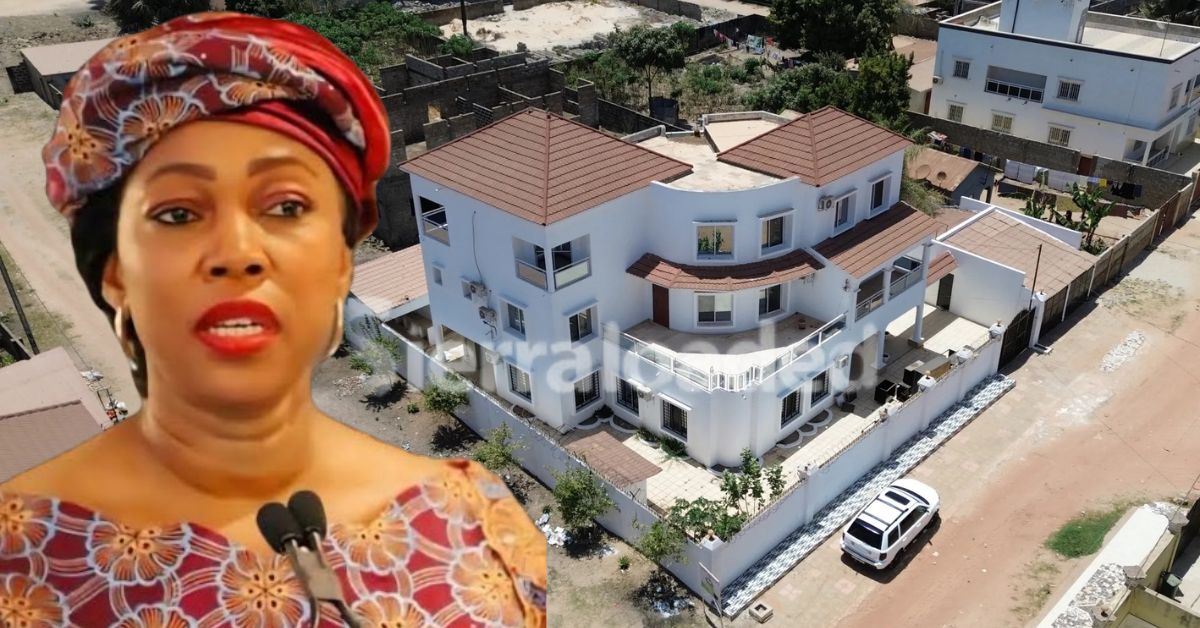
First Lady Fatima Bio has defended her continued tenancy of a council flat in London amid criticism in both Sierra Leone and the United Kingdom over her housing status and growing public profile.
In an interview with the BBC, the First Lady confirmed that she still keeps a council property in Southwark, central London, where some of her children live.
The issue has drawn attention because council housing in Britain is intended to support people with limited housing options, while Bio currently lives in Sierra Leone’s Presidential Lodge in Freetown as the wife of President Julius Maada Bio.

According to Southwark Council, more than 18,000 people remain on the waiting list for housing in the borough, with many residents waiting years for accommodation.
Responding to criticism, Bio insisted that she has broken no law and continues to pay for the property herself.
“My children are all British citizens,” she told the BBC. “I’m paying for my council house myself. I have not committed any crime.”
Southwark Council declined to comment specifically on her tenancy but told the BBC that investigations are conducted where there are concerns about whether tenancy obligations are being met.
The interview also touched on criticism surrounding the First Lady’s alleged wealth and reports of luxury properties linked to the Bio family, including claims involving homes in The Gambia.
When questioned by the BBC about the properties, Bio refused to directly confirm or deny ownership.
“I don’t have to deny it. I don’t have to acknowledge it,” she said. “When they come out with the proof that what they’re saying is the reality, then we’ll have a conversation.”
Despite the criticism, Bio remains one of Sierra Leone’s most influential public figures. Her supporters credit her with modernising the image of the office of first lady and promoting women’s rights, education and menstrual health awareness.
She has gained a strong following on social media, where she regularly posts videos interacting with supporters and promoting youth and women-focused initiatives.
The BBC reported that Bio sees herself as a bridge between ordinary Sierra Leoneans and government leaders.
“I listen to the people and I bring it to the government. I listen to the government and I take it to the people,” she said.
Her rising political influence comes as Sierra Leone continues to face economic challenges linked to inflation, unemployment and the lingering impact of the Ebola epidemic, Covid-19 and global fuel and food price increases.

What is wrong with her children continued occupancy of the borough housing ? is she the only sierra Leonean whose children are resident in the borough area or it because she is a public figure ? , These political gimmic should find some where to stop, and let us focous on what can develop us , the staying of her children in London is her choice , any economically abled individual can do likewise if he or she chooses to .