

Rutile Road Resident Appeals to Government To Fix Road
 Aminata Koroma
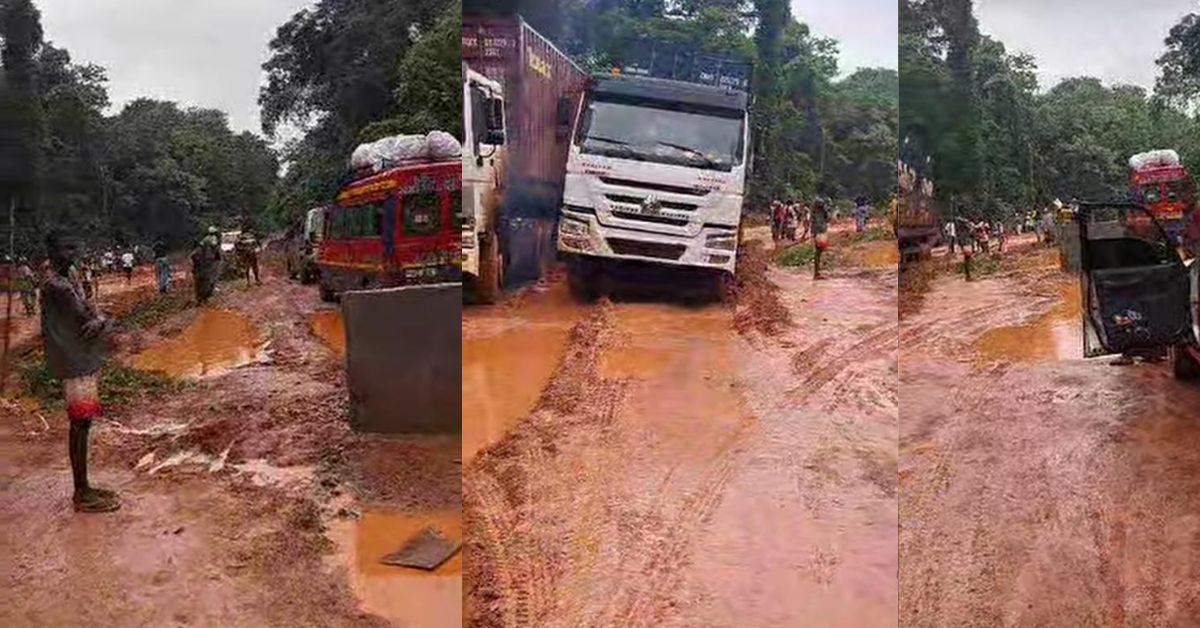
 A resident and road user along Rutile Road has made a passionate appeal to the government to urgently address the deteriorating condition of the road, describing the situation as a major source of daily hardship.
The call comes amid growing frustration among commuters, drivers, and residents who say the road has been in a deplorable state for an extended period, severely affecting movement and livelihoods.
In a video circulating online, a passenger travelling toward Freetown highlighted the extent of the suffering experienced by those using the road. He explained that both passengers and drivers face significant challenges, particularly due to the poor road conditions.

According to the passenger, frequent breakdowns of vehicles, especially heavy-duty trucks, owned by some Chinese companies often lead to blockages, worsening traffic congestion and prolonging travel time. He further alleged that the continuous movement of these heavy vehicles has contributed to the rapid deterioration of the road.

“The suffering is too much,” he lamented, emphasising that the situation has persisted for a long time without intervention.
They are now calling on the government to take immediate action to rehabilitate Rutile Road, expressing hope that their concerns will be addressed to ease the burden faced by communities along the route.
The concerns raised by Rutile Road residents reflect a broader national challenge. More than 86% of Sierra Leone’s road networks remain unpaved, leaving vast stretches vulnerable to heavy usage and climate stressors.
The government has acknowledged the severity of road infrastructure problems. In January 2026, the Director General of the Sierra Leone Roads Authority admitted that the road to Fourah Bay College—one of Africa’s oldest universities—remains in a deplorable state despite years of patchwork repairs.
Despite these challenges, the government has commissioned several major road projects in recent months. In April 2026, President Julius Maada Bio commissioned the 25km Bandajuma–Pujehun Road and the Julius Maada Bio Bridge in Pujehun District, reducing travel time between Bo and Pujehun to approximately one hour. Parliament has also ratified financing for the reconstruction of the 105-kilometre Kambia–Tomparie–Kamakwie Road, expected to enhance transport links in the north-western region.
However, concerns persist about planning and maintenance. In Freetown, residents of Hill Side Bye-Pass Road have similarly complained about flooding caused by clogged drainage systems, accusing authorities of ignoring warnings about inadequate infrastructure design.
For communities along Rutile Road, the wait for a lasting solution continues.
I’m asking president Bio for mercy and forgiveness if sir rutile people do anything bad against him for him to construction of good road before he gets out of the power please please papa president for god sake
This is a complete endless endeavour, whom to trust then, your own brother seem of same interest or other folks to feel and provide supports to eliminate pains and struggles of the people lashing tears like in this case?