


 Post a comment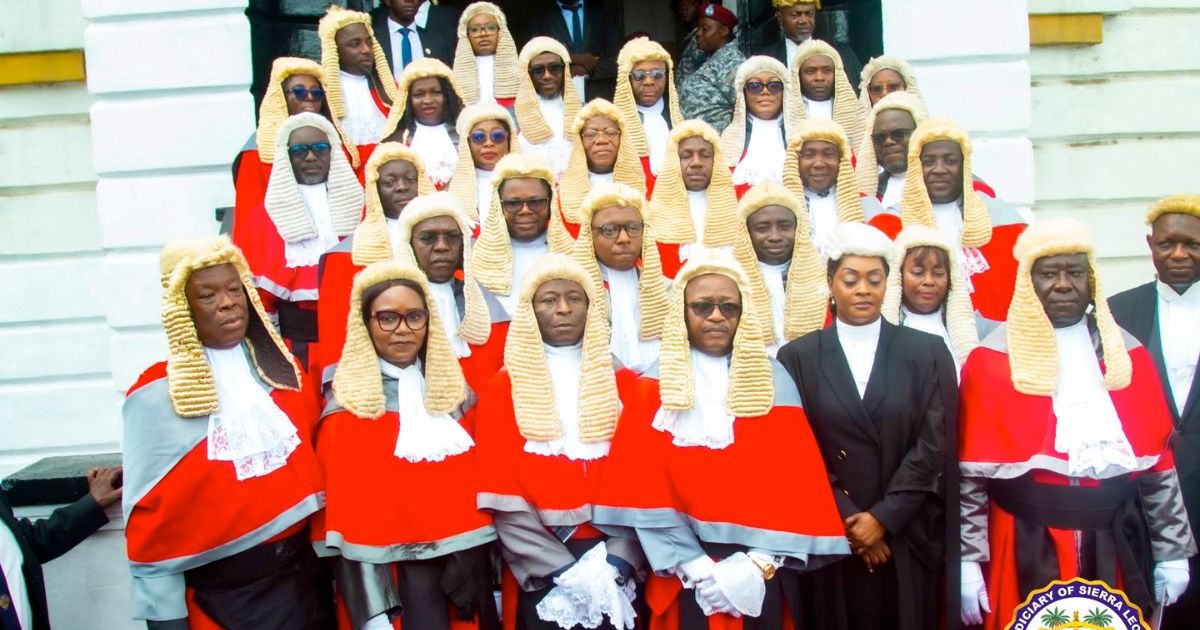
Introduction
Man by nature is selfish, and when he acts, the world is his oyster—no less when he holds authority. Law is fundamentally designed to curb and control our destructive instincts, which is the very essence of government. Yet, the law is not always right, but equity is. This simple fact forms the foundation of justice. In its nascent stages, the law was harsh, resulting in unfairness; thus, equity was introduced to temper its firmness by being fair in light of the given circumstance. While laws are written in rigid words, the ultimate duty of courts is to look at the spirit through the lens of equity and ensure the security of every citizen. In many developing nations—not least Sierra Leone—this duty is periodically undermined as the judiciary is heavily overshadowed by the discretion of politicians, who are only transiently relevant.
The Issue

Right now, our Supreme Court has been asked to decide a landmark case concerning the 2025 Constitution of Sierra Leone (Amendment) Bill. The dispute hinges on the relationship between Sections 91 and 108: specifically, whether a constitutional amendment strictly requires an affirmative vote of two-thirds of all elected Members of Parliament, or if a simple collection of voices among those present can suffice and valid.
This key constitutional challenge has been brought to the judicial arena by Hon. Osman Abdal Timbo, Esq and others, represented by Joseph Fitzgerald Kamara, Esq. Further nuancing the stakes, Thomas Moore Conteh, Esq. and Hon.Tamba Kellie, Esq. have filed an independent application under Sections 124 and 127 of the 1991 Constitution. Together, the lawsuit asks the Supreme Court to determine whether proper constitutional procedures were followed and, if not, to declare the Bill’s passage null and void. This is a watershed moment for our country—a true test of our judiciary’s independence. Can our judges stand firmly by the text of the Constitution, or will they simply bend to the will of politicians?
The Annoying Pattern
To understand why this moment is critical, we must examine the historical pattern of how our Chief Justices leave office. Extra-judicial control has increasingly become a weapon wielded by the Executive over the Judiciary. Justice Ade Renner-Thomas resigned unexpectedly in October 2008, just a year into the tenure of former President Ernest Koroma. Justice Umu Tejan Jalloh replaced Justice Renner-Thomas, but faced public ridicule in the media over rumors regarding her age before being replaced in 2015 by Justice Abdulai Hamid Cham. Justice Cham fulfilled his constitutional duty by swearing in newly elected President Bio in 2018, only to resign less than a year later-amid heavy, unexplained rumors of forced departure- and was succeeded by Justice Desmond Babatunde Edwards, who resigned in 2024 without a stated reason, leaving Justice Browne-Marke to act until Chief Justice Komba Kamanda took office in December 2024.
The Resignation Shibboleth
I have often wondered why these Justices—barring a few rare exceptions—resign rather than retire. When this troubling pattern is brought to senior legal minds, the standard dismissive answer is, “Well, they resigned.” That answer ducks the real question. Why should a Chief Justice suddenly resign when they have years left before reaching official retirement age? When there is no answer, the silence says everything. It proves that successive governments have fostered a system where “resignation” is merely a polite euphemism for political pressure.
The Role of the Supreme Court: Conservative or Modern?
The Constitution is a primary medium through which the state communicates obligations, rights, authority, and limitations to its people and institutions. When doubts and disputes arise, the Supreme Court alone holds the exclusive power to interpret the Constitution. In a vibrant democracy, courts must neither usurp the role of parliament nor act as a rubber stamp. This is why the judicial philosophies of U.S. Supreme Court Justices like Antonin Scalia and Clarence Thomas matter to us. Antonin Scalia championed Textualism—the belief that judges must stick strictly to the written text of the law, entirely ignoring political pressure. Clarence Thomas reminds us that the Constitution is a contract setting strict expectations for how a government must act to protect its people.
Navigating these stormy constitutional waters requires the wisdom found in Robert Bolt’s classic play, A Man for All Seasons. When pressured to abandon legal boundaries for political convenience, Sir Thomas More famously stated: “The currents and eddies of right and wrong, which you find such plain sailing, I can’t navigate. I’m no voyager. But in the thickets of the law, oh, there I’m a forester.”
Like More, our Supreme Court judges must realize that when transient political winds threaten the nation’s safeguards, their only true safety—and the safety of the Republic—lies in being deep foresters who protect the unyielding thickets of the Constitution.
The Constitutional Safeguard
In Sierra Leone, judges enjoy security of tenure and cannot be removed unless they violate their judicial code or face medical incapacity. Section 137 of our 1991 Constitution clearly outlines the transparent tribunal process required to remove a judge. Yet, we can rarely recall when our governments—past and present—have ever followed through with this legal safeguard. Instead, we have witnessed the routine bypassing of this provision to force the quiet resignations of our Chief Justices, allowing politicians to reshape the courts for their own comfort.
Arguably, every judge on our bench carries some political shade that landed them there. That is the reality. But the problem is that these shades are not broad enough to form a canopy over the administration of justice. A Chief Justice – and indeed all justices-should serve as a protective canopy for the entire Constitution, rather than a temporary pinhole umbrella for whoever happens to be in power.
The Office of the Chief Justice faces a definitive choice with the impending Constitutional Amendment Bill. It can continue the cycle of past administrations and leave the court vulnerable to political winds, or it can anchor the bench strictly in the spirit of the Constitution.
Conclusion: The Price of the Politics of Now is Tomorrow
Politicians come and go, relevant for only a short time. But the Constitution outlasts them all. Our Chief Justices must be allowed to uphold the law and equity for the security of all Sierra Leoneans, not the temporary desires of State House. Strict adherence to the Constitution is what grants politicians a true legacy. Short of that, they merely construct a fragile political umbrella that collapses the moment political power changes hands. To leave a lasting legacy, politicians must submit to the spirit and text of the Constitution, ensuring that the institutions they lead outlast their own time in office.