

Why Union Trust Bank Was Closed And Transferred to Rokel Commercial Bank – Bank of Sierra Leone Explains
 Deborah Sorie
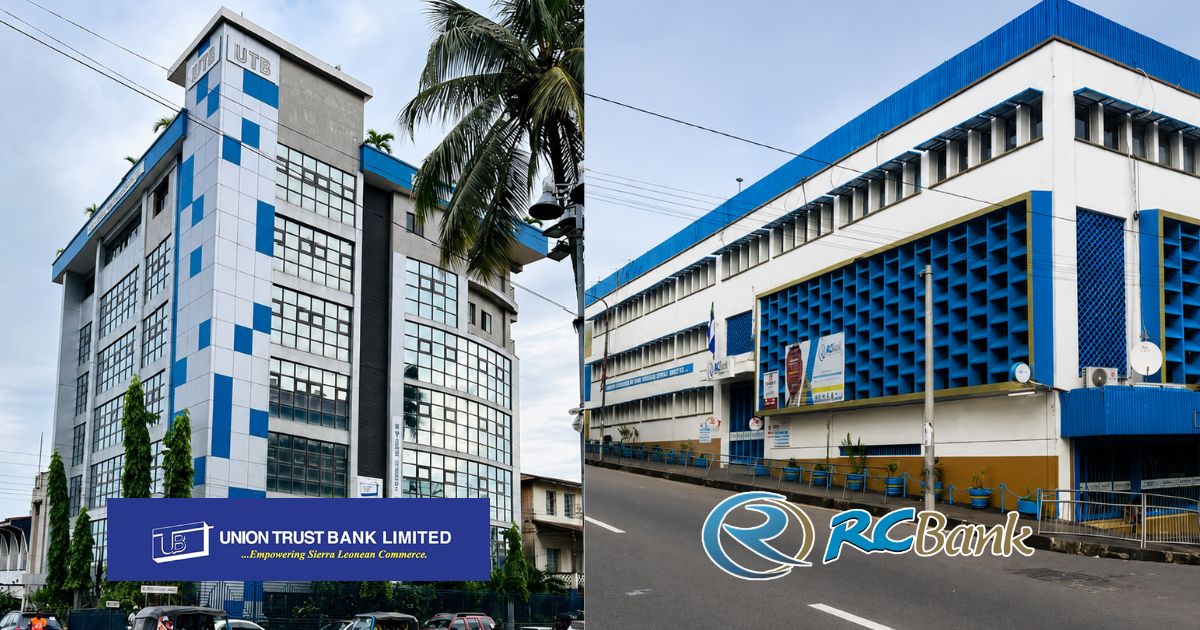
 The Bank of Sierra Leone (BSL) has provided detailed reasons behind the resolution of Union Trust Bank Limited (UTB), describing the move as a necessary regulatory intervention aimed at protecting depositors, maintaining confidence in the banking sector, and safeguarding financial stability.
Speaking at a press conference held today at the Bank of Sierra Leone headquarters in Freetown, Governor Dr. Ibrahim L. Stevens explained that UTB had become insolvent after years of failing to meet the minimum capital requirements prescribed under the Banking Act, 2019.
According to the Governor, UTB’s paid-up capital stood at only NLe33.82 million as of December 2025, significantly below the required NLe122 million under the first phase of the banking sector capital framework. The bank had also accumulated retained losses of NLe328.52 million, resulting in a severely negative capital position.

Dr. Stevens noted that the Bank of Sierra Leone had engaged extensively with UTB over several years to help restore its financial health. In September 2020, the institution was placed under Enhanced Supervision, with a Resident Examiner deployed to closely monitor its operations.
Despite repeated directives requiring shareholders and management to inject additional capital, strengthen governance, improve asset quality, and restore profitability, the bank was unable to recover.
An independent diagnostic and forensic review conducted by Ernst & Young Ghana in September 2024 confirmed that UTB’s financial condition had deteriorated significantly. The review found negative Tier 1 capital, worsening asset quality, failure of previous restoration plans, and no realistic prospects for recapitalisation under the existing ownership structure.
The Governor said that after exhausting all reasonable recovery options, the Bank of Sierra Leone concluded that resolution was the only viable course of action.
To facilitate an orderly resolution, the central bank conducted market-sounding exercises, engaged potential investors, worked closely with the International Monetary Fund (IMF), and secured government support to bridge any funding gap required to protect depositors.
Following a fit-and-proper assessment, Rokel Commercial Bank (RCB) was selected as the acquiring institution.
On December 8, 2025, UTB was formally placed under resolution for a six-month period under the Banking Act, 2019. A Caretaker Management Team was appointed, while Kreston Accountants SL Ltd was engaged to facilitate the transfer process and manage the bank’s non-performing assets.
Under the Purchase and Assumption (P&A) framework adopted by the Bank of Sierra Leone, UTB’s performing assets and customer deposits have been successfully transferred to Rokel Commercial Bank. Non-performing and impaired assets were excluded from the transfer and remain under the management of Kreston Accountants SL Ltd for recovery and orderly wind-down.
The Governor also announced that all UTB staff would be transferred to Rokel Commercial Bank. Additionally, the Government of Sierra Leone has agreed to fund the payment of End of Service Benefits for all affected employees, citing social stability and employee welfare considerations.
The transfer process was successfully completed on June 16, 2026.
Dr. Stevens emphasized that the resolution was not a conventional corporate takeover but a regulatory action carried out under the provisions of the Banking Act, 2019, and aligned with international best practices for bank resolution.
He concluded that the successful completion of the transfer marks an important milestone in strengthening the resilience, stability, and credibility of Sierra Leone’s banking sector while ensuring the protection of depositors and the broader financial system.