


 Post a comment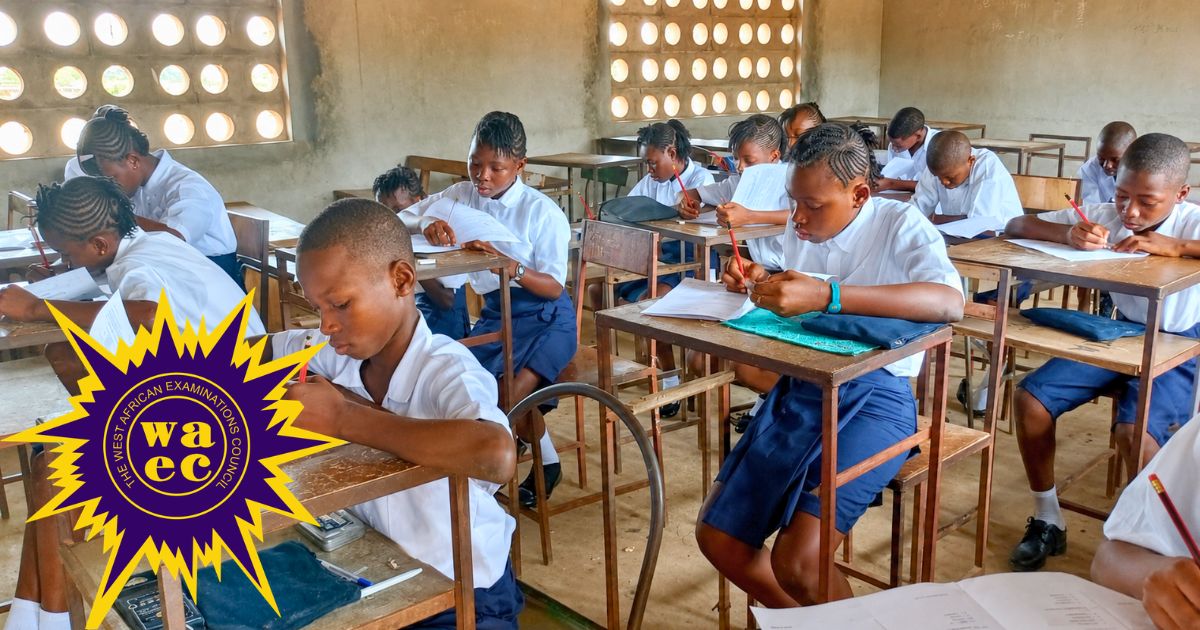
Introduction: The Generational Duty
Ever since creation, all living things have reproduced to continue their existence. Human reproduction is about more than just passing down biological traits; it is about passing down a way of life. Every reasonable parent wants their children to grow up with the best of values and skills for a sustained livelihood—the tools to take care of themselves long after our own demise. Education is one of man’s most instructive and destructive tools ever created. Its benefits and scourge to society through the millennia has been breathtaking and alarming respectively.
Arguably, because man by nature is selfish, we go to desperate lengths to secure this future, even if it means exposing our children to the exact opposite of these ideals. On my way to work last week, I met a bevy of young girls walking down the road with bags, books, and buckets. I asked one of them where they were going, and she told me they were returning from a study camp for the Senior Secondary School examination. The practice is becoming a worrying annual pattern, where school authorities, teachers, and parents all agree to send students to these camps.
As a former teacher and now a parent, that scene played in my mind with several unanswered questions. Critically, these questions do not merely concern individual parental choices; they cut to the core of educational governance and state regulation. When private, coordinated cheating strategies routinely bypass laws and ethics, the phenomenon ceases to be an isolated academic trend but instead signals a fundamental decoupling of the social contract between the state and its citizens.

Government’s Ban but Ineffective
The government, through the Ministry of Education, has banned such study camps due to several factors, not least of which are severe parental concerns. However, the ban is purely theoretical. These camps are rolled out in many houses and spaces that are perfectly known and open to members of the public, interested parents, and children alike.
A progressive state is one that focuses on transforming the lives of its citizens by protecting their present and future security needs, and not just the survival of the regime. A stable society is built on the efficacy of the social contract and the rule of law, not on unreasonable force or hollow decrees that face the possibility of collapsing.
Intended Goals and Warped Reality
Like everything we do in life, there is a goal and an objective to the destination. Such study camps are meant to create a conducive environment for students to work, study together, and study harder for better examination results to access higher education. It is arguable to some extent that they create a conducive environment, because many students live in communities that are not student- or study-friendly—places marked by public nuisance, lawlessness, and little or no law enforcement.
On the other hand, and undesirably so, these camps have become a cell for exam malpractices. They are hubs for getting leakages and designing means of smuggling prepared materials—commonly called ‘missiles’—into the hall to reproduce them on exam papers.
The Economic and Exploitative Burden
There is a heavy economic layer to this phenomenon. All these camps charge fees to organize. Yet, despite the financial cost, the students are left to prepare food, launder their clothes, and fetch water for themselves. This introduces a tragic irony: an environment paid for under the guise of maximizing study time instead forces students to expend their energy on basic domestic survival chores.
Furthermore, these study camps generally last between three and four weeks, and students are housed in homes or makeshift structures. Some of these students come from far places, while others are closer. The immediate concern is that they are not effectively monitored—from their sleeping and waking times to how and what they eat.
But one of its most insidious effects is that of abuse. For instance, recently, a school proprietor told me that he was threatened by the family members of a young teacher who is presently facing trial for impregnating a 15-year-old student girl. Her parents had brought her all the way from Guinea to be schooled here. When I asked the proprietor how it happened, he said the girl revealed the teacher had sex with her right in the Principal’s office, and that was where she got impregnated.
A Crisis of Equity and Demographics
The social layers are visibly felt in these camps, in that most of those in attendance are from poor and struggling backgrounds. It is evident that most of these children are from public schools and increasingly lower-tier private schools, some of whose primary concern is simply to justify the huge fees taken from hardworking parents.
Alarmingly, about 70% of these study camps comprise adolescent and teenage girls. Despite the spirited public calls against girl-child abuse, economic desperation and systemic pressure mean most parents still choose to send their children away to these high-risk places.
Value Retrogression: Complicity at the Heart
For most parents with children taking these public exams, they also do not help the situation. Some parents are outright complicit; they even encourage and lobby teachers to provide their children with illicit materials. When parents subsidize dishonesty, they teach the next generation that fraud is a legitimate tool for advancement. Together, through this collective compromise, we destroy their future and the overall development of the country.
The Mirror Effect: A Self-Inflicted Crisis
Notwithstanding these societal failures, the government cannot deflect its own responsibility. The problem is deeply self-inflicted. During the presidential election campaign in 2018, the President promised Free Quality School Education. Today, that is a reality, marked by a massive increase in student retention, enrollment, and public examination passes, all enamored by the institutional wherewithal of radical inclusion.
However, nearly eight years later, we are also witnessing the painful and punishingly slow regression of our country’s future. By prioritizing sheer numbers over systemic values, we have created an existential paradox. A society whose education system is not well funded, and is based on numbers rather than values, and chicanery rather than hard work, faces a bleak future. If the duty-bearers are not ready to do the needful—to fund the system adequately and enforce the law strictly—this numerical success will yield an existential threat to the very state we are trying to build.
The author is a private legal practitioner and solicitor in Sierra Leone. He is a Senior Chevening Fellow, an alumnus of the Kofi Annan International Peacekeeping Training Centre (KAIPTC) with a background in Conflict, Peace, and Security, and the Executive Director of Rightsbridge Civic Solutions (RCS).


