

 Post a comment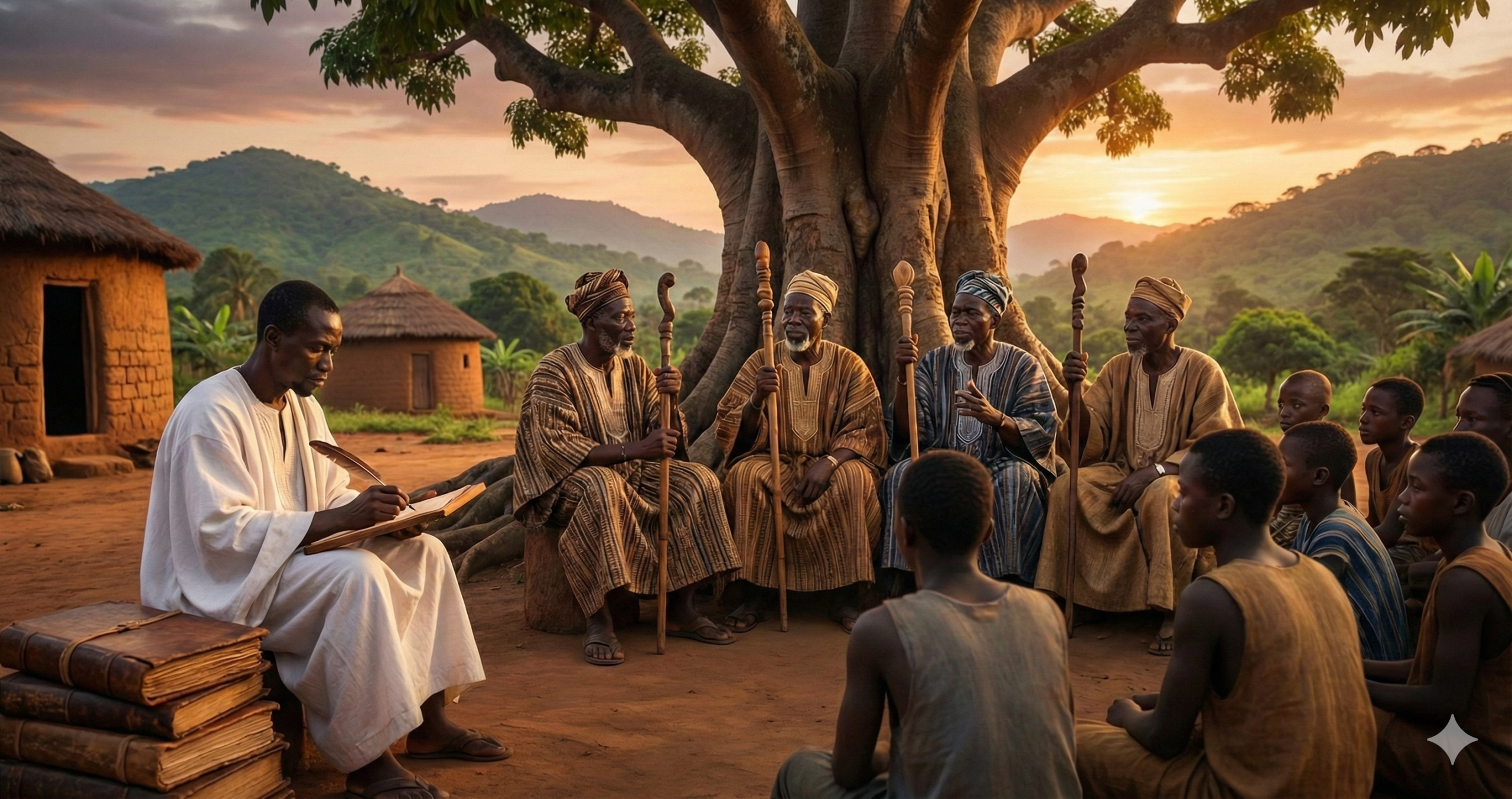
For much of Sierra Leone’s post-colonial historiography, a familiar assertion recurs with striking confidence: that the most significant—if not the only—benefit conferred by British colonialism was education. This view is often anchored in the founding of Fourah Bay College in 1827, celebrated as the first Western-style tertiary institution in sub-Saharan Africa, and in the subsequent emergence of missionary schools that propelled Freetown into the global imagination as the “Athens of West Africa.”¹ The historical importance of these institutions is undeniable. Yet to elevate colonial education as an originary civilizational gift is to reproduce a deeply Eurocentric epistemology—one that mistakes European schooling for education itself.²
Such a claim collapses under closer historical scrutiny. It rests on an impoverished definition of education that excludes indigenous and Islamic knowledge systems, reduces Africa’s intellectual past to a void, and implicitly portrays pre-colonial societies as epistemically barren. This is not merely an empirical error; it is an epistemological violence.³
Education Before Colonialism: Indigenous Epistemic Orders
Long before European contact, societies occupying the territory now known as Sierra Leone sustained sophisticated and socially embedded systems of education. Among Mende, Temne, Limba, Loko, Susu, Yalunka, Koranko, and Fula communities, education functioned not as an abstract institutional exercise but as a lived social process—integral to governance, production, spirituality, and moral formation.⁴
Knowledge transmission occurred through age-grade systems, apprenticeship, and initiation institutions such as the Poro and Bondo societies, which served as structured pedagogical spaces. These institutions imparted ethical reasoning, jurisprudential norms, leadership training, environmental knowledge, medicinal science, historical consciousness, and conflict-resolution mechanisms. As Jan Vansina has demonstrated, oral tradition in Africa was not a primitive substitute for writing but a rigorously regulated historical method governed by rules of memory, authority, and verification.⁵
To deny these systems the status of “education” is to confuse form with function. They did not resemble European classrooms, but they performed precisely what education does: the systematic reproduction of knowledge, skills, and values across generations.⁶
Islamic Scholarship and the Upper Guinea Intellectual Corridor
Equally central to Sierra Leone’s pre-colonial intellectual history is the long-standing Islamic scholarly tradition that connected the Upper Guinea region to a wider Sudanic and Sahelian world of learning. From at least the eleventh century onward, Islamic education flourished across West Africa, producing literate elites trained in Arabic grammar, Qur’anic exegesis, jurisprudence (fiqh), logic, mathematics, astronomy, and history.⁷
Northern Sierra Leone—particularly areas such as Falaba—formed part of this broader intellectual corridor linking Futa Jallon, Senegambia, and the Middle Niger. While Falaba did not leave behind a manuscript archive comparable in scale to Timbuktu, the absence of preserved texts should not be mistaken for the absence of scholarship. Islamic pedagogy in the region was transmitted through mosque-schools, itinerant scholars, and family-based clerical lineages, all of which emphasized memorization, textual mastery, and scholarly debate.⁸
The accounts of medieval travelers such as Ibn Battuta attest to the density of scholarly networks across West African centuries before European colonialism. Timbuktu itself was not an anomaly but the apex of a regional ecosystem of learning whose intellectual influence radiated far beyond the Niger Bend.⁹
Colonial Education: Reorientation, Not Invention
Colonialism did not introduce education to Sierra Leone; it redefined what counted as education. Missionary and colonial schools privileged European languages, epistemologies, and institutional forms while systematically marginalizing indigenous and Islamic knowledge systems. As Walter Rodney and Valentin Mudimbe have argued, colonial education functioned less as an emancipatory project than as an instrument of epistemic domination—producing clerks, catechists, and intermediaries rather than autonomous thinkers grounded in local intellectual traditions.¹⁰
Fourah Bay College itself, for all its historic achievements, was embedded within this colonial logic. Its curriculum largely excluded African knowledge systems, reinforcing the idea that legitimate knowledge flowed from Europe outward. The brilliance of its graduates does not negate the epistemic hierarchies within which the institution operated.¹¹
The Myth of the “Colonial Gift”
The persistent claim that education was the sole benefit of colonialism is therefore misleading on two levels. First, it ignores the rich educational traditions that predated colonial rule. Second, it romanticizes colonial schooling while overlooking the profound epistemic dislocations it produced. As Ali Mazrui and Lamin Sanneh have shown, Africa’s encounter with Western education was not a simple story of enlightenment but a complex negotiation involving displacement, adaptation, and resistance.¹² To frame colonial education as a benevolent gift is to mistake historical contingency for civilizational necessity.
Toward an Epistemically Honest History
A more intellectually honest account recognizes Sierra Leone’s educational history as a continuum rather than a rupture. Indigenous and Islamic systems provided deep reservoirs of knowledge and social organization. Colonial institutions introduced new forms of schooling that expanded certain capacities while simultaneously eroding others. The task of the present is not to nostalgically idealize the past nor uncritically celebrate colonial legacies, but to reclaim a plural intellectual heritage capable of informing contemporary educational renewal.¹³
Education did not arrive with colonialism. What arrived was a new hierarchy of knowledge—one that still shapes how Africans are taught to understand their own past. Recovering that past is not an exercise in sentimentality; it is an act of intellectual sovereignty.
 Chernor M. Jalloh is Lecturer of Governance & Development Studies at PAM – USL
Footnotes
-
- Joe A. D. Alie, A New History of Sierra Leone(London: Macmillan Education, 2017), 213–215.
- Valentin Y. Mudimbe, The Invention of Africa: Gnosis, Philosophy, and the Order of Knowledge(Bloomington: Indiana University Press, 1988), 1–23.
- Ali A. Mazrui, Cultural Forces in World Politics(London: James Currey, 1990), 68–72.
- Magbaily Fyle, Historical Dictionary of Sierra Leone(Lanham, MD: Scarecrow Press, 2006), 98–105.
- Jan Vansina, Oral Tradition as History(Madison: University of Wisconsin Press, 1985), 27–46.
- Daniel N. Sifuna, “Indigenous Education in Africa,” Journal of African Studies14, no. 2 (1990): 43–55.
- Spencer Trimingham, A History of Islam in West Africa(London: Oxford University Press, 1962), 15–39.
- John O. Hunwick and R. S. O’Fahey, eds., Arabic Literature of Africa, Vol. 4: The Writings of Western Sudanic Africa(Leiden: Brill, 2003), 3–22.
- Ibn Battuta, The Travels of Ibn Battuta, trans. H. A. R. Gibb (Cambridge: Cambridge University Press, 1958), 322–330.
- Walter Rodney, How Europe Underdeveloped Africa(London: Bogle-L’Ouverture, 1972), 262–285; Mudimbe, Invention of Africa, 87–110.
- Edward H. Berman, African Reactions to Missionary Education(New York: Teachers College Press, 1974), 41–63.
- Lamin Sanneh, The Crown and the Turban: Muslims and West African Pluralism(Boulder, CO: Westview Press, 1997), 112–139; Mazrui, Cultural Forces, 91–97.
- N’Dri Thérèse Assié-Lumumba, African Higher Education: Developments and Perspectives(Dakar: CODESRIA, 2006), 19–37.


