

 Post a comment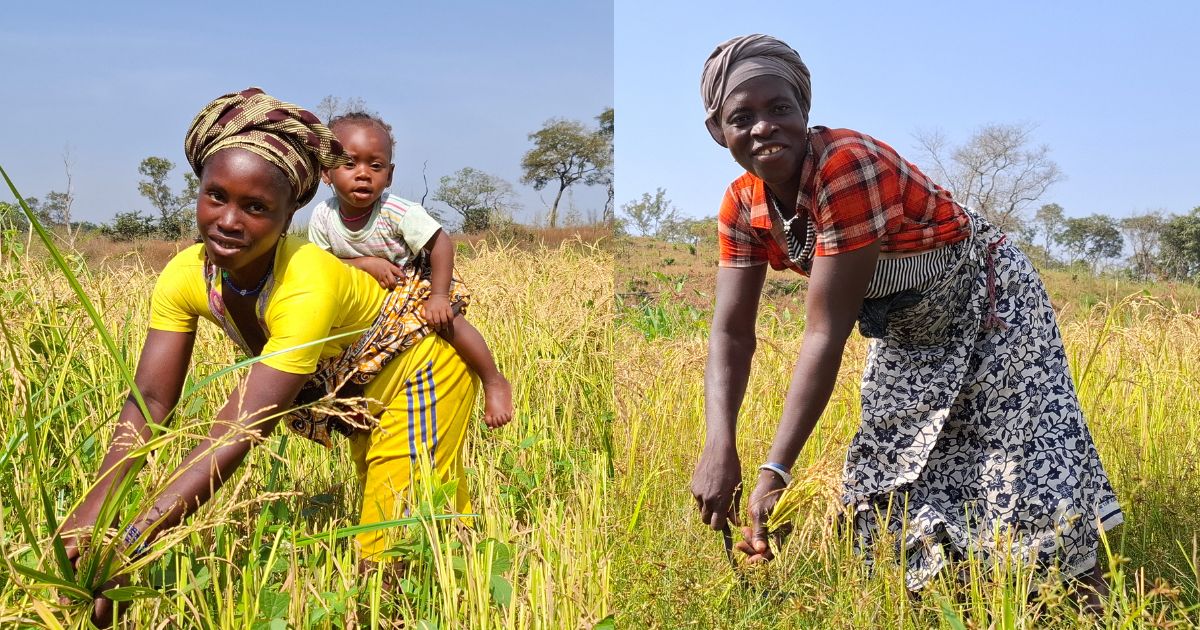
When the morning mist lifts over the inland valley swamps of Danyoro village in Mongo Chiefdom, Falaba District, it reveals more than green rice fields. It reveals a quiet transformation—led by women, strengthened by youth, and rooted in hope.
At the centre of this change is Adama Manasaray, a mother of five and the chairlady of her farmers’ group. Standing barefoot at the edge of a five‑hectare swamp, Adama recalls how life used to be before the Mercy Ships Austria‑funded project began.
“Before the project, we worked on individual farms, mostly upland,” she explains. “We always struggled—with money, with labour, and with low yields.”
Farming alone meant higher costs, limited tools, and constant uncertainty. But that reality began to shift when inland valley swamp (IVS) farming was introduced with support from WFP and the Ministry of Agriculture and Food Security. For the first time, farmers like Adama were organized to work collectively sharing labour, resources, and responsibility.
Through the project, Adama’s group received agricultural tools, quality seeds, and conditional cash support while rehabilitating the swamp. Water control structures were rehabilitated, restoring the land’s ability to hold and regulate water for year-round rice cultivation. In total, 50 hectares of inland valley swamps were rehabilitated and over 600 farmers supported in 2025, laying the foundation for sustainable, climate‑resilient food production.
Today, Adama speaks with pride about the group’s plans for their rice harvest.
“We will keep some rice for food and seed,” she says, “and sell the rest to WFP’s home‑grown school feeding programme.”
The income will not stop at meeting immediate needs. The group has clear ambitions: to invest in a power tiller and a threshing machine to reduce labour burdens, increase efficiency, and expand production. They also plan to establish a small internal loan system to help members pay college fees for their children—ensuring that the benefits of farming reach the next generation.
While women like Adama lead production, youth are powering knowledge and sustainability behind the scenes.
Twenty-two-year-old Hawa Sannoh, a trained community youth contractor, has been working closely with the Ministry of Agriculture and Food Security to provide extension services in the same communities. Having received training in the Technical Package for Rice Production, Hawa now supports farmers from land preparation through to harvest.
“I help farmers focus on proper seed selection, timely nutrient management, and water control,” she explains. “These practices increase yields and make farming more sustainable.”
Her role bridges the gap between technical expertise and community practice—ensuring that investments in land and inputs translate into lasting results.
Beyond rice, the project is improving nutrition and environmental resilience. Communities have been introduced to orange‑fleshed sweet potato (OFSP), with vines distributed and farmers trained on best cultivation practices to improve household diets and food security. At the same time, 5,000 economic trees have been planted to revegetate degraded water catchment areas—restoring ecosystems while providing future nutritional and income benefits.
For Adama, the impact of the project goes beyond hectares rehabilitated or trees planted. It is about dignity, unity, and possibility.
“This project has brought us together,” she says. “Now we farm as one group, we plan together, and we build a future together.”
With support from Mercy Ships Australia, what was once an undeveloped swamp has become a shared asset—feeding families, financing education, empowering women, and anchoring hope in the fertile soil of Falaba. This supports the Government’s Feed Salone Strategy and strengthens the national food systems.


