

Why Sierra Leonean Muslims Should Perform I’tikaf in the last Ten Days of Ramadan
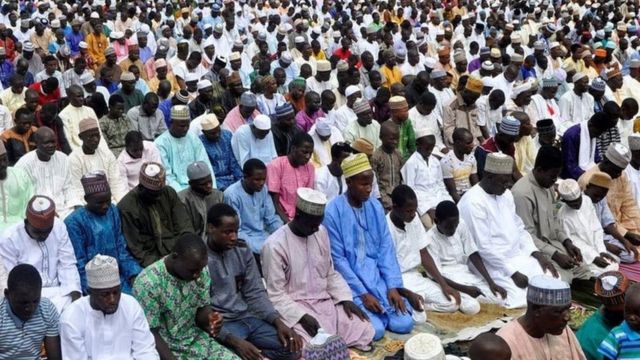
Sierra Leonean Muslims should spend the last ten days of Ramadan in seclusion (i’tikaf), where one solely focuses on worshipping Allah and refrains from involvement in worldly affairs. It is a time to reflect, increase worship and to increase one’s religious knowledge, seeking closeness to Allah.
There is no set time for i’tikāf, and while it is Sunnah to do a full i’tikāf the last ten days of Ramadan, one can also do just a few days, or even a night, or even (according to the Ḥanbalīs) a few hours.
-During the i’tikāf, one must minimize all non-necessary actions and talk, and concentrate on the worship of Allah, and what is required to take care of one’s body (eating, drinking, restroom, hygiene, etc.). If the masjid has restroom facilities, those should be availed; if not, one may go to the nearest reasonable location and return without breaking i’tikāf. The same applies for food: if food is provided in the masjid, he should partake of that, otherwise it’s best to arrange for someone to deliver it, and if that is not possible one may go to obtain food without breaking i’tikāf.

-To be even more explicit: one cannot leave the masjid except for a valid need. To leave the masjid premises without such a need invalidates the i’tikāf. A ‘valid’ reason is not another act of worship, so one is not allowed to leave to attend a burial, or visit the sick, or delivering food to others.



-Intimacy with one’s spouse and all that leads to it is not allowed during i’tikāf.
-Talking with others should not be a primary objective nor should it take up too much time. Scholars have allowed – since we are human and cannot worship constantly – some general talk and brotherly interactions while one is in the state of i’tikāf. But one of the major problems that occurs during i’tikāf is that people spend more time socializing with one another rather than worshiping, and there is no question that such a culture contradicts the entire purpose of i’tikāf.
-I’tikāf is not inherently obligatory, nor is there a penalty for ‘breaking’ it. Hence if for some reason a person changes his mind and decides to go home, there is no sin on him, but of course he has lost the reward of the i’tikāf. As well, if a person does ‘break’ i’tikāf for a reason, he may resume another i’tikāf as soon as possible. There is no sin on someone doing this. So, for example, it is allowed for a person to make an intention every night from qiyām for as long as he is sitting in the masjid to do i’tikāf, and he may do so every night he is in the masjid.