

Children in Pujehun Communities Deprived of Formal Education, DDCC Raises Alarm
 Alhaji Mashalat Sheriff
 Concerns over the growing number of children deprived of formal education in parts of Pujehun District have intensified following a follow-up engagement conducted by members of the District Development Coordinating Committee (DDCC).
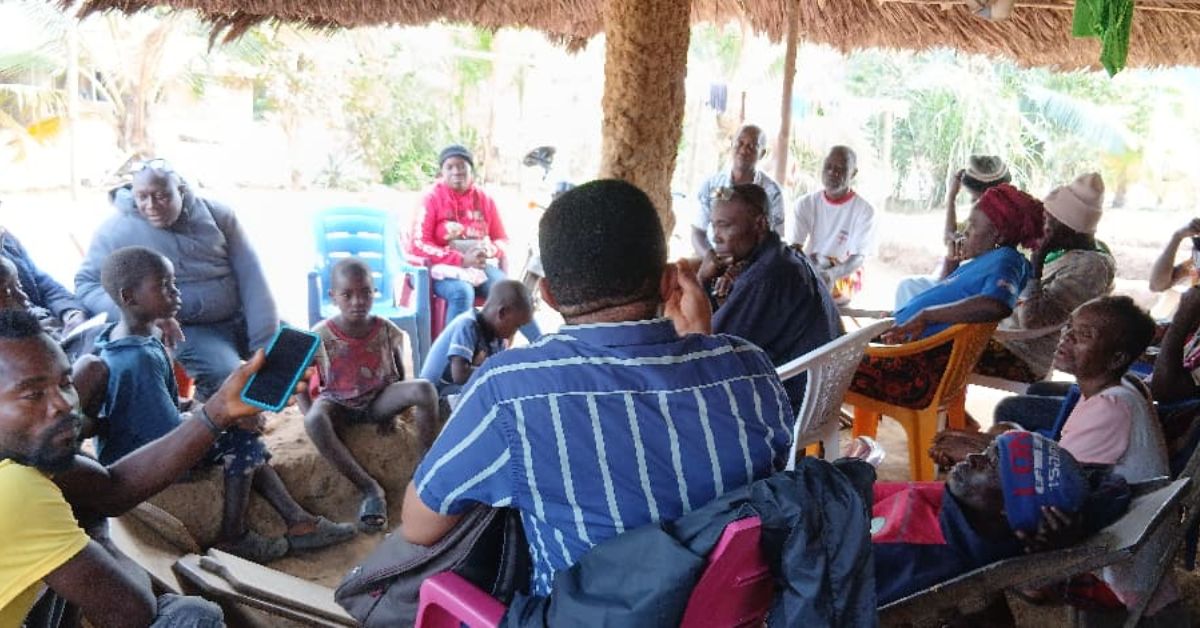
The engagement stemmed from resolutions reached during the committee’s previous meeting held at the Pujehun District Council Hall, where stakeholders raised alarm over the educational situation of children in Kalia 1, Kalia 2, and Kalia 3 in Sorogbema Chiefdom, as well as Gbongay Village in Pejeh Chiefdom. Many of the children in these communities are reportedly receiving only Quranic education without access to formal schooling.
The verification and community engagement exercise, funded by Save the Children – Pujehun Branch, brought together representatives from the Pujehun District Council, the Ministry of Basic and Senior Secondary Education (MBSSE), Save the Children, Civil Society Organisations (CSOs), media practitioners, and agricultural sector stakeholders.

During the first engagement in Gbongay Village, the team discovered that approximately 100 children are enrolled exclusively in Quranic education and are not attending formal schools.
Stakeholders commended Quranic teachers and community leaders for their dedication to preserving religious education and moral values among children. However, the team emphasized that while Quranic learning remains important, formal education is equally essential in equipping children with the knowledge and skills needed to access employment opportunities and assume leadership roles in Sierra Leone.
Discussions with residents further revealed that several children had been sent from other districts specifically to pursue Quranic studies, while some are orphans whose caregivers are unable to financially support their enrollment in formal schools.
The team observed that only a limited number of children living with their parents currently combine both Quranic and formal education.
Further engagements in Kalia 1 and Kalia 2 uncovered what stakeholders described as an even more alarming situation, with a significantly high number of children particularly those between the ages of one and six years not enrolled in any formal educational institution.
Community members disclosed that more than 200 school-age children in Kalia 1 alone are not attending formal school, while only a few have access to Quranic education.
Residents attributed the situation primarily to the absence of both pre-primary and primary schools within the Kalia communities. According to them, the nearest school is located in Gendema Town, approximately three miles away.
They explained that children traveling to Gendema must cross two locally constructed stick-and-mud bridges, which become extremely dangerous during the rainy season.
Community members recounted that two children previously lost their lives while attempting to cross the bridges on their way to school.
During periods of heavy rainfall, residents said they are often forced to use local boats or travel through longer and more hazardous routes, causing many parents to prevent younger children from making the journey to school.
As a result, only children aged seven or eight years and above are reportedly able to undertake the difficult trip from Kalia 1, 2, and 3 to attend school in Gendema.
Community leaders strongly expressed their willingness to support formal education if a primary school is established to serve the three Kalia communities, which they estimate have a combined population of more than 400 children.
They appealed to the District Council, Save the Children, and development partners to support the construction of a school facility within the area.
Following the engagements, stakeholders agreed on several recommendations, including encouraging children to combine Quranic and formal education to promote balanced spiritual and academic development.
The team also recommended the urgent establishment of a primary school within the affected communities, improvement of road and bridge infrastructure between Kalia and Gendema to ensure safe access to education, and a follow-up assessment to identify orphans and other vulnerable children requiring educational support.
The assessment concluded that many children in Gbongay Village and the Kalia communities continue to be deprived of formal education due to socio-economic and infrastructural challenges.
Stakeholders expressed appreciation to Save the Children – Pujehun Branch for supporting the engagement exercise and reaffirmed the importance of sustained collaboration to ensure every child in Pujehun District has access to safe, equitable, and quality education.