

Gender Minister Decries Removal of Anti-FGM Clause From Child Rights Act
 Kanja Sesay
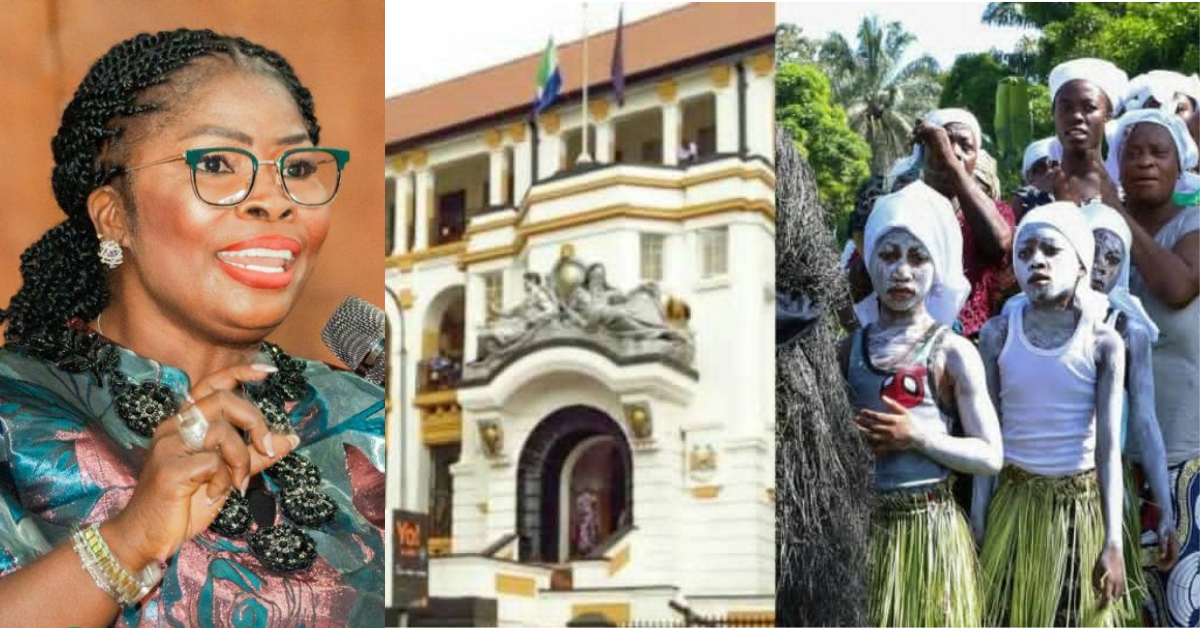
The Minister of Gender and Children’s Affairs, Dr. Isata Mahoi, has expressed disappointment over the removal of a proposed provision aimed at criminalising Female Genital Mutilation (FGM) for minors from Sierra Leone’s revised Child Rights Act.
Speaking during the Government’s weekly press briefing held at the Miatta Civic Centre in Freetown, Dr. Mahoi said the ministry had strongly pushed for the inclusion of a clause that would have explicitly outlawed FGM for girls under the age of 18 as part of broader child protection reforms.

She explained that the proposal had received backing from the executive arm of government, including President Julius Maada Bio. However, she noted that when the bill reached Parliament, lawmakers amended the draft and completely removed the anti-FGM provision.

According to the Minister, the decision reflects the continuing political and cultural sensitivities surrounding the practice, describing it as an indication of limited readiness to directly confront deeply rooted traditional norms.
Dr. Mahoi described FGM as a “harmful cultural practice,” stressing its wide-ranging consequences on the health, education, and overall wellbeing of girls.
She highlighted several concerns, including its reported link to early and forced marriages in some communities, the severe physical and psychological health risks associated with the practice, and its contribution to school dropouts among girls. She also noted that FGM reinforces existing gender inequalities.
While acknowledging the cultural significance attached to certain traditional rites, the Minister emphasised that cultural practices must evolve in line with the protection of human rights and the wellbeing of children.
Despite the legislative setback, Dr. Mahoi said the Ministry has not abandoned its efforts. She revealed that government is currently awaiting judicial interpretation of certain provisions within the Child Rights framework, which could help clarify how child protection measures may still be enforced.
The outcome of that legal process, she added, is expected to shape the next phase of policy direction and intervention strategies.
“How do we protect our children without abandoning our traditional values?” she asked, calling for a balanced national dialogue on the issue.
FGM remains a highly sensitive issue in Sierra Leone, where it is closely associated with traditional initiation societies, particularly the Bondo society. The practice continues to generate debate between cultural preservation advocates and child rights campaigners.
Global health organisations such as UNFPA and UNICEF have long reported that Sierra Leone records one of the higher prevalence rates of FGM globally, although recent advocacy and awareness efforts have contributed to gradual shifts in public perception.
In response to ongoing challenges, the government is increasingly focusing on non-legislative interventions, including community sensitisation programmes, engagement with traditional leaders and Soweis, promotion of alternative rites of passage, and implementation of the National Strategy for the Reduction of FGM (2025–2030).
Awo! Man dem dae pull dem head
If na you sef, you go wan tote da badname?