

Man Remanded as Human Skull Allegedly Linked to Kush Production is Tendered in Court
 Daniel Amara
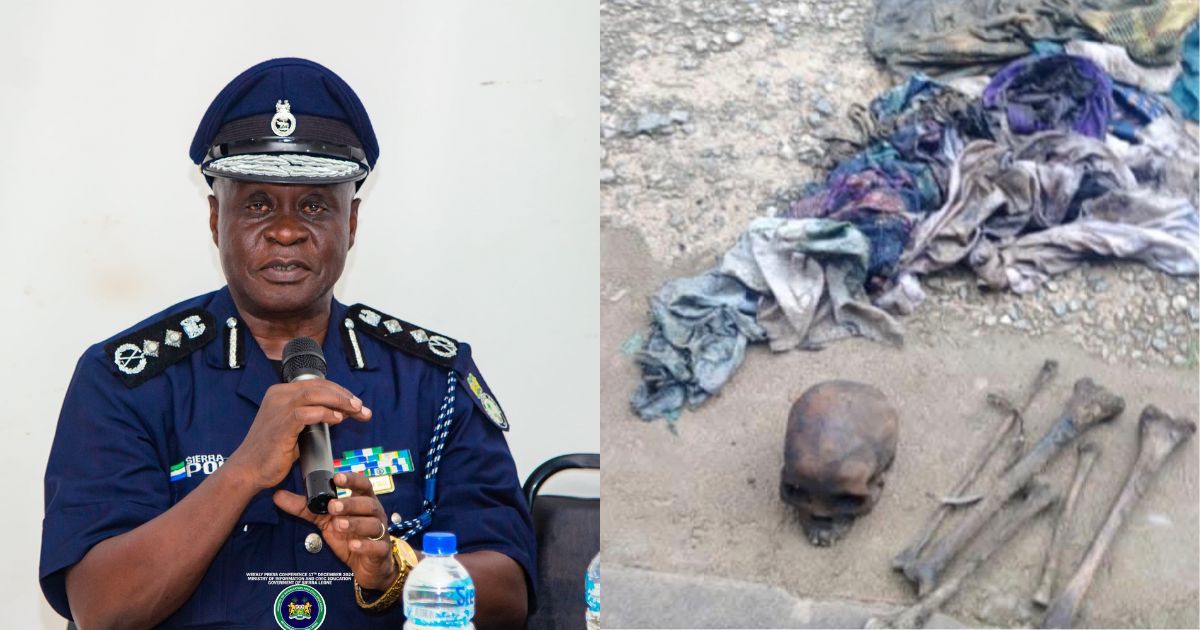
 The High Court of Sierra Leone has been presented with disturbing evidence in a case involving the alleged unlawful possession and use of a human skull in the production of synthetic cannabis, commonly known as kush.
The accused, Augustine Joe Dauda, was on Friday remanded at the Male Correctional Centre by Justice Isata Sellu Tucker after prosecutors tendered a human skull as a key exhibit in the ongoing criminal proceedings.
Dauda is facing two serious charges: unlawful possession of materials intended for the production of illegal drugs, contrary to the National Drugs Control Act of 2008, and unlawful reopening of a grave without medical supervision, in violation of the Public Health Act of 2023.

According to the prosecution, the accused was arrested on 5 December 2025 at the Kent Police Checkpoint in the Western Area, where law enforcement officers allegedly discovered him in possession of a human skull believed to be connected to the manufacture of kush.
Authorities further allege that the skull had been exhumed from a grave in Bureh Village sometime between January and December 2025 without the authorization or supervision of a health officer.
During the court proceedings, Detective Police Constable Julius Abu Kamara identified the skull, which was admitted into evidence as Exhibit A. The officer testified that the accused led investigators to the location where the skull was recovered.
Under cross-examination by defence counsel J.M. Jengo Esq., questions were raised regarding the circumstances surrounding the recovery of the evidence and whether the crime scene had been reconstructed. However, the witness maintained that the accused voluntarily guided police officers to the site.
The prosecution’s second witness, renowned forensic pathologist Dr. Simeon Owiz Koroma, presented findings from a forensic examination conducted on 12 February 2026. His report, admitted as Exhibits A1-A3, concluded that the skull belonged to a female estimated to have been between 35 and 45 years old at the time of death.
Dr. Koroma further informed the court that the skull displayed signs of possible ritualistic manipulation. According to his testimony, the remains were wrapped in black sheepskin, tied with black threads, decorated with cowries and coins, and had paper inserted into the eye sockets. He stated that these features strongly suggested deliberate post-mortem handling and possible ritual use.
The revelations have intensified concerns over the growing links between illegal drug production, ritual practices, and the desecration of graves in Sierra Leone. Human remains have previously been associated with clandestine activities, including secret cult operations and criminal enterprises, prompting calls for stronger enforcement measures.
In refusing bail, Justice Tucker cited the gravity of the offences and the strength of the evidence presented by the prosecution. The matter has been adjourned to 25 June 2026 for further hearing.
The case has sparked widespread public concern and renewed debate about illegal exhumation, the misuse of human remains, and the ongoing threat posed by the production and distribution of synthetic drugs across the country.