

APC Leader Abdul Kargbo Writes President Bio, Urges Action on Drug Trafficking Claims
 Sahid Bangura
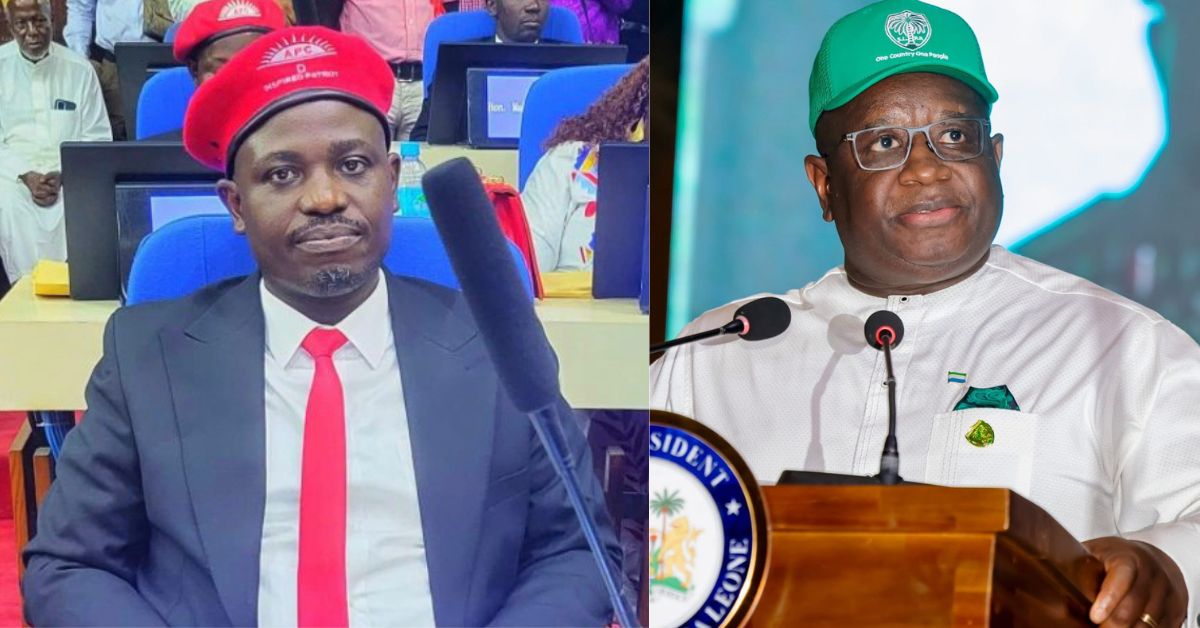
 Parliamentary Leader of the All People’s Congress (APC) Party, Abdul Kargbo has issued a strongly worded open letter to President Julius Maada Bio, expressing grave concern over what he described as the increasing international linkage between Sierra Leone and global narcotics trafficking networks.
In the letter addressed to the President at State House in Freetown, the Opposition Leader said repeated international reports involving Sierra Leone, its ports, territorial waters, airports, and citizens in cocaine trafficking and organized crime investigations were seriously damaging the country’s reputation, security, and economic future.
Kargbo stated that over the last two years, Sierra Leone has increasingly appeared in international criminal investigations, media reports, extradition proceedings, and law enforcement briefings connected to transnational drug trafficking and organized criminal syndicates.

According to the Opposition Leader, the latest development involves the interception of the vessel MV Arconian by Spanish authorities. He cited reports by Spanish newspaper El País and other international media organizations which alleged that the vessel was carrying more than 30 tonnes of cocaine after reportedly departing Freetown on April 22, 2026, en route to Libya.


Kargbo stated that the vessel was intercepted off the coast of Western Sahara by the Spanish Guardia Civil following intelligence reportedly provided by the United States Drug Enforcement Administration and Dutch authorities. He further claimed that the vessel had previously operated under the name Nur Zeynep and reportedly flew Sierra Leone’s flag.
The APC lawmaker also referenced statements made by Spain’s Interior Minister, Fernando Grande-Marlaska, who reportedly disclosed during a press conference that authorities discovered automatic rifles, tactical pistols, ammunition, and heavily armed security personnel onboard the vessel allegedly assigned to protect the cocaine shipment.
Kargbo said the presence of weapons onboard a vessel that had recently departed from Freetown raised “grave national security concerns” for Sierra Leone and exposed possible weaknesses in the country’s maritime surveillance, port inspection systems, intelligence gathering, and border security structures.
He further noted that Spanish authorities had linked the operation to the Dutch-Moroccan criminal organization known as the “Mocro Mafia,” which European investigators have associated with fugitive drug trafficker Jos Leijdekkers, popularly known as “Bolle Jos.”
According to Kargbo, the alleged prolonged presence of Leijdekkers in Sierra Leone has already generated significant international embarrassment and scrutiny for the country.
The Opposition Leader also referenced reports by Reuters, Europol, and other international investigators alleging that Sierra Leone has become an increasingly important transit point for Latin American cocaine destined for European markets.
Kargbo said international concern intensified after reports emerged alleging close associations between Leijdekkers and senior Sierra Leonean officials, leading to heightened diplomatic and international scrutiny. He further cited publications including Reuters and The Guardian, which reportedly raised concerns among European investigators about possible protection networks operating within Sierra Leone.
The APC politician also referred to a previous incident in Guinea involving the interception of a Sierra Leone embassy vehicle allegedly carrying seven suitcases suspected to contain cocaine. He noted that the incident reportedly led to the recall of Sierra Leone’s Ambassador to Guinea for questioning.
Kargbo stated that additional narcotics-related arrests and interceptions involving passengers travelling from Sierra Leone or linked to Sierra Leone routes had been recorded in Hong Kong, India, Sri Lanka, and several European countries.
He argued that the repeated appearance of Sierra Leone in international narcotics investigations was creating a growing perception that the country was becoming deeply connected to global drug trafficking corridors linking Latin America, West Africa, Europe, Asia, and the Middle East.
According to the Opposition Leader, the Government’s silence and limited public response to the allegations were strengthening international suspicions that criminal networks could be operating with institutional protection or political influence.
“The prolonged silence and apparent hesitation by the Government of Sierra Leone in responding firmly and transparently to these matters is creating a dangerous international perception of either indifference, weakness, or worse, complicity,” Kargbo stated in the letter.
He further warned that Sierra Leone risks being classified internationally as a “narco-transit state” or even a “narco-state,” which he said could negatively affect foreign investment, international banking relationships, tourism, trade, diplomatic credibility, visa policies, and development partnerships.
Kargbo also linked the international trafficking concerns to Sierra Leone’s worsening domestic drug crisis, especially the widespread abuse of the synthetic drug known as “Kush.”
Describing the situation as a national emergency, he said communities across Freetown and provincial towns were experiencing rising addiction, mental instability, criminal activity, and social breakdown among young people.
In a personal account contained in the letter, Kargbo revealed that his own nephew had become addicted to drugs shortly after enrolling at Milton Margai Technical University.
He explained that despite paying the student’s tuition fees and supporting his education, the young man allegedly became involved in drugs within weeks of beginning classes and later dropped out of university.
“Today, he has dropped out of university and now lives under the bridge at Aberdeen along with other young people struggling with addiction,” Kargbo wrote, adding that the experience demonstrated that “none of our families are immune from this self-inflicted menace.”
The Opposition Leader maintained that the issue goes beyond politics and concerns the future security and international standing of Sierra Leone.
He urged President Bio to act “immediately and decisively” to address the growing allegations and prevent what he described as irreversible damage to the image and future of the country.
Kargbo concluded by warning that countries do not become narco-states overnight, but gradually through “silence, institutional compromise, political protection, corruption, and the normalization of criminal infiltration into public life.”
As of press time, the Government of Sierra Leone had not officially responded to the concerns raised in the Opposition Leader’s open letter.