

 Post a comment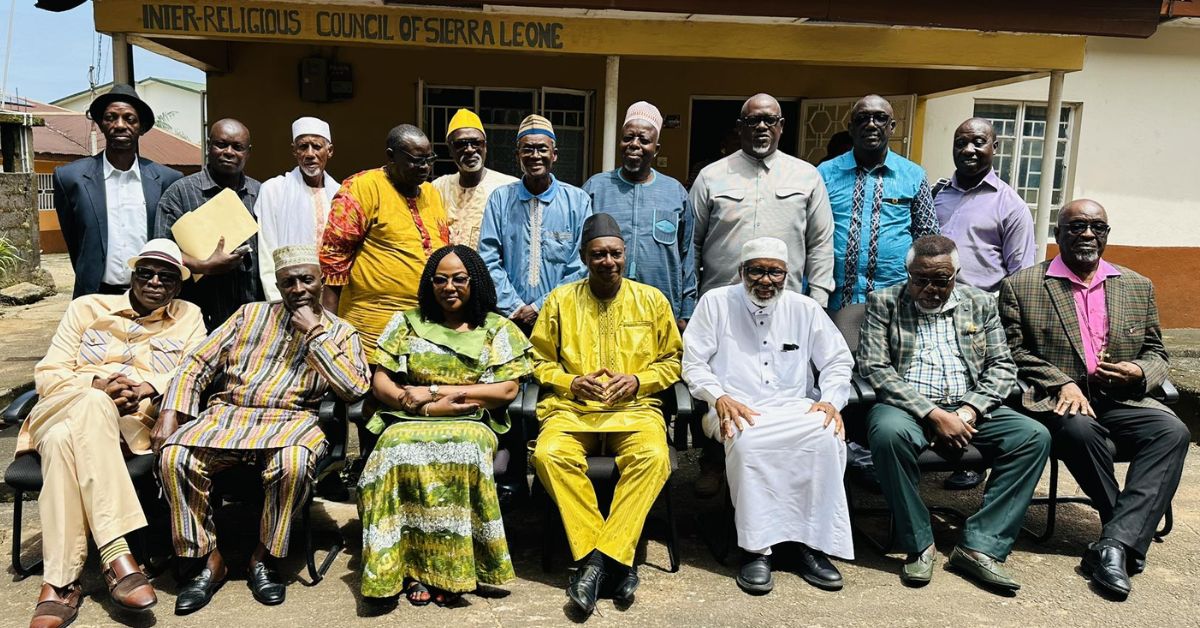
On Thursday, 9 October 2025, Professor Alpha Tejan Wurie, Adviser to the President on Human Capital Development, and Mrs. Isatu J. Kabba, Gender Adviser to the President, met with the leadership of the Inter-Religious Council at their Freetown headquarters to discuss strategies for inclusive governance and national cohesion.
Professor Wurie presented a strategic decentralisation framework aimed at promoting equity, efficiency, and social cohesion across Sierra Leone.
Key recommendations included appointing regional deputy ministers in basic education, health, and agriculture; relocating key ministries to regional capitals; establishing universities and factories in each region; improving housing and energy access; and creating inter-regional transport authorities.
He also proposed expanding government ownership in mining companies and establishing regional diplomatic presences to boost trade and investment.
“These recommendations are intended for discussion with religious leaders to solicit social input and support,” Professor Wurie said, emphasizing the importance of joint action by government, faith leaders, and public institutions to strengthen the nation’s governance and social contract.
The Adviser highlighted that Sierra Leone’s inherited British governance framework has created service delivery imbalances that disadvantage rural communities, contributing to economic disparities and political discontent.
He referenced the President’s August 2025 call for political reforms to unite the nation and draw contributions from all regions, faiths, and backgrounds.
Professor Wurie also cited the 2004 Local Government Act as the legal basis for decentralisation and urged urgent redistricting and reconfiguration in Freetown to better connect urban and regional areas.
He assured that the Presidency’s Advisers’ office will continue engaging the Inter-Religious Council and other stakeholders as the framework and proposals are refined.


