

 Post a comment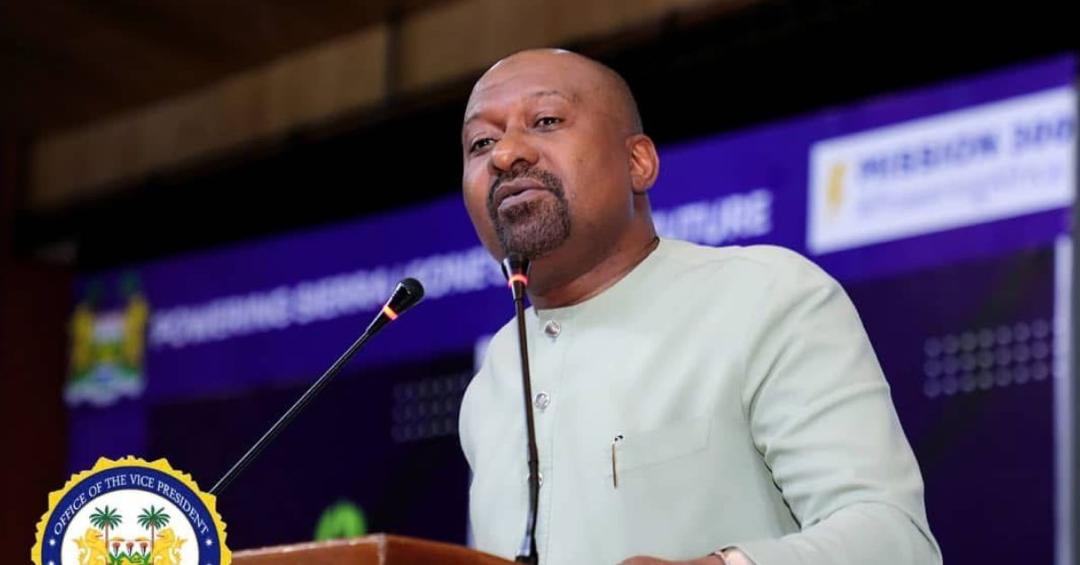
The Vice President of the Republic of Sierra Leone, Dr. Mohamed Juldeh Jalloh, emphasized that human development and equitable energy access remain central to building climate resilience and advancing national progress.
Speaking on the second day of the Third National Dialogue on Climate Resilience and Energy Transition (CRET 2025) at the Bintumani Conference Center, Dr. Jalloh said the government is committed to expanding reliable and affordable energy as a foundation for sustainable development.
“Energy transformation is not just a technical process; it is a human development imperative that improves the quality of life for every Sierra Leonean,” he stated, expressing gratitude to conference organizers and development partners for their continued collaboration.
Dr. Jalloh highlighted tangible gains in education and healthcare, linking them directly to increased energy access and investment. He revealed that the government has allocated over 20% of the national budget to human development initiatives, leading to higher school enrollment and reduced infant mortality.
“Our energy transformation is a pathway to healthier and better-educated communities,” he affirmed, adding that a strong human capital base is vital for enhancing resilience to climate change.
The Vice President noted that agriculture remains the backbone of Sierra Leone’s economy and called for expanded energy infrastructure to boost productivity, processing, and industrial growth.
“Energy is the gateway to economic transformation, driving value addition, industrialization, and job creation,” he said, inviting the private sector to play a more active role in the country’s clean energy transition.
Concluding his remarks, Dr. Jalloh expressed optimism about the country’s energy trajectory, citing progress in national electricity access, which has risen from 16% in 2018 to nearly 36% in 2025. He reaffirmed the government’s determination to extend electricity to all communities, particularly in rural areas.
“This dialogue is not just about policy, it’s about people’s lives,” he emphasized. “We will act on the recommendations emerging from this conference to secure a sustainable and inclusive energy future for Sierra Leone.”
The dialogue proposed key measures to accelerate energy transition, including:
Enhancing governance through private sector participation models such as Build-Operate-Transfer (BOT), with measurable targets for loss reduction and service reliability.
Harmonizing regional electricity markets and establishing a national scoreboard to track progress toward 2030 energy goals:
78% national energy access
52% reliable supply
1.12 GW installed capacity
25% clean cooking access
$1.4 billion in credit investments


