

 Post a comment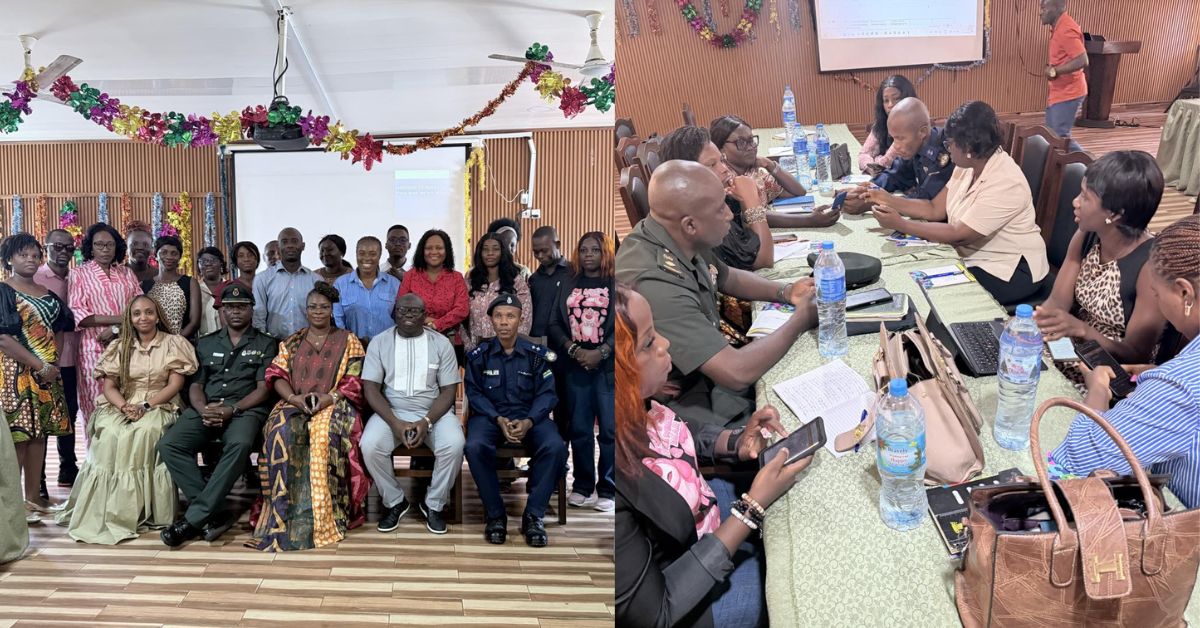
The Ministry of Gender and Children’s Affairs (MoGCA), in collaboration with Ministries, Departments and Agencies (MDAs), has concluded a two-day stakeholders’ workshop to review the Draft Gender Accountability Framework designed to support reporting on the Gender Equality and Women’s Empowerment (GEWE) Act.
The workshop brought together senior government officials, policy experts and representatives from various MDAs to provide technical inputs and recommendations ahead of the framework’s validation and presentation to Parliament.
Key officials in attendance included the Minister of Gender and Children’s Affairs, Dr. Isata Mahoi; Chief Director Charles Vandi; Deputy Chief Director Marian Goodie Sowonie; Director of Planning and Policy Ibrahim Kamara; Deputy Directors Bamie J. Sesay and Harry Mahoi; as well as Assistant Directors Josef Dennis Koroma and Foday Sesay, alongside representatives from partner institutions.
Chairing the session, Harry Mahoi welcomed participants and commended their commitment, stressing the importance of shared ownership in strengthening the Gender Accountability Framework.
Presenting the purpose and objectives of the workshop, Ibrahim Kamara highlighted the framework as a roadmap for effective implementation and evidence-based reporting on the GEWE Act. He noted its alignment with national legislation and international best practices, including UN gender accountability principles, and outlined features such as compliance benchmarks, scorecards, and women’s empowerment indicators. These include employment opportunities, gender parity, and achievement of the statutory 30 percent female representation in decision-making across Parliament, local councils and institutions.
Delivering the keynote address, Dr. Isata Mahoi emphasized the framework’s role in advancing women’s empowerment, gender parity and inclusive governance in both the public and private sectors. She noted that Sierra Leone is the first country to pilot the tool, describing it as a major milestone in gender mainstreaming and socio-economic inclusion. The Minister also referenced ongoing gender justice reforms and announced that the framework will be submitted for presidential approval following validation, before being tabled in Parliament.
The workshop featured intensive group discussions on provisions of the GEWE Act and thematic indicators for targeted institutions, including employment, education and training, access to financial services and gender-responsive budgeting. Group presentations concluded the first day’s activities.
Day two focused on follow-up deliberations coordinated by Assistant Director Bamie J. Sesay, covering access to financial services, regulatory frameworks, reporting requirements, capacity-building for staff, women’s representation in leadership positions, participation in decision-making, and strategic partnerships to support implementation of the GEWE Act.
The engagement ended with renewed commitments from MDAs to strengthen support for women’s empowerment and gender equality across all sectors. Agreed next steps include validation of the draft framework, capacity-building for gender focal points, submission of MDA reports, and the eventual endorsement of the framework to guide nationwide implementation of the GEWE Act.


