

 Post a comment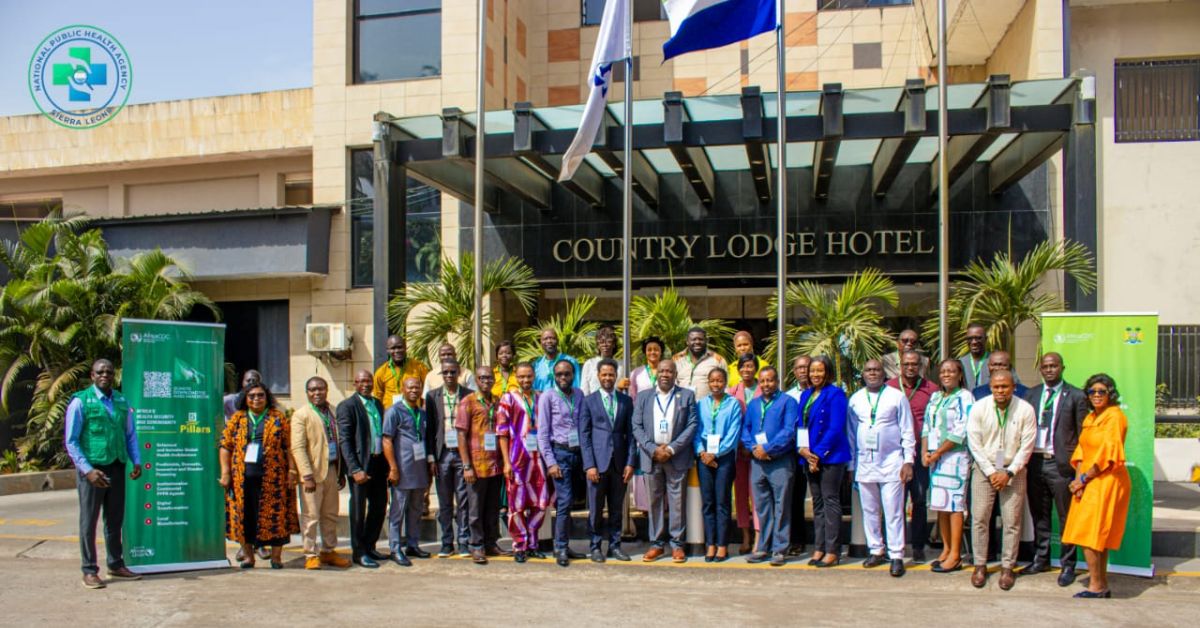
The National Public Health Agency (NPHA), in partnership with the Africa Centres for Disease Control and Prevention (Africa CDC), concluded a three-day consultative workshop aimed at advancing ISO 9001 accreditation across Sierra Leone’s public health institutions. Held at Country Lodge, the workshop brought together directors, managers and coordinators to build institutional capacity, agree certification milestones, and set roles for the accreditation process.
The program, held from 3–5 March 2026, introduced participants to the principles and benefits of ISO 9001 quality management systems, and provided practical tools to translate those principles into measurable action. Organisers emphasised a results-oriented approach: participants received a gap analysis framework and a progress tracker to monitor implementation and ensure accountability throughout the certification journey.
Dr Prof. Foday Sahr, Executive Director of NPHA, opened the workshop by underscoring the role of quality management in building resilient health institutions and reaffirming NPHA’s commitment to achieving ISO 9001 certification.
Dr Clemens, Africa CDC Representative in Sierra Leone, highlighted the importance of regional standardisation and shared lessons from successful certification efforts across the continent.
Chief facilitator Dr Eric N. Ikoona, who framed ISO accreditation as a transformative process that enhances institutional credibility, fosters stakeholder trust, and aligns operations with globally recognised standards, led sessions. Dr Ikoona emphasised the centrality of Standard Operating Procedures (SOPs) for ensuring consistency, accountability and efficiency in service delivery.
Participants engaged in interactive exercises designed to translate theory into practice. A case study using the 5S methodology enabled teams to identify operational inefficiencies and apply ISO 9001 principles to real-world scenarios. The workshop also introduced a progress tracker to help institutions monitor milestones and a gap analysis framework to prioritise corrective actions.
The workshop concluded with a consensus on next steps for the accreditation process, including timelines, assigned responsibilities, and mechanisms for ongoing monitoring. Organisers stressed that ISO 9001 certification is not merely a technical requirement but a cultural shift: quality must become a habit, embedded across all levels of public health practice.
By strengthening institutional systems, standardising procedures, and fostering collaboration with regional partners such as Africa CDC, NPHA aims to elevate service delivery, enhance stakeholder confidence, and position Sierra Leone’s public health sector to meet international benchmarks.
NPHA and its partners will continue to roll out implementation activities, using the tools and frameworks introduced during the workshop to guide progress toward certification. The agency has committed to sustained capacity building, regular monitoring, and stakeholder engagement to ensure that the accreditation process delivers lasting improvements to public health systems and outcomes in Sierra Leone.


