Post a comment
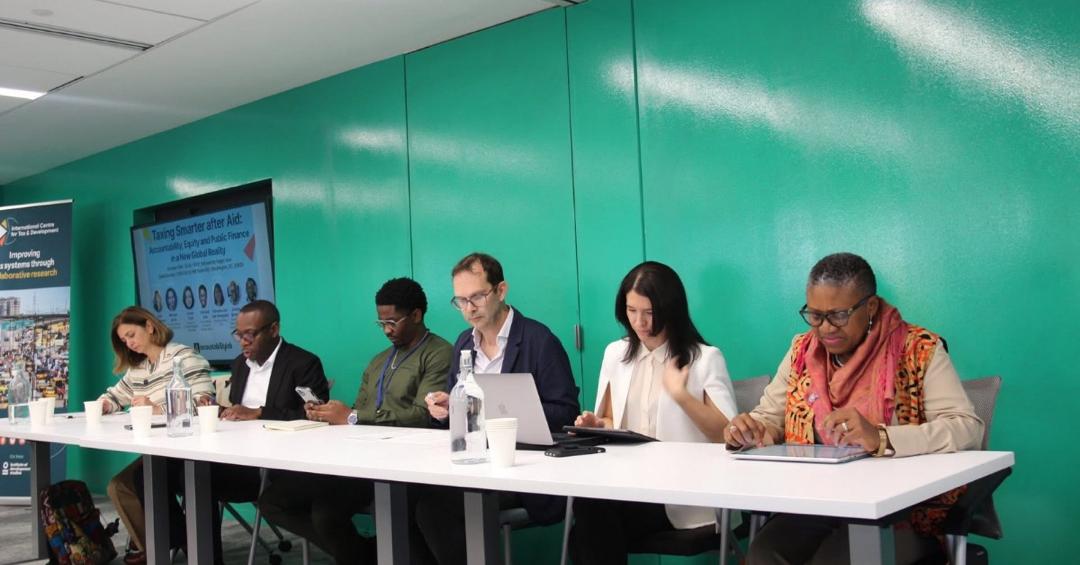
Sierra Leone’s Commissioner General of the National Revenue Authority (NRA), Mrs. Jeneba J. Bangura, delivered a keynote address at the high-level global dialogue “Taxing Smarter After Aid: Accountability, Equity and Public Finance in a New Global Reality,” held at the OpenGov Hub in Washington, D.C., during the IMF–World Bank Annual Meetings.
In her remarks, Mrs. Bangura highlighted the sharp decline in international financial support to Sierra Leone, particularly from the World Bank, whose budget assistance fell from about one hundred million dollars to forty million dollars in 2024, with no allocation expected for 2025. She noted that similar trends were observed with other partners such as the FCDO, while the European Union has only recently resumed limited support.
She explained that these reductions often occur after the national budget is approved, creating fiscal strain and forcing the government to reprioritize spending.
“When aid is cut after the budget is passed, we are forced to rearrange our spending priorities. It creates tremendous pressure on the national budget and increases the demand for more domestic revenue,” she said.
In response to these challenges, Sierra Leone has intensified domestic revenue mobilization, with targets increasing by 46% in 2024 and projected to grow by a further 30% in 2025. She added that the Ministry of Finance now conducts daily monitoring of revenue collection, replacing the previous quarterly oversight system.
“The pressure is relentless daily, but even under this pressure, we must maintain integrity and coherence in our reforms,” she noted.
Commissioner Bangura outlined the country’s ongoing tax policy and administrative reforms, including the Medium-Term Revenue Strategy, the Finance Act, and the introduction of digital systems such as the Integrated Tax Administration System (ITAS), ASYCUDA World, the Electronic Cash Register (ECR), and the Fuel Marking Program for excisable goods. She said these initiatives have enhanced compliance, improved filing rates, and strengthened taxpayer service delivery contributing to fiscal sustainability and independence.
She acknowledged that fiscal reforms are complex and require continuous adaptation, noting that the decline in donor funding underscores the importance of domestic resource ownership. Mrs. Bangura reiterated the NRA’s commitment to accountability, transparency, and stronger partnerships that promote fair and effective tax administration.
“Even with limited aid, our focus must remain on reforms that yield results, strengthen trust, and ensure that every citizen and business contributes their fair share,” she emphasized