

 Post a comment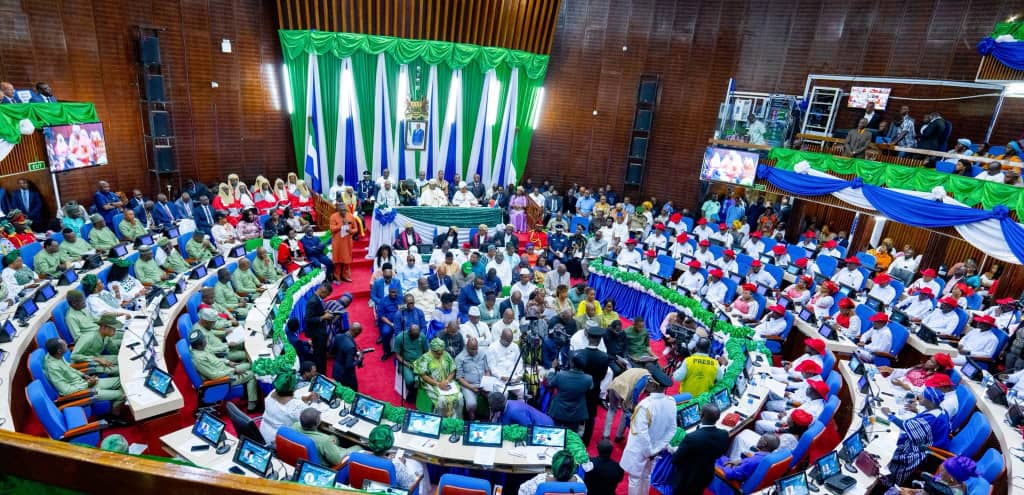
The Office of the Clerk of Parliament has announced that a critical pre-legislative hearing on the Constitution of Sierra Leone (Amendment) Act, 2025, is scheduled for Monday, 26 January 2026.
The session, which will take place at 10:00 a.m. in Committee Room One of the Parliament Building at Tower Hill, marks a significant step in the legislative process for a bill that has generated intense debate among political leaders and civil society.
According to the Clerk’s office, the hearing is part of the formal consultative process required before the Bill is introduced for legislative consideration. Members of Parliament and the general public have been invited to attend, with a specific advisory for lawmakers to ensure punctuality.
The upcoming hearing will scrutinize a legislative package that proposes fundamental changes to the 1991 Constitution. While Attorney General and Minister of Justice Alpha Sesay has previously described the process as an effort to modernize the country’s governance framework before the next general election, opposition figures and legal experts have raised alarms over several key provisions.
The Bill consolidates recommendations from the recent Tripartite Committee and the government’s White Paper on electoral reforms. Among the most discussed proposals are:
Presidential Removal by Party: A new clause that would allow Parliament to remove a sitting President or Vice-President if they are expelled from their political party.
Fixed Election Dates: A proposal to fix parliamentary elections on the second Saturday of November every five years, replacing the current flexible window.
Electoral Thresholds: A controversial amendment to lower the threshold for a first-round presidential victory from 55% to a simple majority combined with a district-level spread.
Proportional Representation (PR): Formalizing the shift from a constituency-based system to Proportional Representation, a move the Institute for Legal Research and Advocacy for Justice (ILRAJ) warns lacks sufficient clarity and safeguards.
Independent Candidates: Allowing independent candidates to run for the presidency for the first time, though subject to financial and community support requirements that critics argue may be exclusionary.
The hearing comes amidst heightened political tension regarding the amendments.
On January 18, Femi Claudius-Cole, Leader of the Unity Party, warned that the Bill represents a “serious threat to Sierra Leone’s democratic future.” She argued that provisions allowing for the deregistration of parties that fail to win elections and the introduction of complex legal timelines for petitions could weaken opposition voices and “shrink political space.”
“Confusion undermines elections as much as fraud does,” Claudius-Cole stated, urging lawmakers to reconsider clauses that grant excessive discretionary powers to regulatory bodies.
Similarly, the ILRAJ has expressed concern that the proposed removal of the President based on party status could destabilize the executive branch. The legal group has recommended that any such change be subject to a national referendum rather than a simple parliamentary vote, echoing the stance of the late Justice Cowan’s Constitutional Review Commission.
The government maintains that the reforms are necessary and feasible. Earlier this month, Attorney General Sesay confirmed that the administration aims to have a “new constitution” in place before the end of President Julius Maada Bio’s tenure. He noted that the drafting process had been separated to expedite electoral reforms, with the intention of presenting a single “Yes or No” question to the public in a future referendum regarding a wholly new constitution.
Monday’s hearing will be the first major opportunity for MPs and the public to directly interrogate these proposals in a legislative setting.


