

 Post a comment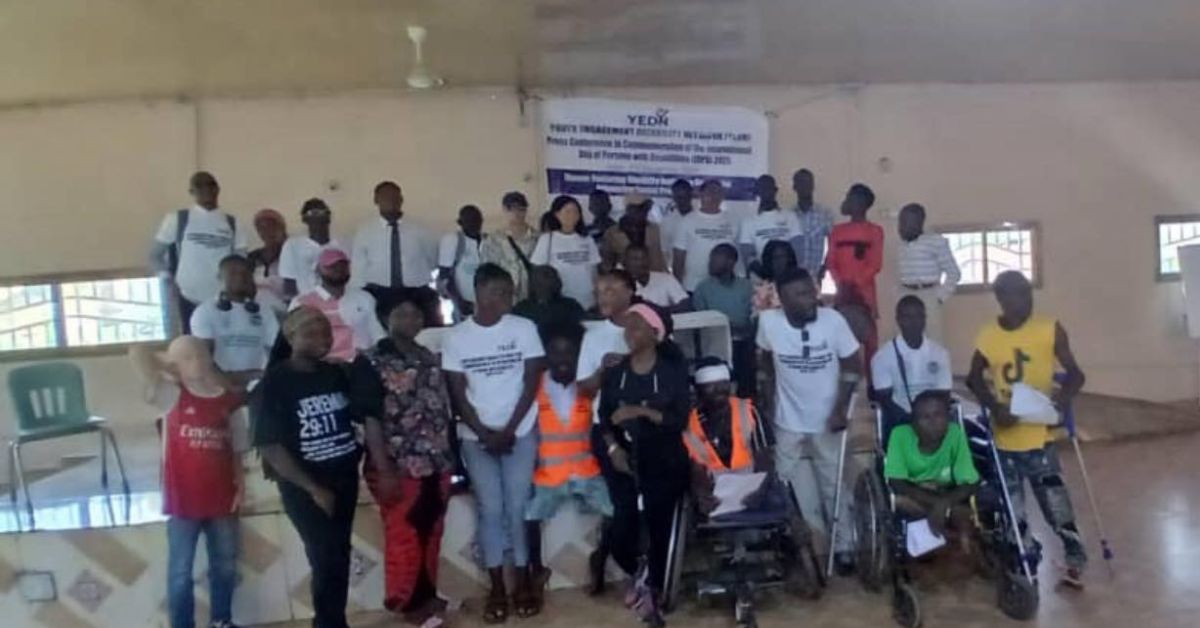
Disability rights advocates renewed calls for systemic inclusion in education and employment, urging government to allocate 5% of scholarships to students with disabilities on the International Day of Persons with Diabilities (IDPD).
The commemoration, held at New Sela Spot, Kingharman Road, was themed “Fostering Disability-Inclusive Society for Advancing Social Progress.” Speaking at the event, Executive Director of the Youth Engagement Disability Network (YEDN), Hamid Mo-Kamara, said that despite the Sustainable Development Goals (SDGs) prioritising inclusive education under Goal 4, Sierra Leone remains far from achieving that vision.
“Education stands as one of the pivotal areas where persons with disabilities suffer the most. Past and present governments have deliberately barred us from accessing quality education,” Mo-Kamara said.
He condemned recent demands by the University of Sierra Leone – including Fourah Bay College (FBC), the Institute of Public Administration and Management (IPAM), and the College of Medicine and Allied Health Sciences (COMAHS) – requiring disabled students to pay Le 3,000 in graduation fees, despite Section 14(1) of the Persons with Disability Act of 2011, which exempts them from tuition fees at recognised institutions.
Mo-Kamara revealed that only 21 students with disabilities graduated this year across the three colleges. He stressed that the government’s flagship Free Education Programme cannot be considered genuine unless it is inclusive. “They cannot be preaching quality education while excluding persons with disabilities. Inclusion is the true test of quality,” he said.
Beyond education, Mo-Kamara cited Section 17 of the Disability Act, which guarantees equal access to employment, yet noted that qualified persons with disabilities continue to face discrimination in the job market.
Delivering the keynote, James Abraham George, Senior Administrative Assistant for Special Needs at FBC, categorised the challenges into societal attitudes and structural barriers. He emphasised that stigma, discrimination, and inaccessible infrastructure that remain widespread.
“Acceptance, participation, and inclusion are the three pillars of disability rights. If we ourselves do not accept our disability, society will not accept us. Once we accept, we can participate, and through participation, we must be included,” George said.
He acknowledged progress at FBC, including wheelchair-accessible facilities, but noted that many public and private buildings in Freetown still lack ramps and basic accessibility features. George urged institutions to adopt a “human face” approach, recognising the rights and contributions of persons with disabilities rather than focusing on their limitations.
Advocates expressed disappointment that government institutions invited to the programme failed to attend, describing the absence as “indifference” to their voices.
The International Day of Persons with Disabilities is observed worldwide to reflect on progress, highlight challenges, and re-energise efforts toward equality. In Sierra Leone, campaigners insist that without inclusion, the nation’s development goals remain incomplete.


