

 1 Comment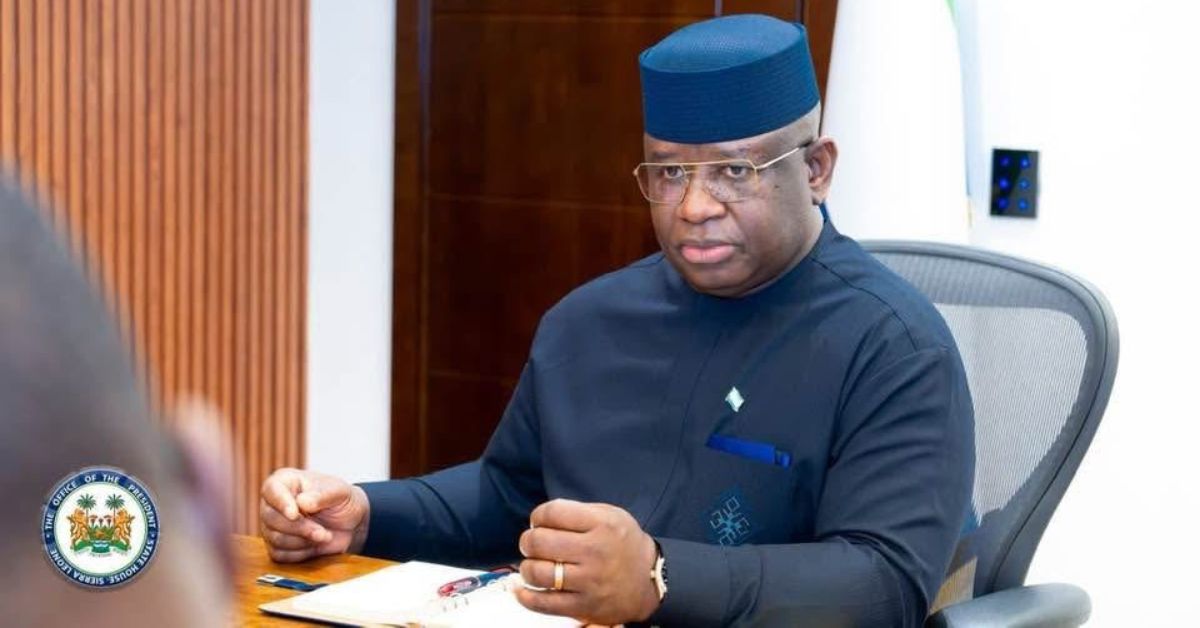
President Julius Maada Bio has announced substantial achievements in Sierra Leone’s education sector, notably the training of over 20,000 teachers, marking a major milestone in the country’s human capital development.
He reaffirmed his government’s commitment to advancing this agenda, which is a key component of the nation’s “Big Five” Game Changers initiative. Additionally, President Bio highlighted the addition of 1,500 classrooms to the country’s educational infrastructure, aimed at enhancing the quality of learning.
“In our efforts to promote digital literacy, we have trained over 20,000 teachers and constructed 1,500 new classrooms,” President Bio stated. “Education remains at the heart of our social contract,” he added.
The President further emphasized progress in restoring educational opportunities for Sierra Leone’s youth, particularly those who have yet to access formal and university education. He highlighted initiatives in technical, vocational education, and training (TVET), designed to strengthen the country’s middle-skilled workforce. Several technical centers and universities have been established, with ongoing certification programs for informal workers across the nation.
Furthermore, the development of a National Research and Innovation Policy aims to elevate Sierra Leone’s university system, fostering industrial growth and economic development.
On gender equality and women’s empowerment, President Bio reaffirmed his government’s commitment to fully implementing the Gender Equality and Women’s Empowerment (GEWE) Act. He noted that women’s representation is steadily increasing, supported by new legislation aimed at ending child marriage and protecting children, especially girls. The government has also expanded social protection programs, reaching over 84,000 elderly citizens and 11,000 vulnerable women nationwide.
“Radical inclusion is leading to increased participation of women and girls in both formal and informal education schemes,” President Bio emphasized. “We are implementing the GEWE Act, including new registration processes to prohibit child marriage.”
He further highlighted that over 250 young women have received training in digital business, while hundreds of youths are benefitting from skills development in welding, mechanics, and entrepreneurship.
Lastly, President Bio underscored the expansion of internet access to over 10,000 students, the digitization of government services, and the launch of Sierra Leone’s first national digital identity platform.
He stressed that technology is no longer a luxury but a necessity for job creation and effective governance, positioning Sierra Leone on a path toward a more digital and inclusive future.


20,000 teachers training celebration, while the police mourn the passing of police officers who died 😳 in August 10, 2022.
Which one is a priority?