

Sierra Leonean Scholar at Peking University Calls for Smarter Engagement with China
 Aaron Parker
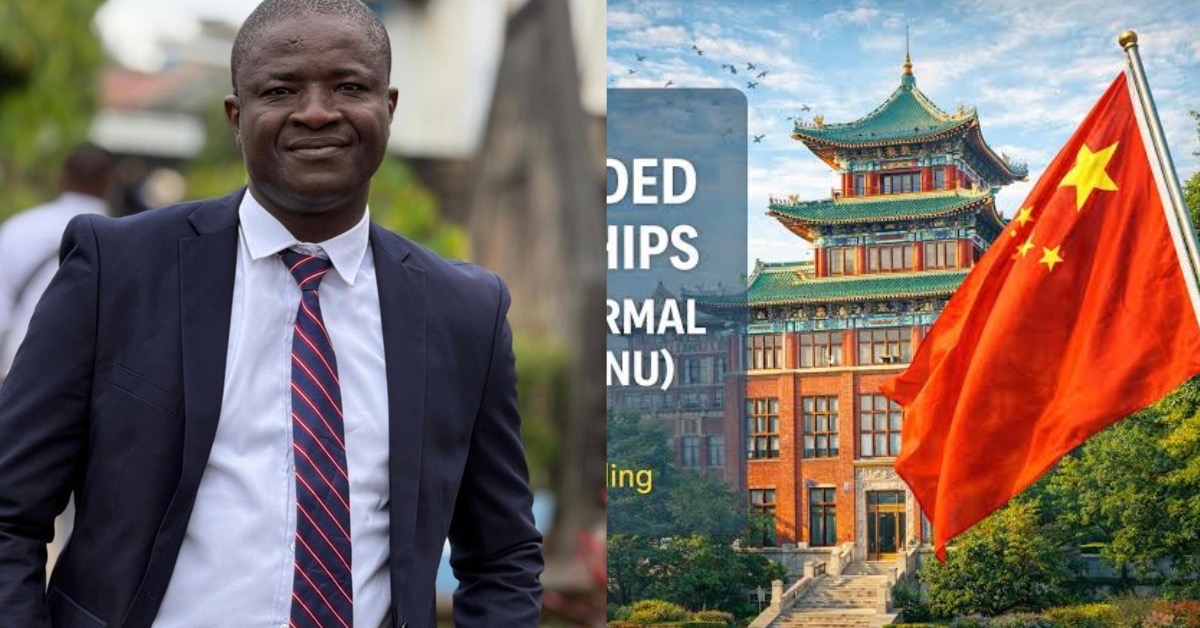
 A Sierra Leonean PhD candidate at Peking University has described China’s Government Scholarship programme as a transformative platform for academic advancement and long-term development cooperation between Sierra Leone and China.
Joseph Momoh Conteh, a doctoral researcher in National Development Studies at Peking University, shared his academic journey and experiences in an extensive interview, highlighting how the programme is shaping both his research and professional work in Sierra Leone’s justice and governance sectors.
Conteh, who began his PhD in 2024, is also serving as Director of Administration and ICT Specialist at Sierra Leone’s Justice Sector Coordination Office. His doctoral research focuses on China’s role in Sierra Leone’s development aid coordination, examining how Chinese cooperation is integrated into national development planning systems.

Academic journey across multiple countries


Conteh’s academic background spans several countries and institutions. He holds two MBA degrees—one in Management Information Systems from UNICAF University and another in Operational Management from Dr. D. Y. Patil Vidyapeeth University in India—as well as a Master of Public Administration from Sun Yat-sen University in Guangzhou, China.
He said his exposure to Chinese higher education through his master’s programme strongly influenced his decision to pursue doctoral studies in China.
“China has done the work I want Sierra Leone to learn from. In four decades, the country lifted hundreds of millions out of poverty and built a planning system with execution discipline at its core,” he explained.
Conteh added that studying at Peking University places him at the centre of policy research on Sino-African cooperation, which directly aligns with his work in Sierra Leone.
Navigating the Chinese Government Scholarship
Conteh credited the China Scholarship Council programme for providing full academic support, including tuition, accommodation, monthly stipend, and medical insurance.
He described the application process as rigorous, involving coordination between the online scholarship portal, the Chinese Embassy in Freetown, and Sierra Leone’s Ministry of Technical and Higher Education.
Despite challenges in aligning timelines and securing supervisory approval, he said prior academic exposure in China and a well-defined research proposal strengthened his application.
Life and study at Peking University
Reflecting on his arrival in Beijing, Conteh described the transition as both overwhelming and inspiring, particularly due to the scale and organisation of the city and university environment.
He noted that doctoral training at Peking University demands high academic discipline, engagement with Chinese policy literature, and active participation in advanced research seminars.
According to him, the academic culture is highly structured and intensive, with strong emphasis on independent research, policy engagement, and continuous output.
Conteh also highlighted access to extensive research facilities, including policy archives, academic databases, and statistical tools, which he said have significantly strengthened the quality of his doctoral work.
Language and cultural adaptation
While acknowledging the challenges of the Mandarin language, Conteh said he has achieved basic working proficiency, supported by prior exposure during his studies at Sun Yat-sen University.
He explained that research is primarily conducted in English, though access to Chinese policy documents and fieldwork requires gradual language development.
“Mandarin is a long-term investment. It opens doors that English alone cannot,” he said.
Cultural experience and personal transformation
Beyond academics, Conteh said living in China has reshaped his worldview, particularly regarding governance discipline, infrastructure efficiency, and long-term national planning.
He contrasted China’s systems with those in Sierra Leone, noting differences in execution capacity, institutional discipline, and policy continuity.
However, he also emphasised that Sierra Leone must adapt lessons selectively rather than replicate foreign systems wholesale.
Strengthening Sierra Leone–China relations
Conteh described China’s scholarship programme as a strategic tool for building Sierra Leone’s human capital and deepening bilateral relations.
He argued that returning scholars serve as “bridges” between both countries, improving communication, investment understanding, and policy cooperation.
He also noted that Sierra Leonean scholarship recipients are concentrated in fields such as engineering, ICT, public administration, and medicine, though he identified gaps in energy systems, advanced manufacturing, and transport planning.
Recommendations for improvement
The scholar proposed several reforms to strengthen the scholarship system in Sierra Leone, including:
* Publishing annual priority study areas aligned with national development plans
* Introducing structured pre-departure orientation for students
* Establishing a national returnee database
* Creating job placement pathways for returning graduates
* Enhancing coordination between government institutions and scholarship beneficiaries
He also recommended stronger follow-up mechanisms between scholarship recipients, the Sierra Leone government, and the Chinese Embassy to ensure better integration of skills upon return.
Looking ahead
Conteh confirmed his intention to return to Sierra Leone after completing his PhD, stating that his research is designed to directly support national development planning and justice sector reform.
He outlined potential future roles in senior public administration, university teaching, and advisory work on China–Africa cooperation.
“Sierra Leone is not a passive recipient of Chinese cooperation. We have choices about what to adapt and how to apply it,” he said.
Conclusion
Conteh’s experience reflects the broader impact of China’s scholarship programme in shaping a new generation of Sierra Leonean professionals with global academic exposure and development-focused expertise.
As he continues his doctoral research at Peking University, his work is expected to contribute to ongoing discussions on governance reform, aid coordination, and Sierra Leone’s evolving partnership with China.
The need for advocacy in China – Africa relations cannot be understated. Sierra Leone should seize this opportunity through its beneficiaries of Chinese education to promote bilateral cooperation through change and strategic foresight. As the Chinese proverb goes, “those that drink water must not forget its source” Thought provoking article! thanks for publishing.