

Sierra Leone Remembers 2014 Ebola Outbreak as Government Boost Preparedness Against Fresh Cases
 Osman Tolo Sesay
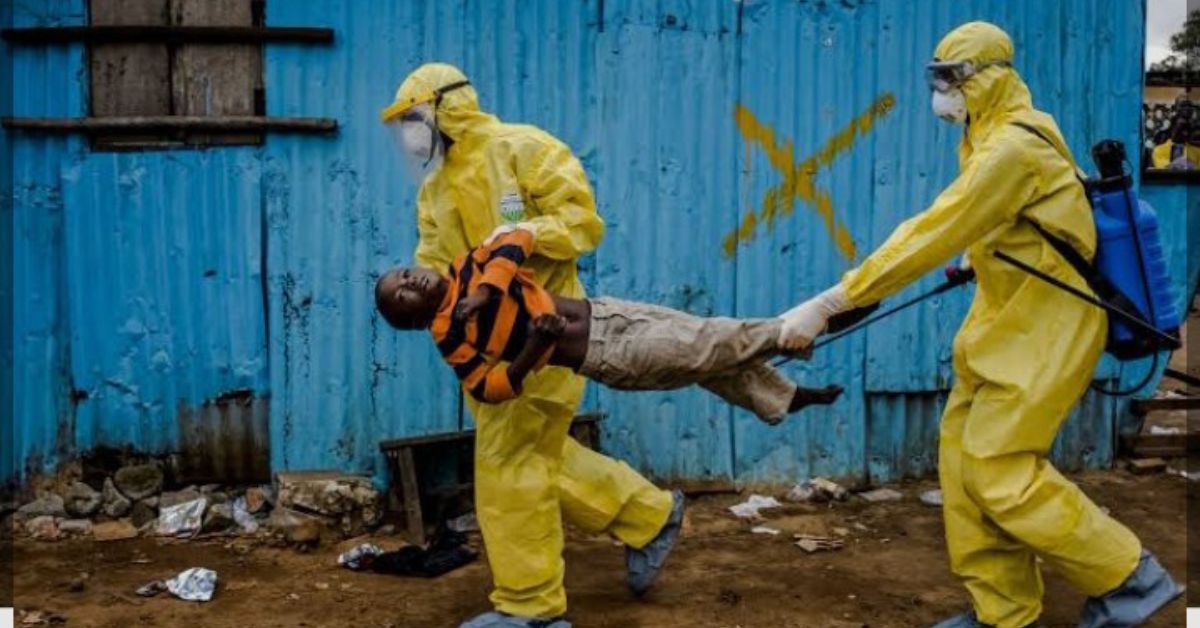
 Sierra Leone continues to contend with the legacy of the 2014–2015 Ebola Virus Disease outbreak as health authorities strengthen preparedness measures in response to renewed cases in the Democratic Republic of Congo.
The Ebola virus entered Sierra Leone through Kailahun District, a border region with Guinea and Liberia, and escalated into a national public health emergency. The World Health Organization declared the outbreak over on November 7, 2015. According to WHO, Sierra Leone recorded 8,704 infections and 3,589 deaths, including 221 healthcare workers who died in the line of duty.
Across West Africa, data compiled by the U.S. National Library of Medicine, National Center for Biotechnology Information, indicate that more than 28,600 people were infected and 11,325 died, making it the deadliest Ebola outbreak documented to date.

For survivors, the impact extended beyond the clinical phase of the disease. Yussuf Kabba, an Ebola survivor from Allentown in eastern Freetown, described his experience beginning on October 6, 2014. Kabba said his relative, a medical doctor, contracted the virus after repeated misdiagnoses. After the doctor’s death, Kabba began experiencing symptoms including severe headaches, joint pain, and vomiting.
“I looked at the ambulance like a death trap,” Kabba said. “It had taken away family members and friends who never returned.”
He was taken to the Waterloo Newton Holding Center, where he recalled vomiting blood and having diarrhea simultaneously. “I was hopeless,” he said. He also recalled a teenage girl begging for help, which he was too weak to answer. Kabba said he found hope after seeing other patients preparing for discharge.
On November 29, 2014, Kabba was discharged as one of the few who survived, while he said six of his family members died.
Kabba said recovery did not end the ordeal. He reported experiencing stigma in his community, including at places of worship. “At the mosque, I turned and realized no one was around me,” he said. He added that friends stopped answering his calls and that whispers of fear followed him. “For him, Ebola was not just a disease; it was a social wound that lingered long after recovery,” according to his account.
Health authorities acknowledge that Sierra Leone’s current Ebola readiness score stands at 51%, below the World Health Organization’s recommended benchmark of 80%.
Minister of Health Dr. Austin Demby has outlined increases made to preparedness capacity. The National Public Health Agency (NPHA) has reassured citizens that Sierra Leone remains Ebola-free, while stating that preparedness is being strengthened in light of recent outbreaks in the Democratic Republic of Congo and Uganda.
The DRC’s latest outbreak, reported in May 2026, involves the Bundibugyo strain, with hundreds of suspected cases in Ituri Province.
For survivors like Kabba, news of renewed cases is unsettling. “I don’t want to experience this again,” he said. “I lost six family members. I saw people die in front of me. We must learn from the past and be prepared.”
Health officials maintain that the 2014–2016 outbreak highlights risks associated with weak health systems, delayed responses, and misinformation, while also demonstrating resilience among survivors and response teams.