

Sierra Leone Holds 2026 National Labour Conference Focused on Digital Era, Decent Work
 Osman Tolo Sesay
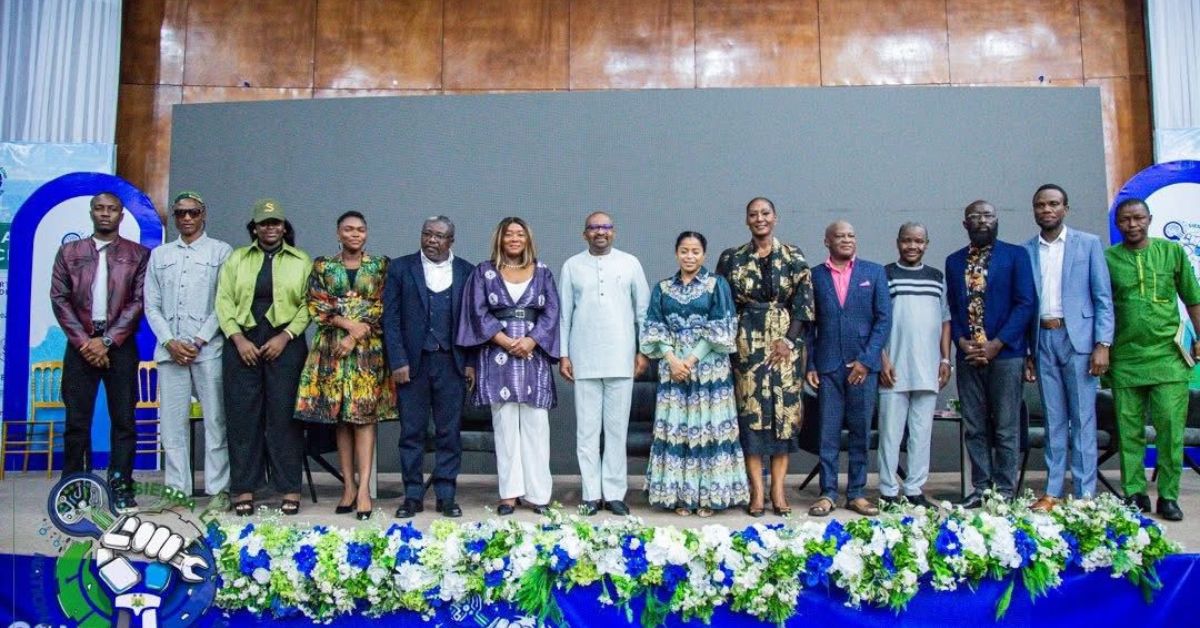
 Government officials, labour unions, employers, and international partners convened for the 2026 National Labour Conference and Social Dialogue ahead of May Day celebrations, reaffirming commitments to labour reforms and decent work in Sierra Leone.
Deputy Minister of Employment, Labour and Social Security, Hon. Mohamed Lansana Dumbuya, served as chairman of the event. He described the gathering as a milestone in advancing labour governance and social dialogue. Dumbuya noted that the first National Labour Conference was held in 2025 under Minister Mohammed Rahman Swaray, aligning with President Julius Maada Bio’s 2018 and 2023 development agenda, which identifies the workforce as a key asset for national development.
Dumbuya said that when the current administration assumed office in 2018, many employment laws were outdated or poorly implemented. Since then, he said, the government has ratified International Labour Organization conventions on migrant workers and occupational health and safety.

Parliament has enacted several pieces of legislation, including the Employment Act 2023, the Work Permit Act 2023 regulating foreign employment, and the Overseas Employment and Migration Act aimed at protecting migrant workers’ rights.

He cited increases to the national minimum wage from Le800 to Le1,200 effective April 2026, pension adjustments from Le25 to Le250, and salary adjustments across sections of the public sector. The ministry, he added, continues to support Decent Work Country Programmes to mobilize resources, create jobs, and promote safe and productive employment, particularly for vulnerable groups.
Despite the reforms, Dumbuya acknowledged challenges including high youth unemployment, violations of workers’ rights by some employers, poor work ethics affecting productivity, delays in payment of end-of-service benefits, pension compliance issues, wage disparities in the public sector, and a skills mismatch between graduates and labour market demands.
Vice President Dr. Mohamed Juldeh Jalloh delivered the keynote address, describing the conference as a cornerstone of the May Day observance. The 2026 theme was “Challenges and Opportunities of Decent Work in the Digital Era.”
Dr. Jalloh said digital technologies including mobile platforms, e-commerce, remote work, freelancing, and artificial intelligence are creating new employment possibilities. However, he warned that structural barriers must be addressed to ensure benefits reach all citizens.
He noted that a significant proportion of the workforce, particularly youth and women, remains in the informal economy where jobs lack security, social protection, fair wages, and safe working conditions. He identified unreliable electricity supply, limited rural broadband access, digital skills shortages, underemployment, automation risks, and unequal access to finance and technology for women entrepreneurs as major concerns. Without deliberate policy action, he cautioned, digital transformation could widen inequality.
General Secretary of the Sierra Leone Labour Congress, Marx Conteh, welcomed government efforts to promote dialogue between workers, employers, and the state. He described the conference as a step toward addressing labour concerns through engagement rather than industrial confrontation.
Conteh called for the institutionalization of the National Labour Conference and Social Dialogue as an annual national platform, similar to structures in other countries. Representing over 3,000 workers, he said sustained dialogue is an internationally recognized mechanism for resolving disputes, in line with ILO Convention 144, which Sierra Leone has ratified. He urged effective use of tripartite mechanisms such as the Joint Consultative Committee and the Joint National Negotiating Committee to strengthen industrial harmony.
President of the Employers’ Federation, Kobe Walker, said digital transformation is reshaping labour markets and economic competitiveness. While technology creates opportunities for productivity and entrepreneurship, he said it also raises concerns about job displacement, skills gaps, informality, labour protection, and inequality. Walker emphasized that Sierra Leone must leverage digital transformation to expand employment access, support enterprise growth, empower women, and prepare young people for the future of work while ensuring no worker is left behind.
The conference concluded with social dialogue sessions, panel discussions, and stakeholder engagements focused on bridging the gap between education and employment, addressing skills shortages, and exploring opportunities in the creative industry.
Activities will climax with the national commemoration of May Day celebrations hosted by President Julius Maada Bio.