

Sierra Leone Signs Key Coffee Investment Deal in Morocco
 Jayah Koker
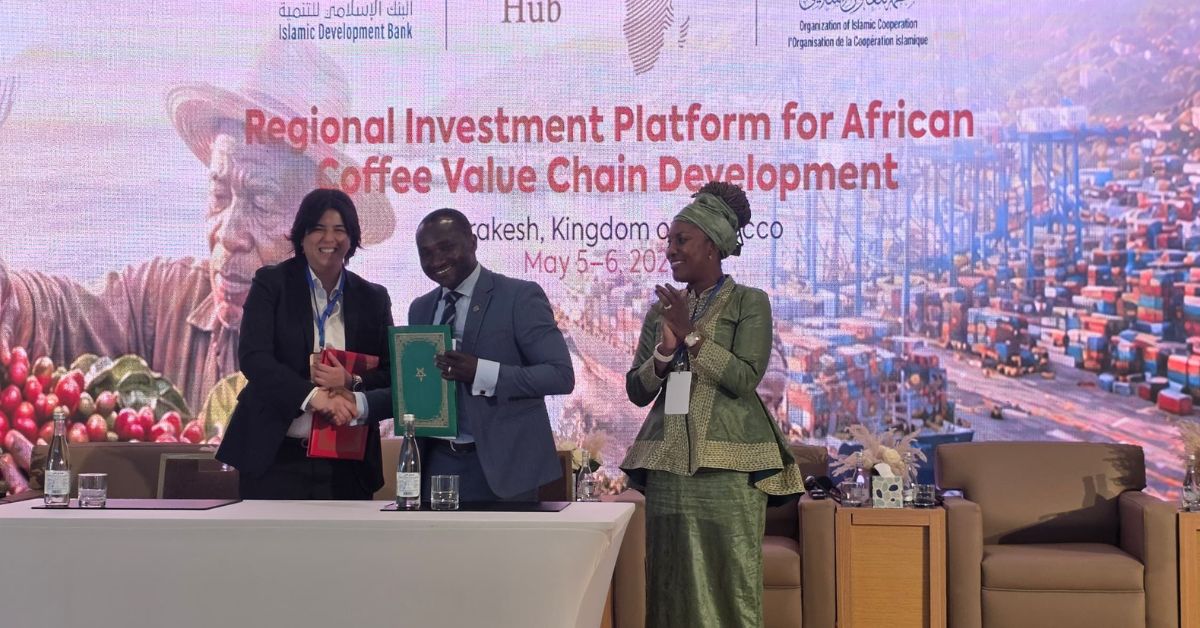
 Sierra Leone has taken a significant step toward transforming its coffee sector from a raw commodity exporter into a value-adding producer, following its participation in the Regional Forum on Coffee Value Chain Development in Africa held in Marrakech, Morocco, on 5 May 2026.
The high-level forum, co-organized by the Islamic Development Bank, the Kingdom of Morocco, the African Coffee Hub, and the Organization of Islamic Cooperation, brought together African governments, private investors, and technical partners to accelerate coffee processing, quality control, and market access across the continent.
Representing Sierra Leone at the gathering were Minister of Agriculture and Food Security, Dr. Henry Musa Kpaka, and Deputy Minister I of Finance, Hon. Kadiatu Allie. The two officials outlined Sierra Leone’s strategy to increase farmer incomes, create jobs, and attract investment through reforms in the coffee sector.

Their participation underscored the country’s commitment to aligning national agricultural policies with regional initiatives focused on processing, branding, traceability, and greater retention of value within Africa’s coffee industry.

During the forum, Sierra Leone highlighted several interventions already underway to support the transition from exporting raw coffee beans to producing processed coffee products. These measures include improved post-harvest handling systems, investments in aggregation and logistics, and major infrastructure projects such as bridges and feeder roads in cocoa and coffee-producing areas to improve market access.
Officials stressed that reliable transport infrastructure remains essential for connecting farmers to buyers and ensuring that quality improvements and processing investments deliver meaningful results.
A major focus of Sierra Leone’s presentation was Coffea stenophylla, a coffee species native to Sierra Leone. Dr. Kpaka described the variety as having strong commercial potential due to its distinctive flavor profile and its ability to thrive in warmer temperatures.
The species is increasingly viewed as strategically important as climate change threatens traditional coffee-growing regions worldwide. By promoting a native and climate-resilient coffee variety, Sierra Leone aims to build a premium niche brand capable of commanding higher prices on international markets.
On the sidelines of the forum, Sierra Leone signed a Memorandum of Understanding with African Coffee Hub Invest to establish a framework for technical cooperation across the coffee value chain.
The agreement covers priority areas including post-harvest management, quality control, traceability systems, aggregation, logistics, branding, value addition, investment preparation, and market access.
Speaking on the partnership, Dr. Kpaka said:
“This partnership is important to us as coffee has great potential to increase farmer income, create jobs, boost exports, and attract investment. We will move beyond raw coffee exports to processed coffee.”
Analysts say Sierra Leone’s new strategy links economic development with climate adaptation. By investing in processing capacity while promoting heat-tolerant Stenophylla, the country could increase farmgate earnings, create employment in logistics and manufacturing, and diversify export revenues.
However, successful implementation will depend on coordinated efforts among government institutions, private investors, farmer organizations, and development partners.
Priority next steps are expected to include technical support for farmers, establishment of traceability systems, development of processing facilities, and pilot market linkages for Stenophylla-based coffee products.
Sierra Leone’s participation in the Marrakech forum and its agreement with African Coffee Hub Invest mark a clear shift toward capturing more value from the global coffee trade, while positioning the country as an emerging player in climate-smart specialty coffee production.