

Sierra Leone Heightens Border Screening Amid New Ebola Outbreak in DRC
 Tolulope Aina
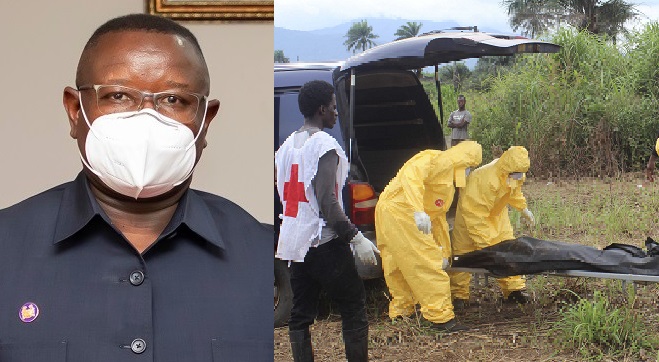
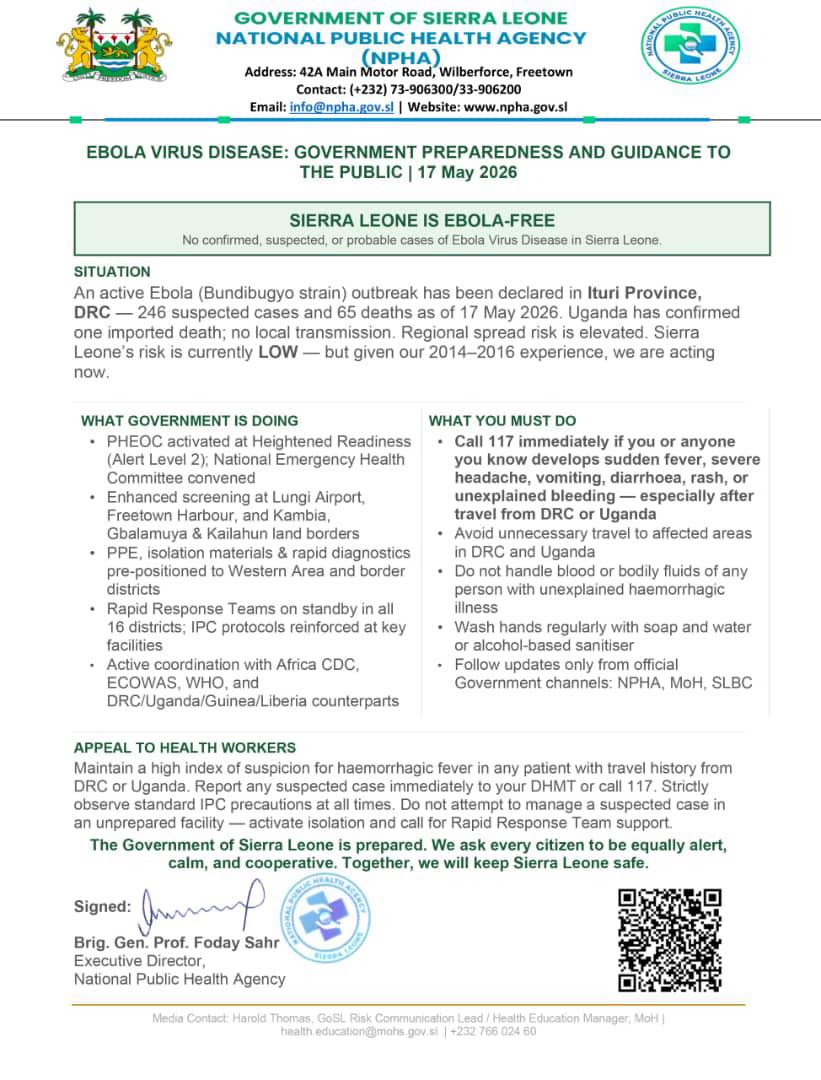
 The Government of Sierra Leone has activated emergency health protocols and enhanced screening at all major entry points in response to a new outbreak of the Ebola Virus Disease in Central Africa.
In a public notice issued on Sunday, May 17, 2026, the National Public Health Agency (NPHA) reassured citizens that Sierra Leone currently remains entirely Ebola-free, with zero confirmed, suspected, or probable cases within its borders.
However, authorities are moving swiftly to prevent the virus from entering the country. An active outbreak of the Bundibugyo strain of Ebola has been declared in Ituri Province, Democratic Republic of Congo (DRC), where 246 suspected cases and 65 deaths have already been recorded. Neighboring Uganda has also confirmed one imported death related to the outbreak.

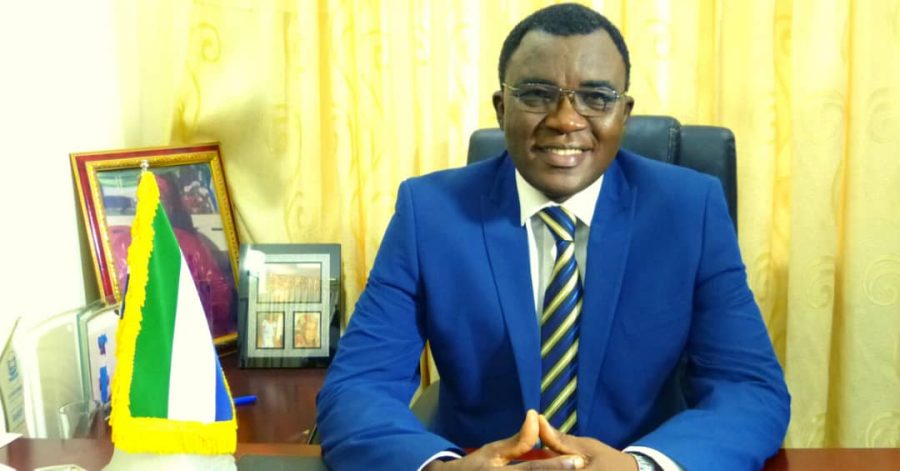
While the NPHA officially assesses Sierra Leone’s immediate risk as “LOW,” Executive Director Brig. Gen. Prof. Foday Sahr noted that the devastating national experience of the 2014–2016 Ebola epidemic dictates aggressive, proactive measures.
To shield the country from the elevated regional threat, the government has convened the National Emergency Health Committee and activated the Public Health Emergency Operations Centre (PHEOC) to Alert Level 2 (Heightened Readiness).
Key preventative measures currently underway include:
Border Screening: Enhanced health screenings have been implemented at Lungi International Airport, Freetown Harbour, and critical land borders including Kambia, Gbalamuya, and Kailahun.
Resource Pre-positioning: Personal Protective Equipment (PPE), isolation materials, and rapid diagnostic tools have been deployed to the Western Area and border districts.
Standby Teams: Rapid Response Teams have been placed on standby across all 16 districts of the country, and Infection Prevention and Control (IPC) protocols have been reinforced at major health facilities.
The NPHA is urging the public to avoid all unnecessary travel to affected regions in the DRC and Uganda. Citizens are advised to strictly maintain hand hygiene and avoid contact with the bodily fluids of anyone exhibiting unexplained hemorrhagic symptoms.
The public is instructed to immediately call 117 if they, or anyone they know, develop sudden fever, severe headaches, vomiting, diarrhea, rashes, or unexplained bleeding—especially if the individual has recently traveled from Central Africa.
A direct appeal was also issued to the nation’s healthcare workers, instructing them to maintain a “high index of suspicion” for patients with relevant travel histories.
Medical staff are ordered to strictly observe standard IPC precautions and to isolate, rather than treat, suspected cases in unprepared facilities until Rapid Response Teams arrive.
Which credible data inform this outbreak? Sierra Leoneans see this as a distraction for the drugs scandal
Congosa government. Lokk wae central Africa far from Sierra Leone
😅😅 Aaaa Salone we don tired for the news
Daboh