

 Post a comment
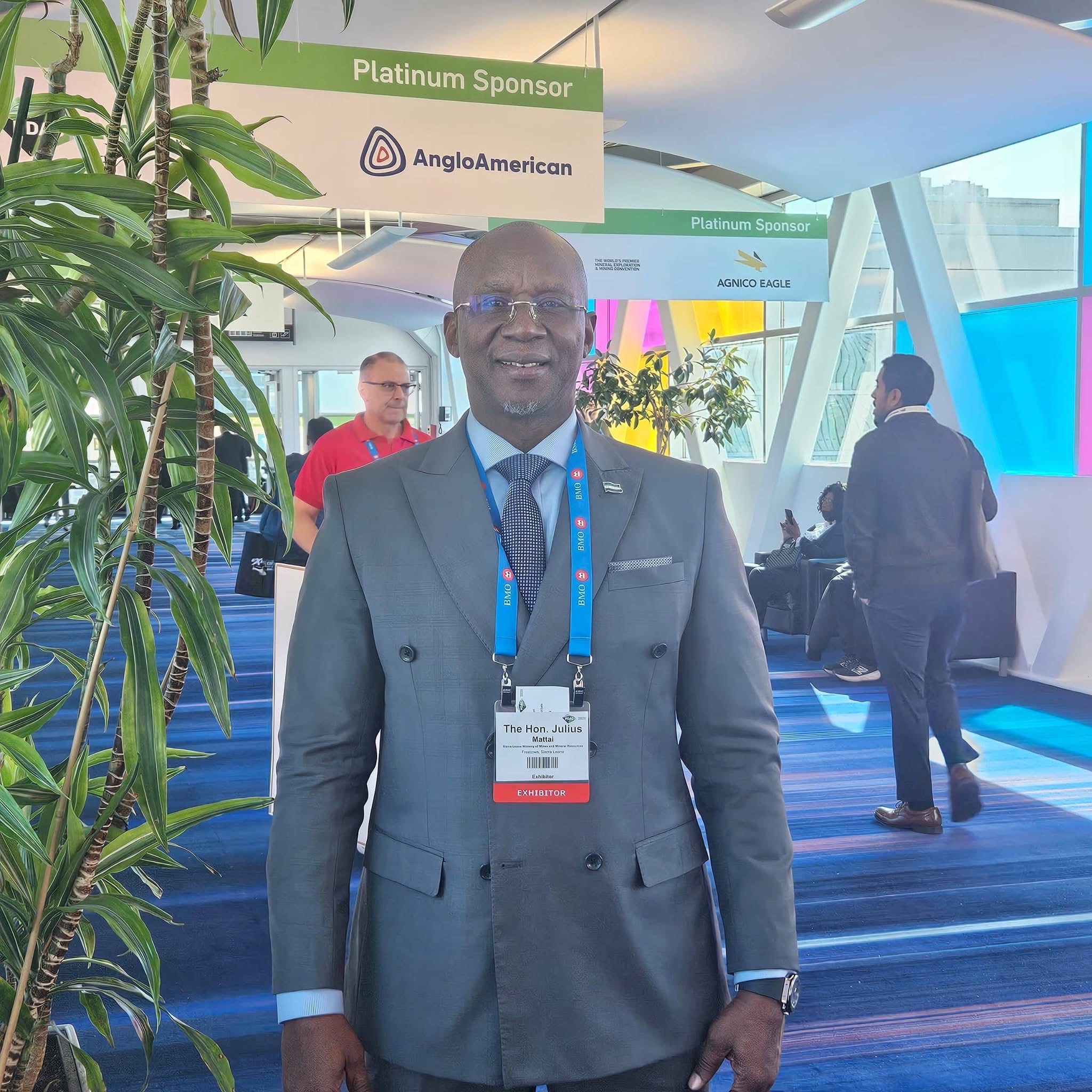
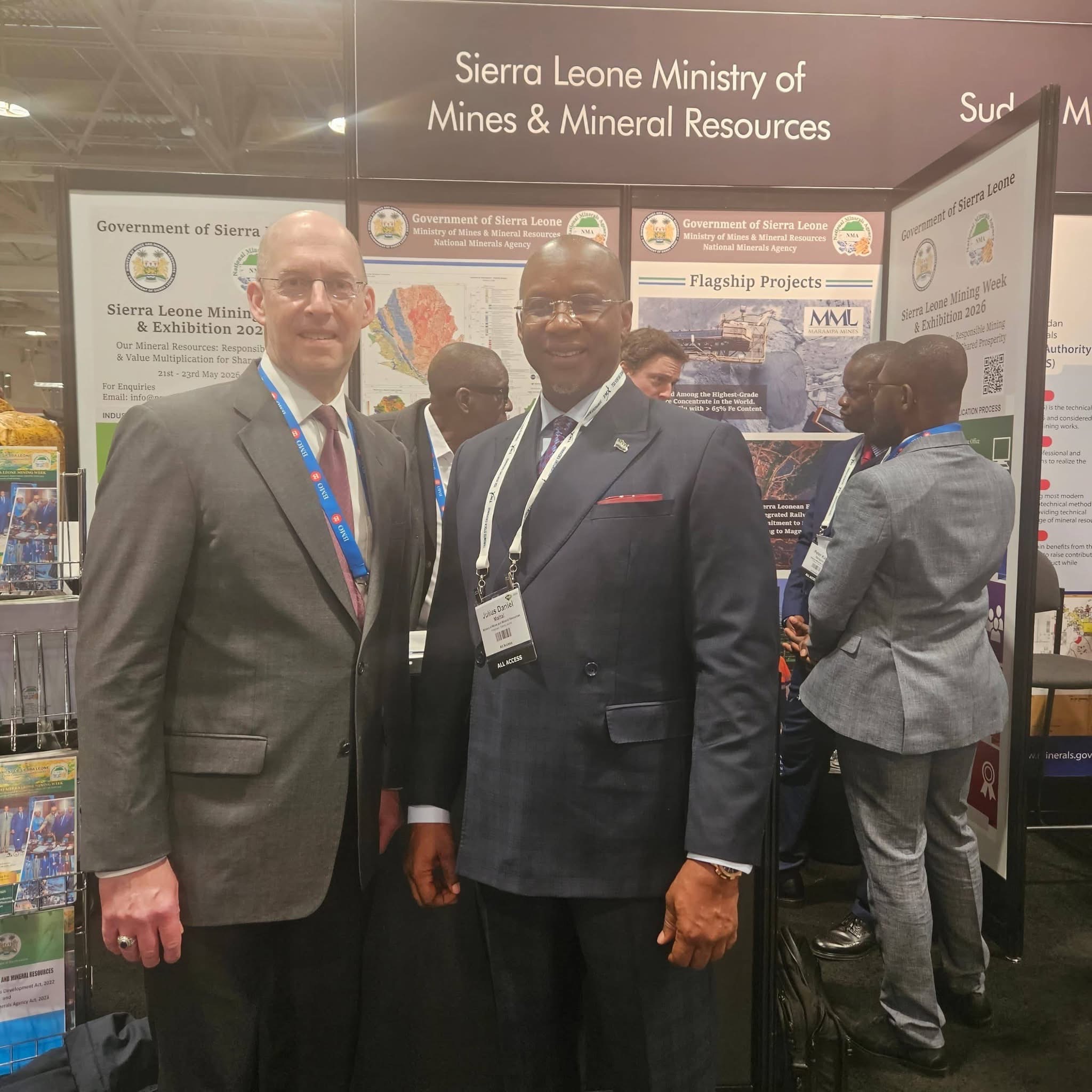
 Sierra Leone has used one of the world’s largest mining gatherings to promote its mineral wealth and push for a new model of partnership in the global minerals economy, as the country’s Minister of Mines and Mineral Resources, Hon. Julius Daniel Mattai, addressed international investors and policymakers at the 2026 Prospectors and Developers Association of Canada (PDAC) Convention in Toronto.
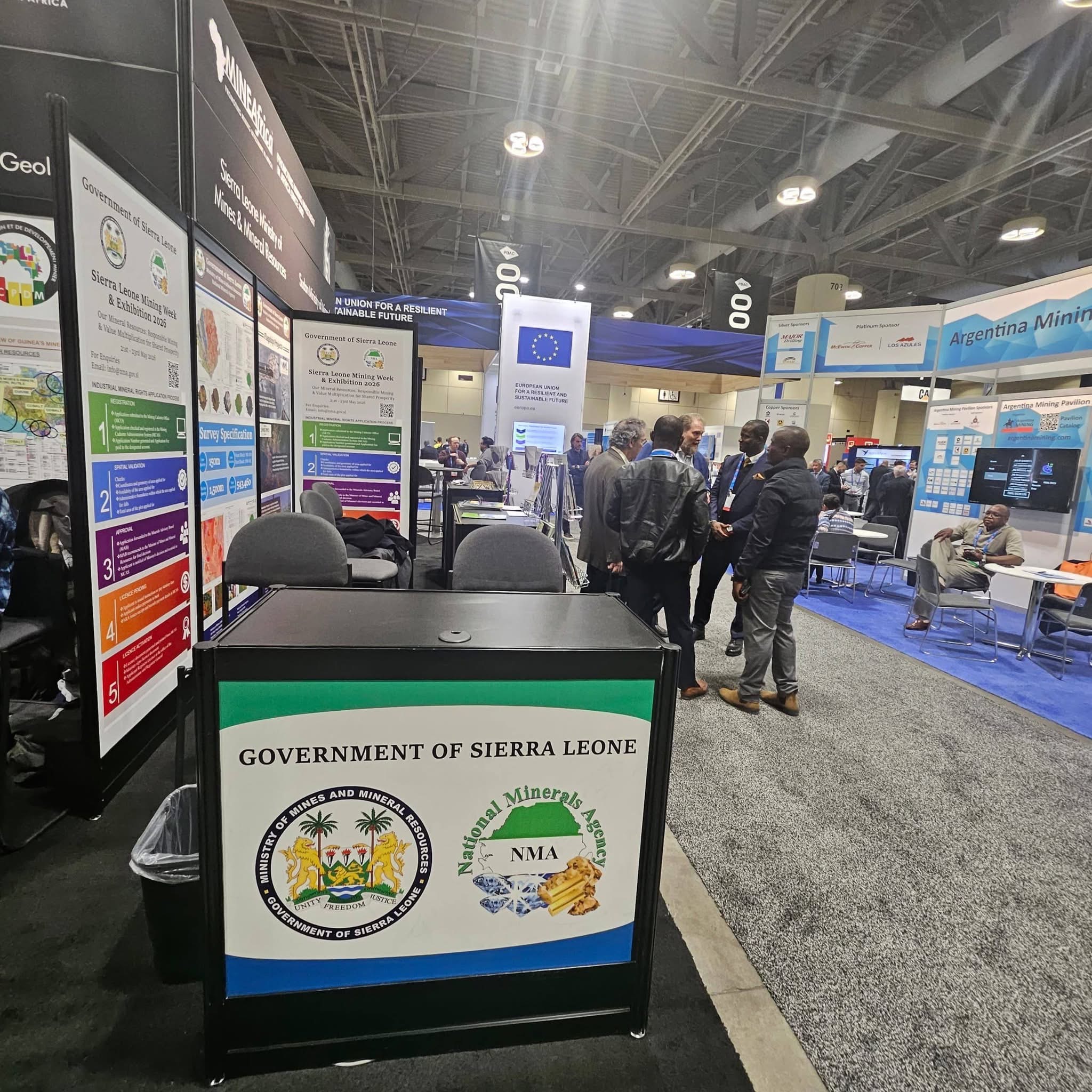
According to the Ministry of Mines and Mineral Resources and the National Minerals Agency (NMA), Sierra Leone participated in the convention held from March 1 to 4, 2026, where Minister Mattai delivered a keynote address during MineAfrica’s 27th Annual African Mining Breakfast and the 24th Annual Investing in African Mining Seminar.
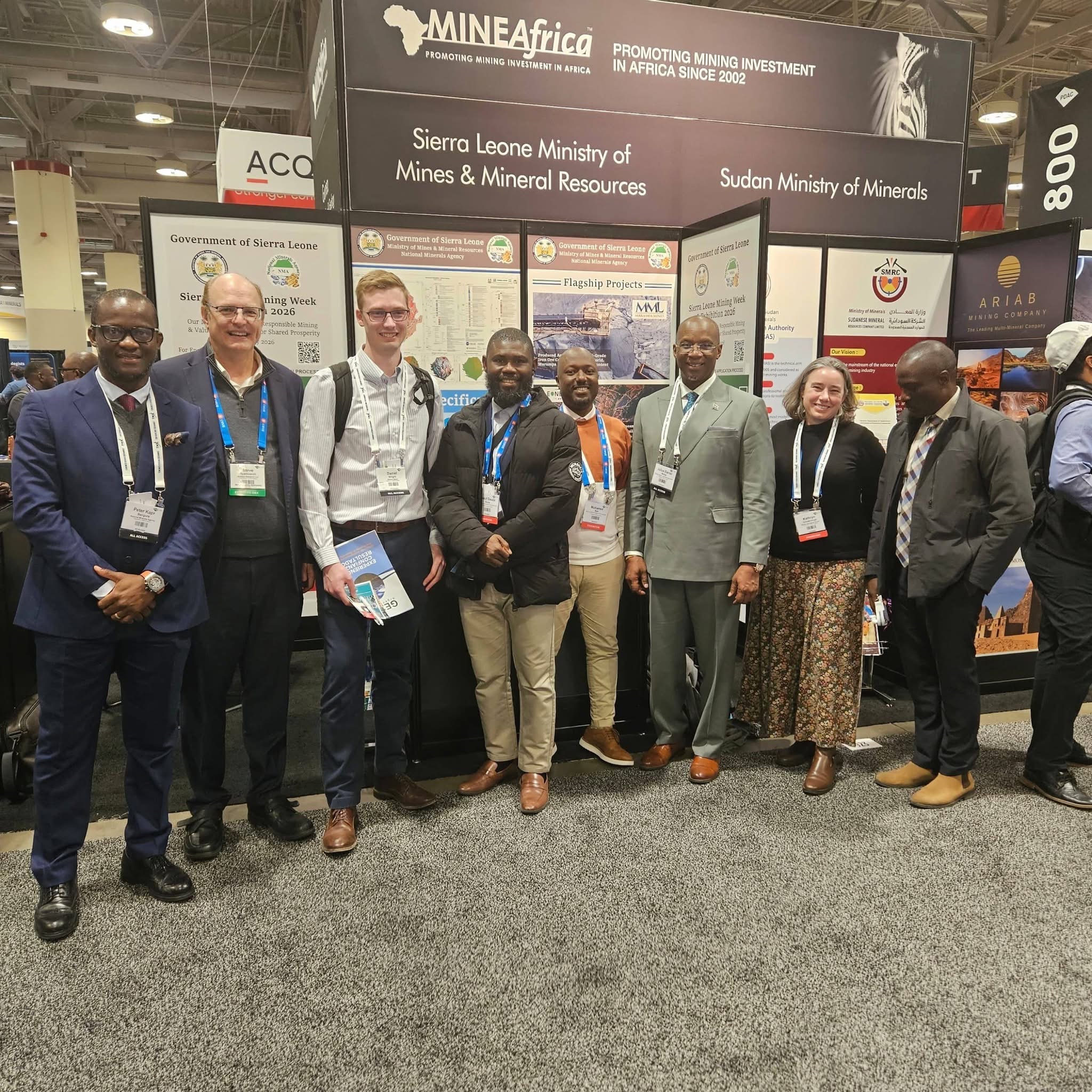
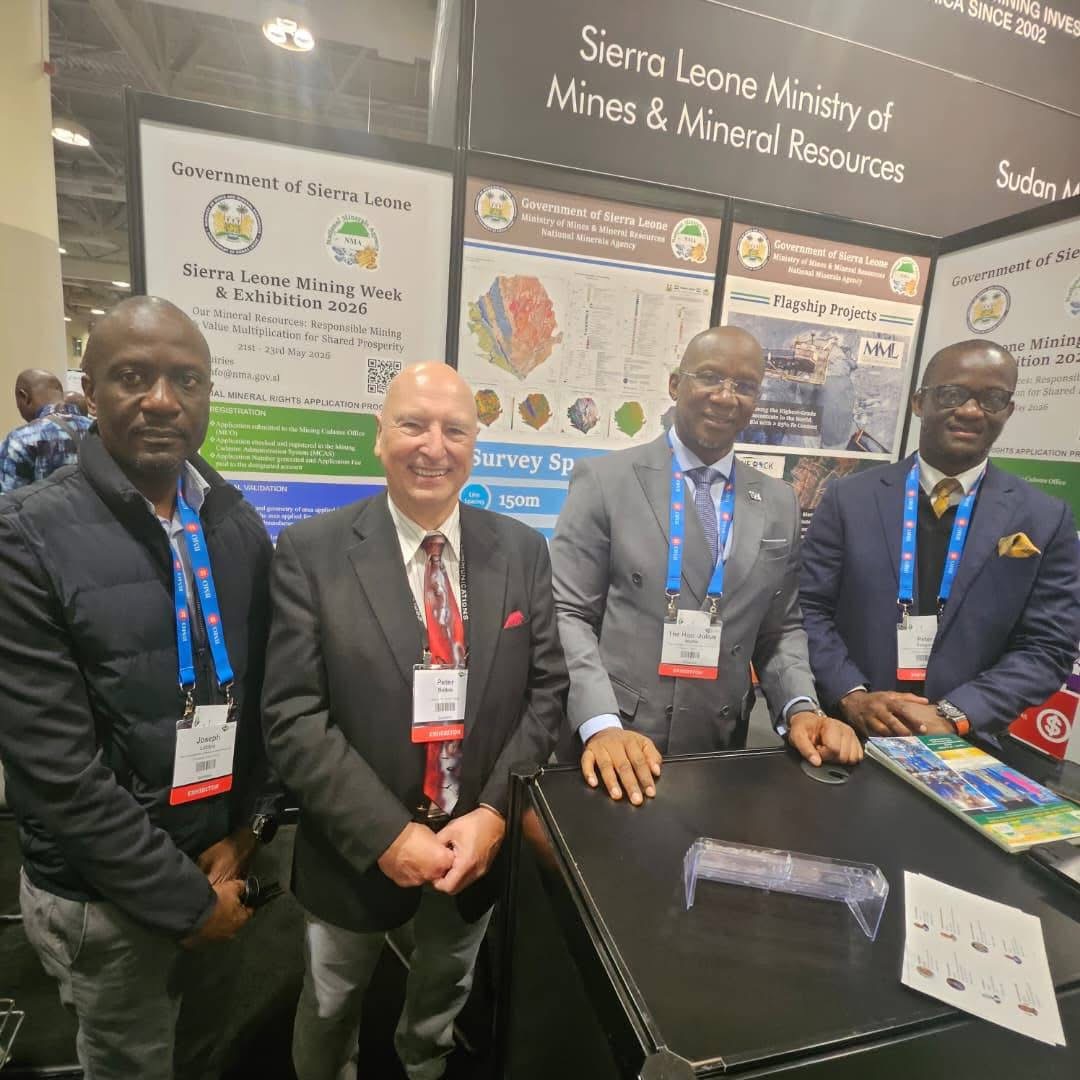
Leading a high-level delegation that included senior officials of the National Minerals Agency, the Minister presented Sierra Leone’s vision for a more balanced and strategic global mining partnership.
The delegation included NMA Director-General Ing. Hadji Dabo, Director of Mines Peter Bangura, Director of Geological Surveys Joseph Lebbie, Director of Precious Minerals Trading Mohamed M. Bah, and Manager of Large-scale Mining Yusuf Summa.
In his address titled “Opportunity Africa: Sierra Leone’s Vision for Transformative Mining Partnership,” Mattai challenged the global mining industry to reconsider its long-standing relationship with Africa.
“The choice before us is stark: Will Africa remain the world’s raw material warehouse, or will we become the 21st century’s manufacturing powerhouse?” the Minister said. “The answer depends on what we do together-starting now.”
He told participants that Africa holds about 30 percent of the world’s known mineral reserves, including roughly 80 percent of global platinum and 70 percent of global cobalt, along with major deposits of lithium, rare earth elements, copper, graphite and nickel. Sierra Leone, he said, reflects much of that resource potential within its 72,000 square kilometres.
Mattai noted that the country is rich in iron ore, rutile, bauxite, gold, lithium, rare earth minerals, coltan, diamonds and heavy mineral sands. He also highlighted Sierra Leone’s geographic advantage with direct access to the Atlantic Ocean through the Port of Freetown, as well as political stability and the use of English as a business language.
The Minister warned that global supply chains for critical minerals are currently concentrated in a limited number of countries, creating risks for the international energy transition.
“Critical mineral supply chains are dangerously concentrated,” he said, adding that African producers can help diversify supply while offering partnerships based on democratic governance, transparency and the rule of law.
At the same time, Mattai acknowledged that infrastructure and financing challenges continue to affect the mining sector across Africa. He cited limited electricity access, inadequate transport networks and high borrowing costs as key barriers.
“When African entrepreneurs pay 18 to 25 percent interest while their counterparts in developed economies pay around 3 percent, this is not market efficiency-this is structural disadvantage,” he said.
The Minister also pointed to Sierra Leone’s governance reforms in the mining sector. He referenced four consecutive peaceful democratic elections, compliance with the Extractive Industries Transparency Initiative (EITI), the enactment of the Mines and Minerals Development Act of 2023, and the role of independent regulators such as the National Minerals Agency and the Environmental Protection Agency.
Despite these measures, he said international investor perceptions of African mining jurisdictions often remain outdated.
“Investor perceptions lag reality,” Mattai stated, describing what he called a “double standard” that costs African countries billions of dollars in lost investment each year.
A central part of Sierra Leone’s message at the Toronto convention was its plan to move beyond exporting raw minerals toward domestic processing and industrial development.
Mattai told the conference that Sierra Leone is pursuing several initiatives aimed at increasing value addition, including heavy mineral separation plants, the establishment of a national gold refinery, diamond polishing and jewellery manufacturing, and the development of a Critical Minerals Special Economic Zone with dedicated infrastructure and incentives.
“These are not aspirational fantasies-they are concrete projects seeking investment partners,” he said. The Minister also addressed the social and ethical dimensions of global mineral supply chains, particularly in the context of the global energy transition.
“The global energy transition cannot be built on Africa’s perpetual underdevelopment,” he said, noting that minerals from countries like Sierra Leone power electric vehicles and advanced manufacturing industries while only about 26 percent of Sierra Leone’s population has access to electricity.
“We do not seek charity. We seek justice. We do not request assistance. We demand partnership,” he added. “We will not accept permanent subordination. We insist on equal dignity.”
Mattai also placed Sierra Leone’s strategy within broader continental frameworks, including the African Union’s Africa Mining Vision, the African Green Minerals Strategy and the African Continental Free Trade Area, which promote regional integration and mineral value addition.
He noted that several emerging partners, including China, India, Turkey and Gulf countries, are expanding their involvement in African mineral development, adding that traditional partners must decide whether they will participate in Africa’s transformation.
“Africa will capture value from our minerals,” the Minister said. “The question for traditional partners is whether you will be part of this transformation as genuine partners, or whether you will be sidelined as Africa diversifies relationships with those willing to offer what we need.”
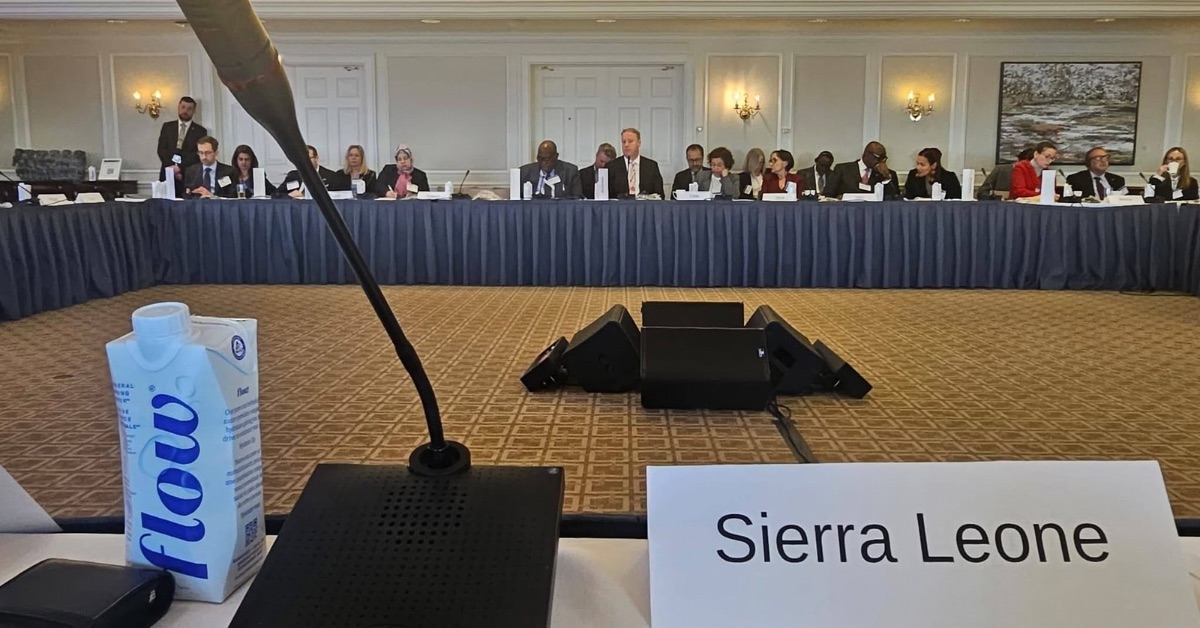
According to the Ministry of Mines and Mineral Resources and the National Minerals Agency, Sierra Leone’s delegation also held meetings with mining executives, investors and development partners during the convention to promote investment opportunities in the country’s mineral sector.
Concluding his address, Mattai reiterated Sierra Leone’s readiness to work with global partners in developing its mineral resources.
“Opportunity Africa is not a slogan. It is a commitment—a commitment to genuine partnership, shared prosperity, environmental stewardship, and justice,” he said. “Sierra Leone stands ready. The question now is whether the world is ready to partner with us.”


