

 Post a comment
The Government of Sierra Leone, through its Ministry of Health, has launched an ambitious nationwide campaign to vaccinate one million girls aged 11 to 18 years against the Human Papillomavirus (HPV), the leading cause of cervical cancer.
The initiative is part of a broader strategy to eliminate cervical cancer in the country within the next two decades.
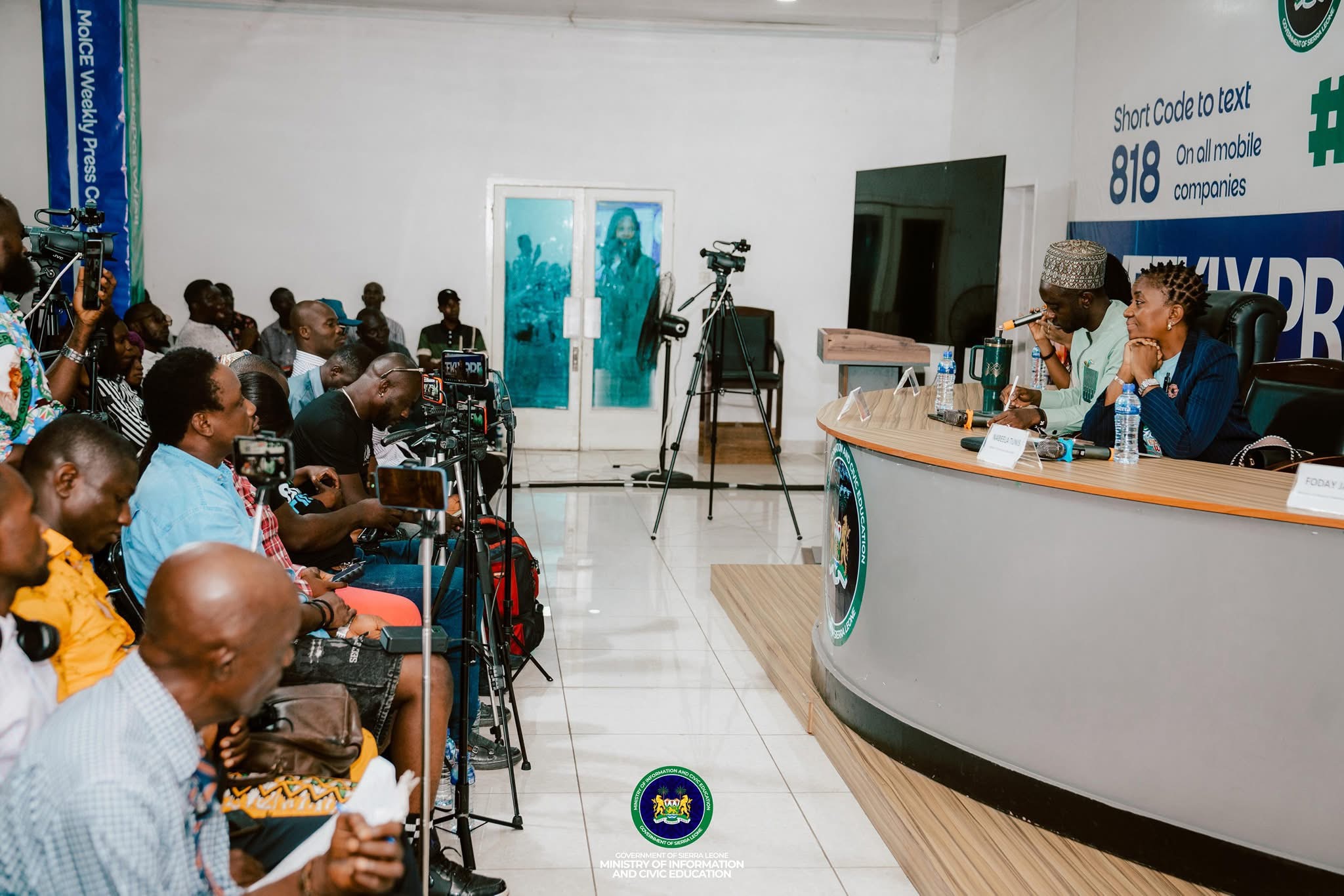
Speaking at the government’s weekly press conference at the Miatta Civic Centre in Freetown, Dr. Jalikatu Mustapha, Deputy Minister of Health II, confirmed the government’s commitment to eradicating cervical cancer, a disease that remains the second most common cancer among women in Sierra Leone, after breast cancer.
According to Dr. Mustapha, over 500 new cases of cervical cancer are diagnosed each year in the country, with more than 70 percent of affected women dying from the disease.
“No woman in Sierra Leone should ever die again from a disease that can be prevented,” Dr. Mustapha stated, echoing the commitment of President Julius Maada Bio, whose administration has prioritized women’s health.

The announcement coincided with the first-ever Global Action Day for the Elimination of Cervical Cancer on November 17, 2025, a milestone observed by countries around the world in a unified effort to end the disease.
Sierra Leone, in its support for this global initiative, marked the day with a call to action to protect the health and lives of women and girls in the country.
“Today, Sierra Leone proudly joined the world in celebrating this historic day,” Dr. Mustapha said. “We did it in grand style to show our collective determination to save women’s lives.”
The HPV vaccine, which prevents infection by the virus that causes cervical cancer, is known to be over 90 percent effective when administered before exposure, typically during adolescence.
In Sierra Leone, the Ministry of Health began piloting the HPV vaccine in 2013. However, the campaign gained momentum in 2023 when the government, with support from Gavi, UNICEF, and other partners, launched its National Cervical Cancer Elimination Strategy. That same year, Sierra Leone became one of the first countries in Africa to introduce the HPV vaccine into its routine immunization schedule.
Since then, the vaccination effort has notably made substantial progress. Nearly 200,000 girls aged 10 years were vaccinated in the first two weeks of the rollout, and as of today, more than 500,000 girls have received the vaccine. The new nationwide campaign is set to expand coverage to every eligible girl aged 11 to 18, both in and out of school.
Mustapha emphasized that no girl would be left behind in this initiative, announcing a robust outreach plan to ensure that all eligible girls, regardless of their location, have access to the vaccine. “We have developed a strong out-of-school outreach plan to ensure that no girl is left behind, no matter where she lives,” she said.
In addition to the vaccination campaign, the Ministry of Health has established 24 cervical cancer screening and treatment centers across the country, including seven in the Western Area. Each of these centers is equipped with trained health workers and diagnostic tools that allow women to be screened, diagnosed, and treated on the same day.
Mustapha emphasized the importance of early detection in reducing cervical cancer mortality, noting that the innovation of same-day screening and treatment could help prevent deaths caused by late-stage diagnoses.
She also highlighted a partnership with Zambian medical specialists to train local surgeons in performing cervical cancer surgeries, making it possible for women in Sierra Leone to receive treatment locally, rather than having to travel abroad at great expense.
“For the first time, these surgeries can now be done locally,” Dr. Mustapha revealed. “This eliminates the need for women to travel abroad and spend thousands of dollars for treatment.”
The Ministry has also set up local hospice care units to provide palliative care for women in the advanced stages of cervical cancer.
Mustapha expressed optimism about the future, stating that with sustained efforts, Sierra Leone could eliminate cervical cancer within 10 to 20 years. “As a ministry, we are deeply passionate about this cause,” she said, sharing her personal connection to the issue, as her own grandmother died of cervical cancer when the disease was not well understood.
Today, with advances in medical knowledge and resources, Dr. Mustapha affirmed the government’s commitment to preventing cervical cancer through vaccination and early detection. “We have the tools and the knowledge to prevent it – and we will,” she said.
Mustapha concluded by reaffirming the Ministry’s dedication to President Bio’s vision of universal healthcare, particularly for women and girls. “This is more than a health programme,” she concluded. “It is a promise – that every girl in Sierra Leone will have the right to a healthy, cancer-free future.”


