
Sierra Leone’s Envoy to Belgium Philip Jusu Accredited to Global Chemical Weapons Watchdog
 Sahid Bangura
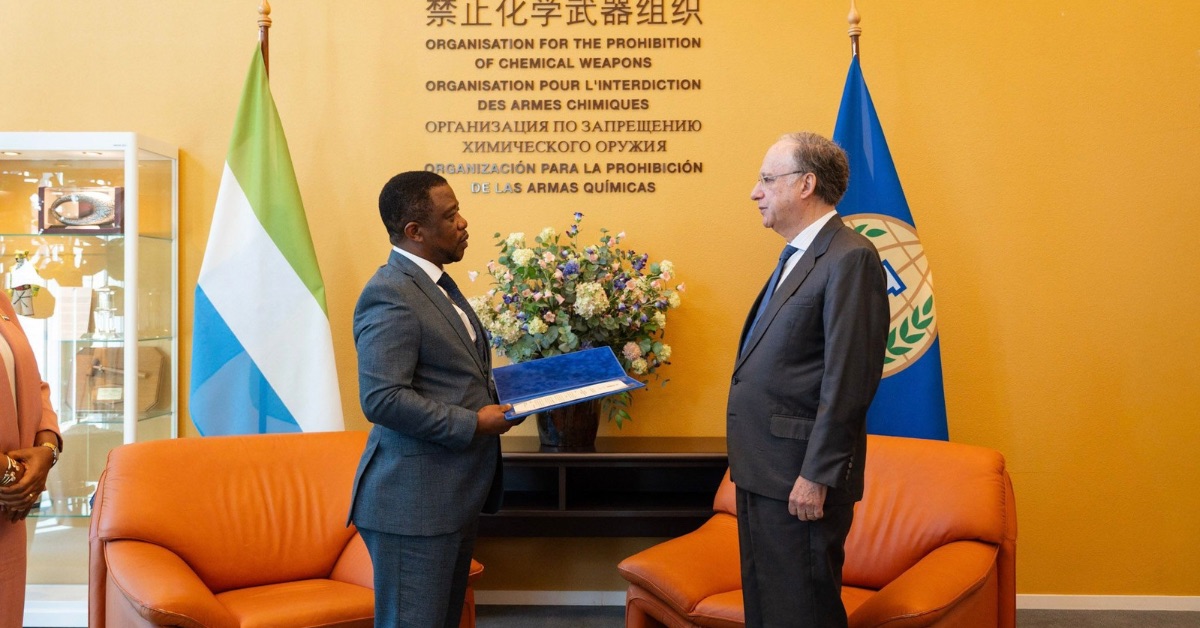
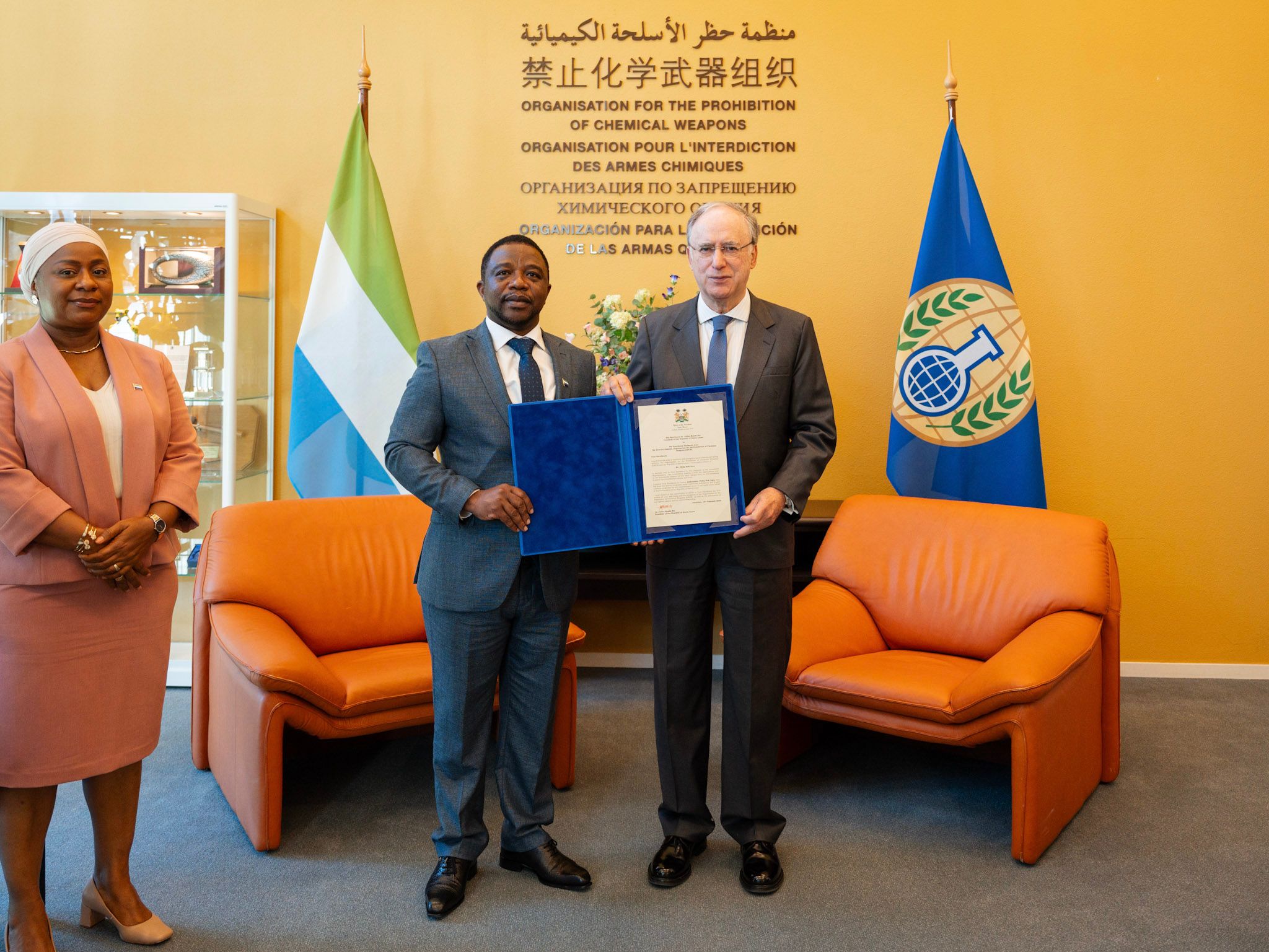
 Sierra Leone’s Ambassador to Belgium and Permanent Representative to the Organisation for the Prohibition of Chemical Weapons (OPCW), Philip Bob Jusu, has formally presented his credentials to the OPCW at the organisation’s headquarters in The Hague, reaffirming Sierra Leone’s commitment to international peace and security cooperation.
The credentials were received by the Director-General of the OPCW, Fernando Arias, during an official ceremony held at the organisation’s headquarters in the Netherlands.
Speaking during the ceremony, Ambassador Arias highlighted the growing security challenges facing the international community, particularly those linked to rapid technological developments.


He said that despite increasing scrutiny of multilateral institutions across the world, the OPCW remains focused on strengthening collective security and preventing the threat posed by chemical weapons.
According to the OPCW Director-General, international cooperation remains essential in addressing emerging global security concerns and ensuring the continued enforcement of international norms against the use of chemical weapons.
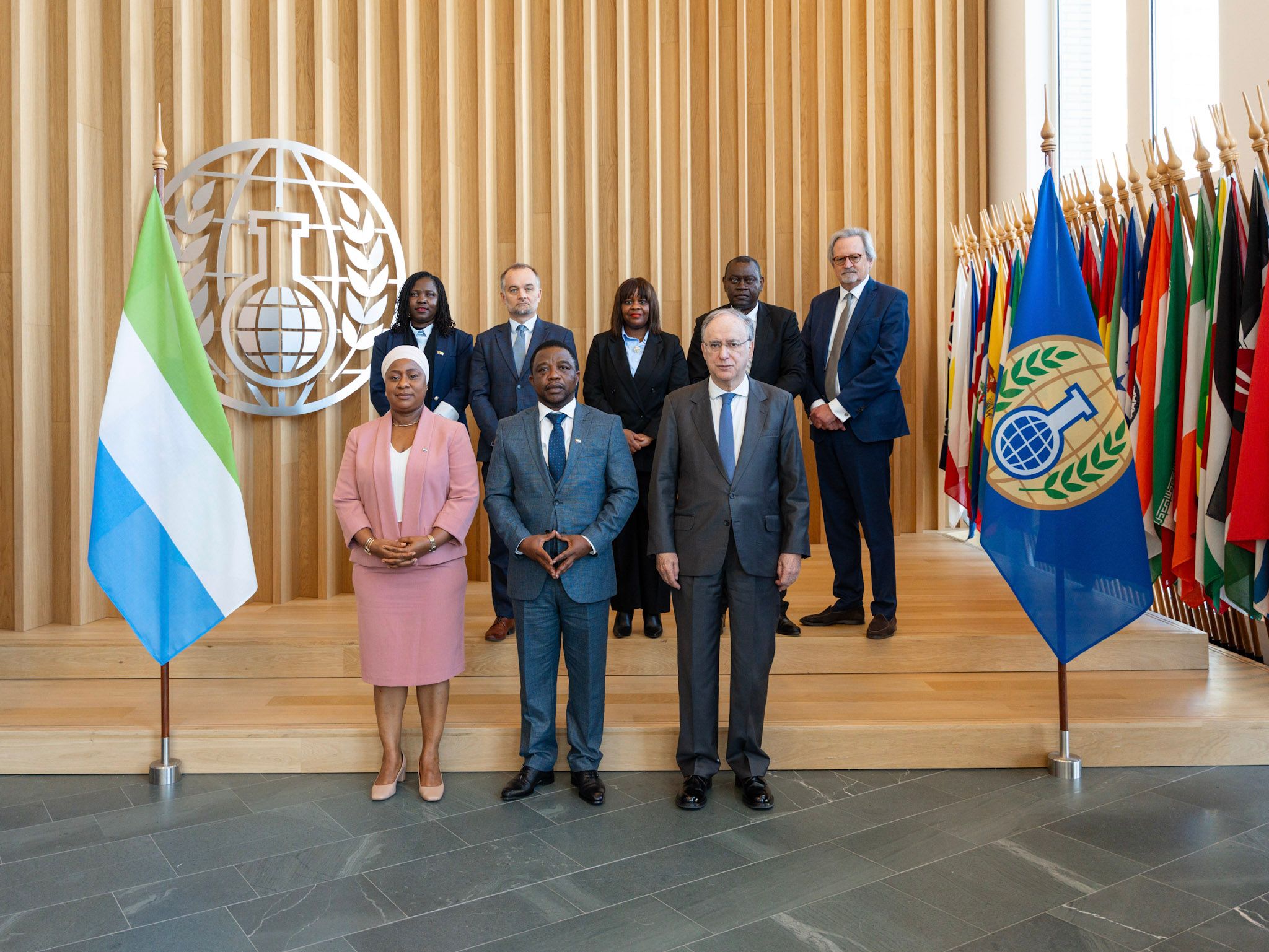
In his response, Ambassador Jusu underscored the importance of partnership and shared responsibility among nations in promoting peace and global stability. He stated that every country, regardless of its size, has a role to play in supporting international security efforts.
The Sierra Leone envoy further reaffirmed his country’s support to the OPCW and its mission, pledging what he described as “our commitment, our partnership, and our collective resolve in support of this important mission.”
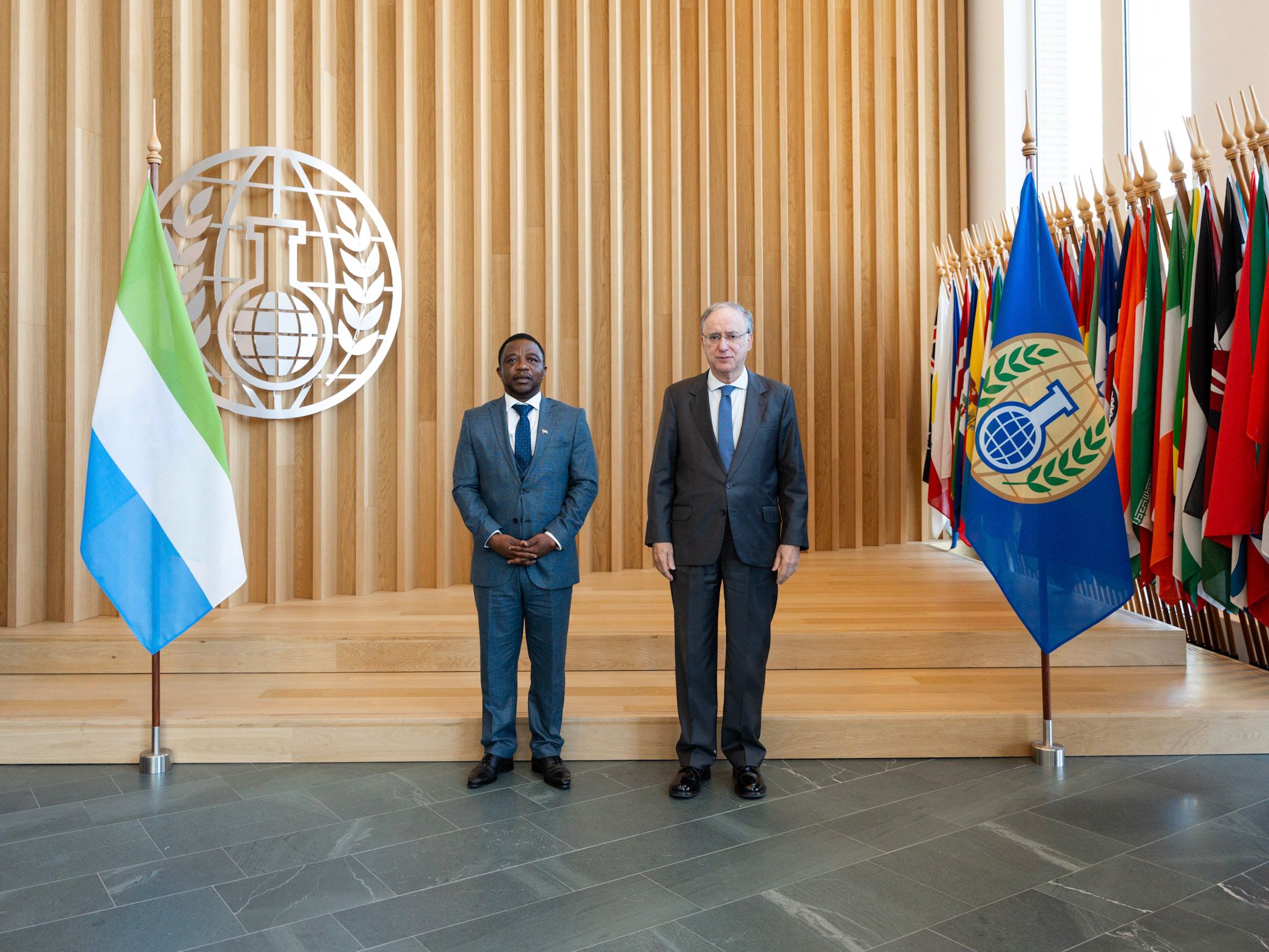
Ambassador Jusu’s presentation of credentials formally confirms his role as Sierra Leone’s Permanent Representative to the OPCW, the global body responsible for implementing the Chemical Weapons Convention and overseeing efforts aimed at eliminating chemical weapons worldwide.
The OPCW, headquartered in The Hague, works with member states to prevent the development, production, stockpiling, and use of chemical weapons, while promoting international cooperation on peaceful chemical activities.