

 Post a comment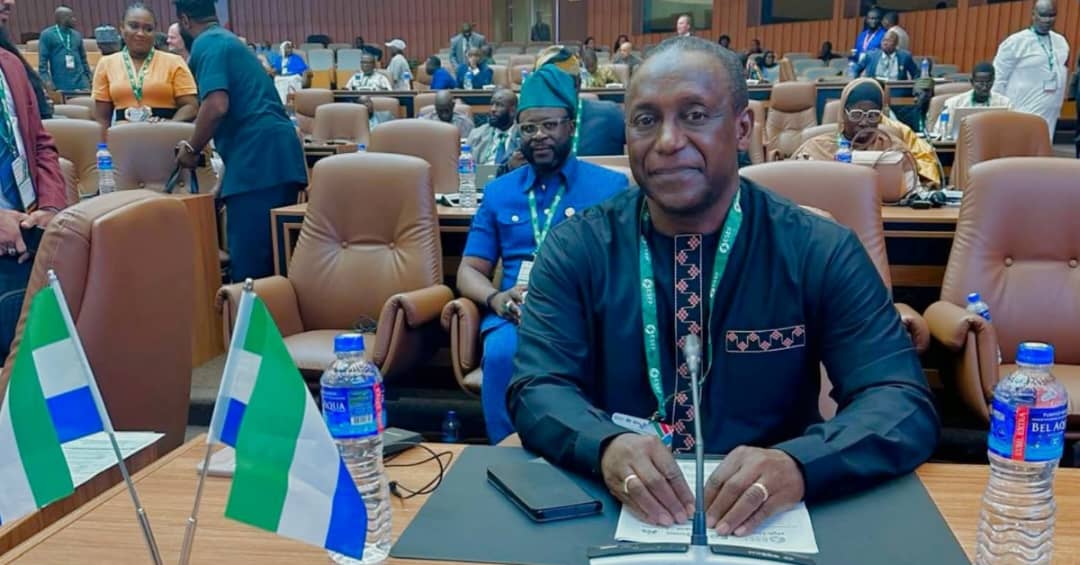
With electricity losses soaring above 50%, Sierra Leone faces a critical challenge that demands swift action to overhaul its energy sector and unlock sustainable growth.
At the recent ECOWAS Sustainable Energy Forum, Dr. Kandeh Yumkella highlighted remarkable progress and pressing challenges in West Africa’s energy landscape.
From The Gambia’s impressive leap to 74% electricity access and Liberia’s aggressive efforts to reduce utility losses, to Sierra Leone’s ambitious goal of adding 180 MW of power by 2026, the message was clear: urgent reforms are needed to accelerate sustainable energy development across the region.
“The message is clear: We must accelerate reforms, cut losses, and embrace cheaper renewables and cross-border trade,” Dr. Yumkella emphasized, underscoring the critical pathways to energy resilience and economic growth.
During the forum, he also shared a nostalgic reflection: “Today, I had the honor of spending time with His Excellency, Vice President Muhammad B. S. Jallow of The Gambia, on the sidelines of the ECOWAS Sustainable Energy Forum organized by the ECREEE – the ECOWAS Centre for Renewable Energy & Energy Efficiency.”
He recounted his pivotal role in establishing ECREEE over 15 years ago, recalling a historic discussion with former UNIDO Director-General Mohammed Ibn Chambas, Austria’s then Foreign Minister Ursula Plassnik, and other international partners. “With support from Austria, Spain, and the EU, UNIDO and ECOWAS created ECREEE during my tenure, laying the foundation for regional energy cooperation and renewable development,” he said.
Highlighting The Gambia’s progress, Dr. Yumkella noted that the country’s electricity access surged from 35% in 2017 to 74% in 2025. Additionally, The Gambia has slashed its utility losses from 35% to approximately 20%, effectively ending emergency power purchases from Karpowership. The nation is now on the cusp of building about 100 MW of solar capacity and importing over 50 MW of cheaper electricity from Guinea and Senegal via the OMVG line.
Liberia’s achievements are equally impressive, with utility losses reduced from 60% to 35% in less than five years, alongside a crackdown on electricity theft through a specialized task force comprising police and security agencies. Both countries have adopted prepaid meters across all Ministries, Departments, and Agencies (MDAs), demonstrating a firm commitment to transparency and efficiency.
“These examples show that other African countries are advancing faster in energy sector reforms,” Dr. Yumkella remarked.
“In Sierra Leone, we must accelerate this transition. With over 50% losses at EDSA, we cannot afford to delay. We need to pivot swiftly toward renewable energy and regional grid integration.”
He concluded on an optimistic note: “With President Bio’s leadership and the support of development partners under the new Mission 300 (M300) Energy Compact, we are on the path to transformative change. By the end of 2026, we aim to add approximately 180 MW of power, including over 60 MW in the short term by March 2026. With MCC investments, we will rebuild our transmission and distribution infrastructure, ensuring more households have access to reliable, affordable power.”
This rallying call underscores the urgent need for regional unity and strategic investment to unlock Africa’s vast renewable energy potential, fueling economic growth and improving the lives of millions across West Africa.


