
FACT SHEET: Understanding Sierra Leone’s Third-Country National Arrangement (TCNA)
 Tolulope Aina
 What is the TCNA?
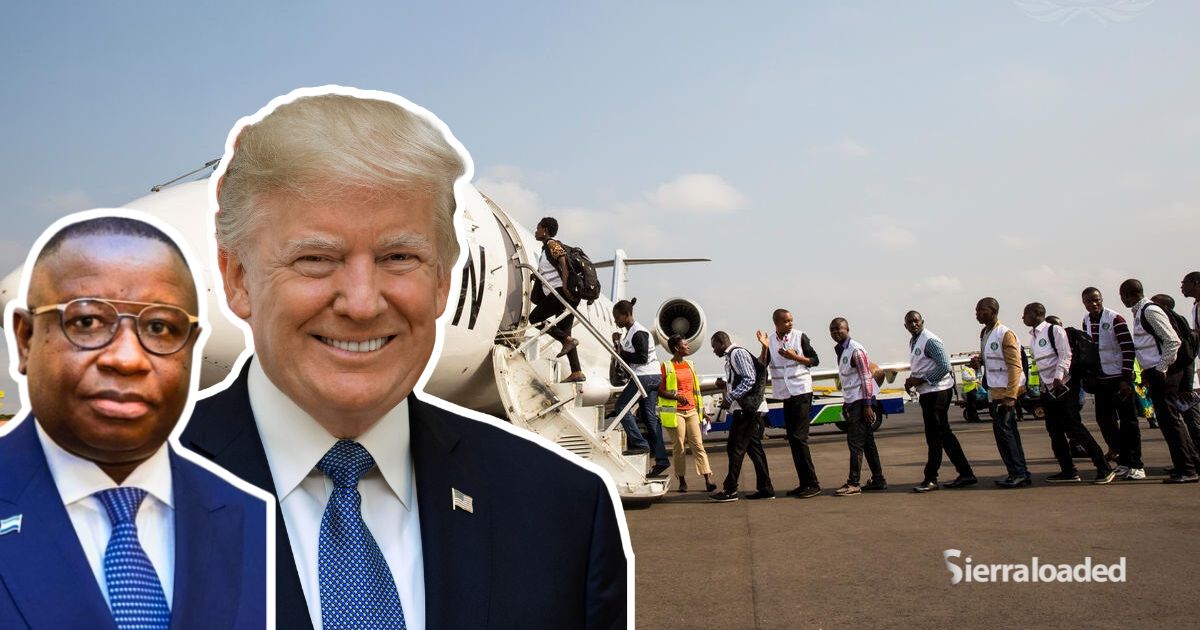
The Third-Country National Arrangement (TCNA) is a humanitarian and migration cooperation arrangement between the Government of Sierra Leone and the Government of the United States. Under this arrangement, a limited number of third-country nationals from ECOWAS member states may travel to Sierra Leone under agreed immigration, security and humanitarian procedures. The arrangement supports lawful migration management, humanitarian coordination and onward repatriation processes where applicable.
Who is covered under the arrangement?

The arrangement applies only to third-country nationals who are citizens of ECOWAS member states. The programme is limited in scope and operates under agreed immigration, security and humanitarian procedures coordinated by the Government of Sierra Leone and its international partners.
Is Sierra Leone accepting people permanently?
No. The arrangement does not give automatic citizenship, residency, asylum, or permanent settlement in Sierra Leone. All individuals remain subject to Sierra Leone’s immigration laws and procedures.
How long will people stay in Sierra Leone?
ECOWAS citizens are entitled to lawful stay in Sierra Leone in accordance with existing ECOWAS free movement protocols and Sierra Leone’s immigration laws. Under the arrangement, processing for onward repatriation or transfer is expected to be completed within approximately 14 days and, in exceptional situations, may extend up to 30 days. Any individual wishing to remain in Sierra Leone beyond the applicable legal stay period must apply through the country’s existing immigration laws and procedures, and all decisions will remain subject to Sierra Leonean law and the authority of the Government of Sierra Leone.
How many people are involved?
The programme is limited and controlled. The operational framework allows for a maximum of 25 individuals per month and no more than 300 individuals per year.
Who is in charge of the programme?
The Government of Sierra Leone remains fully in charge of the arrangement. Several government institutions are involved, including:
- Ministry of Foreign Affairs and International Cooperation
- Immigration Department
- Ministry of Health
- Security agencies
- Ministry of Social Welfare
Kenvah Solutions is the humanitarian and operational service provider supporting the arrangement. Services include airport reception, temporary accommodation, food and non-food items, healthcare and psychosocial coordination, logistics and repatriation coordination.
Are international organizations involved?
Yes. The International Organization for Migration (IOM) is supporting repatriation and international coordination processes in line with international humanitarian standards. Repatriation support is expected to follow two pathways:
an IOM-supported Assisted Voluntary Return (AVR) process to countries of origin where conditions permit; and
direct government-to-government diplomatic coordination where necessary.
This helps ensure the arrangement is managed professionally, safely and responsibly.
Does Sierra Leone still apply its own laws and procedures?
Yes. All individuals hosted under the arrangement remain subject to Sierra Leone’s laws, immigration procedures, security processes and public health requirements. Sierra Leonean authorities maintain oversight and coordination throughout the process.
Is this a security risk?
The arrangement includes strict screening, security coordination and health checks. Before any arrival, Sierra Leonean authorities receive advance information to support planning, risk assessment and proper management. Security agencies, immigration officials and health authorities remain fully engaged throughout the process.
Are there health safeguards in place?
Yes. The Ministry of Health will conduct immediate health screening for all individuals upon arrival in Sierra Leone. Additional health assessments will also be carried out within 48 hours during the processing period to protect both public health and individual wellbeing.
Will individuals with violent criminal backgrounds be brought to Sierra Leone?
No. As part of the understanding reached between the Government of Sierra Leone and the Government of the United States, Sierra Leone secured assurances that individuals with known violent criminal backgrounds will not be proposed for transfer under this arrangement. This forms part of the broader security coordination, screening and advance information-sharing process that supports the safe and controlled implementation of the programme.
Why is Sierra Leone participating?
Sierra Leone continues to engage international partners on issues relating to migration management, humanitarian cooperation and international mobility. Many countries around the world participate in different forms of migration cooperation and humanitarian migration arrangements, including countries in Europe, Latin America, Africa and the Pacific. Sierra Leone’s participation reflects international cooperation, humanitarian responsibility and continued diplomatic engagement with international partners.
Will this cost Sierra Leonean taxpayers money?
No. The programme is supported through a grant of USD 1.5 million provided by the Government of the United States to support humanitarian and operational costs connected to the arrangement. The framework is designed so that it does not create a long-term financial burden on the Government of Sierra Leone or Sierra Leonean taxpayers.
What should the public know?
This is:
- a limited and controlled arrangement;
- restricted to ECOWAS nationals under agreed procedures;
- professionally managed under government oversight;
- supported by international partners;
- guided by humanitarian and international standards; and
- implemented under Sierra Leone’s laws and institutions.
- It is not an open-border policy or a permanent settlement programme.
Why are they repatriated to Sierra Leone when they are not criminal’s or crime committed individuals?
In a country known for as a drug hub this is a perfect play ground for this criminal since they already know the sufficicated drug ring of the US, it will be our police playing kid cops for these guys not to talk about rubbery and child sex offenders these guys have a list of,remember even the US is tired of the people.