Post a comment
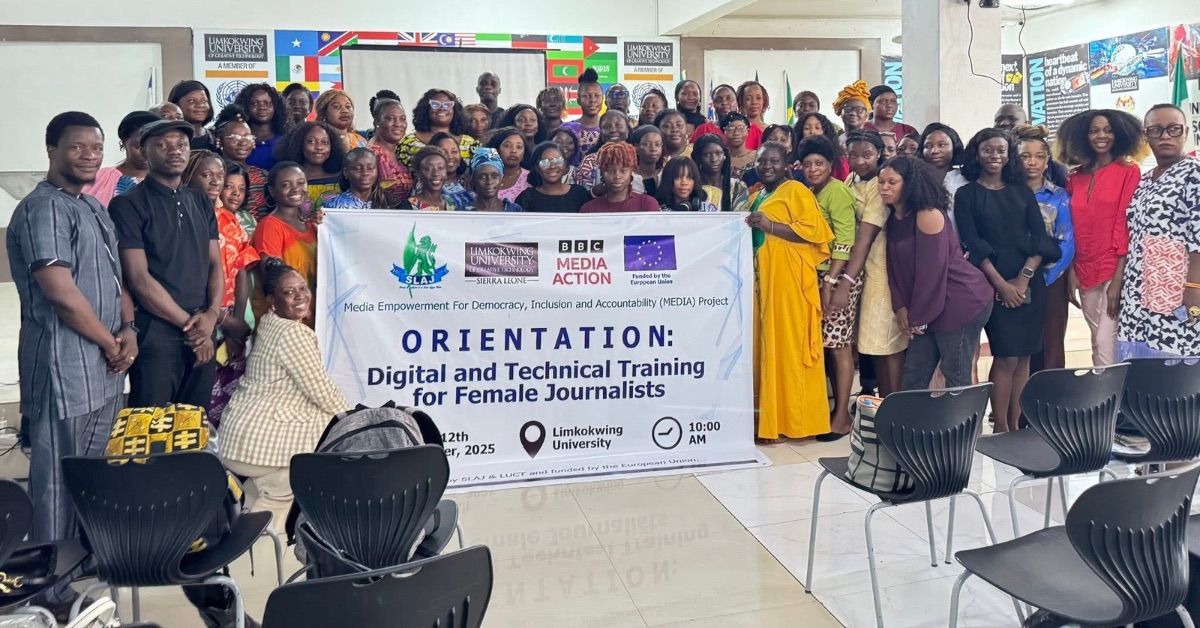
 The Sierra Leone Association of Journalists (SLAJ) officially launched a six-week Digital Literacy and Technical Media Training program for 70 female journalists on Friday, 12th December 2025, at Limkokwing University of Creative Technology.
The event, attended by key partners including the European Union, BBC Media Action, and representatives from the media development community, marked a significant milestone in empowering women in Sierra Leone’s media sector.
In his opening statement, SLAJ President Alhaji Manika Kamara emphasized the importance of the program, describing it as a rigorous, college-level course designed to equip female journalists with the necessary digital, technical, and critical thinking skills to succeed in an increasingly digital media environment.
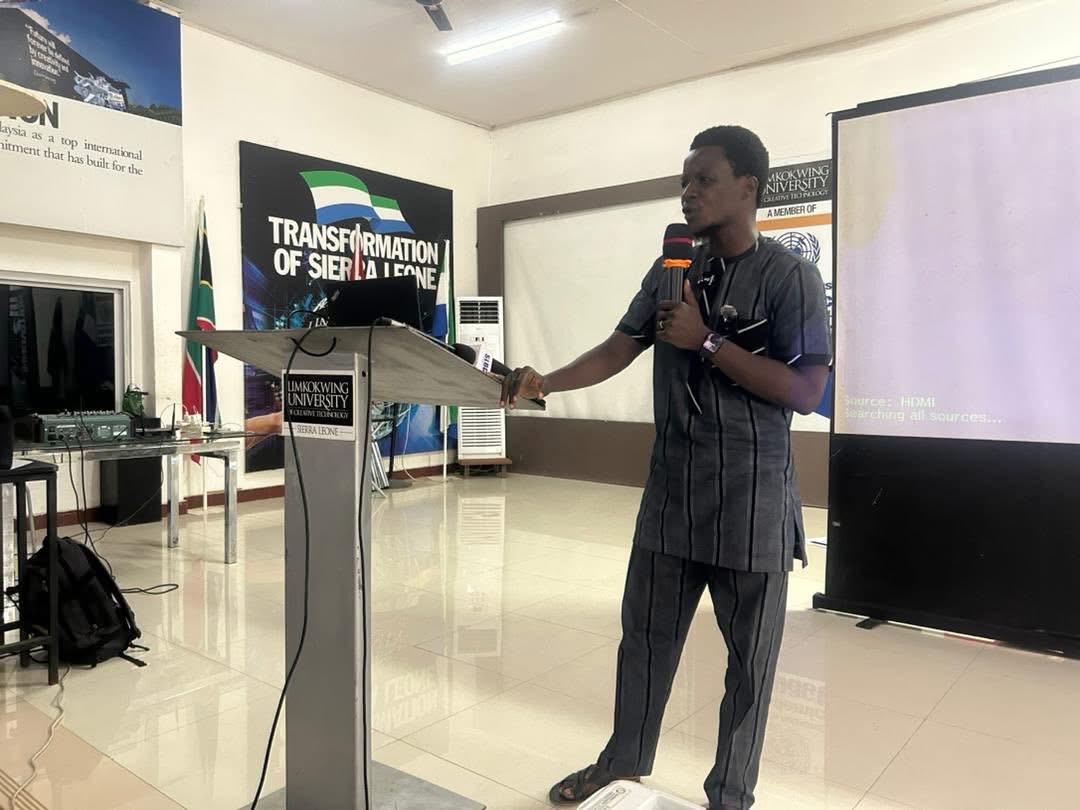
Kamara highlighted that the initiative was not a one-off seminar but a structured, practical, and transformative learning experience.
“This initiative is designed with one goal in mind: to empower female journalists with the digital, technical, and critical thinking skills required to thrive in a fast-changing media landscape,” Kamara said. “It is not just a workshop; it is a transformational course.”
The training program is part of a broader collaboration between SLAJ and Limkokwing University, supported by the European Union through the MEDIA Project, and facilitated by BBC Media Action. The program aims to strengthen media professionalism, accountability, and inclusivity in Sierra Leone’s journalism sector.
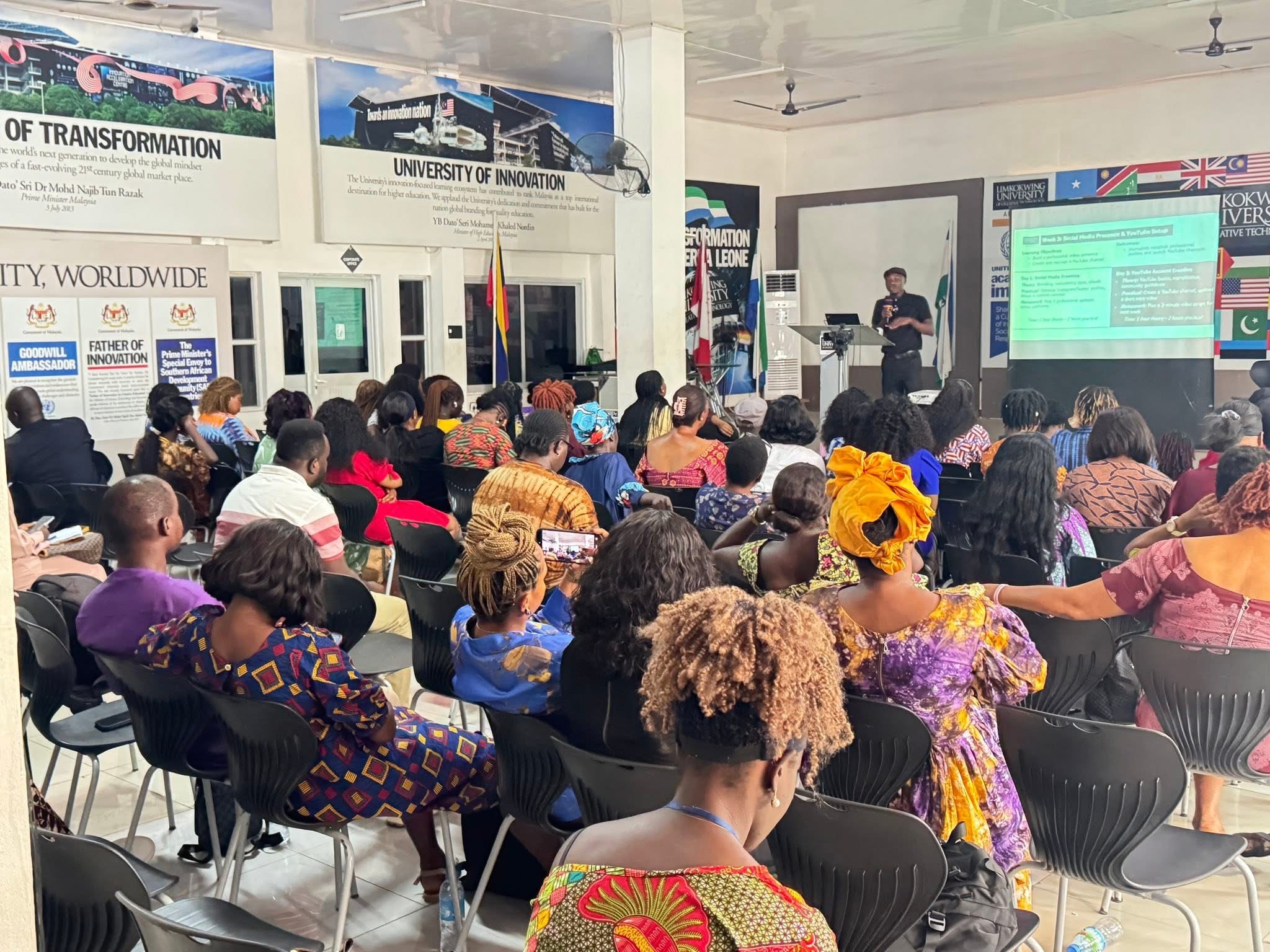
Kamara expressed his gratitude to the European Union for its continued support of media development and democratic governance in Sierra Leone, noting that the EU’s investment ensures that female journalists have the tools to not only participate in the media industry but to lead. He also thanked BBC Media Action for its technical support in building capacity and strengthening the media ecosystem in Sierra Leone.
“We extend our sincere appreciation to the European Union and BBC Media Action for your unwavering support. Your efforts are crucial in shaping a more resilient and effective media sector in Sierra Leone,” Kamara stated.
The program also complements other initiatives aimed at improving the media landscape, including the ongoing Public Financial Management training in Freetown, which began the previous week. Kamara reiterated that these efforts were part of SLAJ’s broader ACTION agenda-Accountability, Collaboration, Training, Innovation, Opportunities, and National Impact.
Turning to the trainees, Kamara encouraged the female journalists to fully embrace the opportunity before them, emphasizing that the training would equip them with vital skills such as digital literacy, multimedia production, online safety, data verification, and ethical digital practices. He urged the participants to see themselves as pioneers, noting that the training would position them to not only compete but to lead in the ever-evolving media sector.
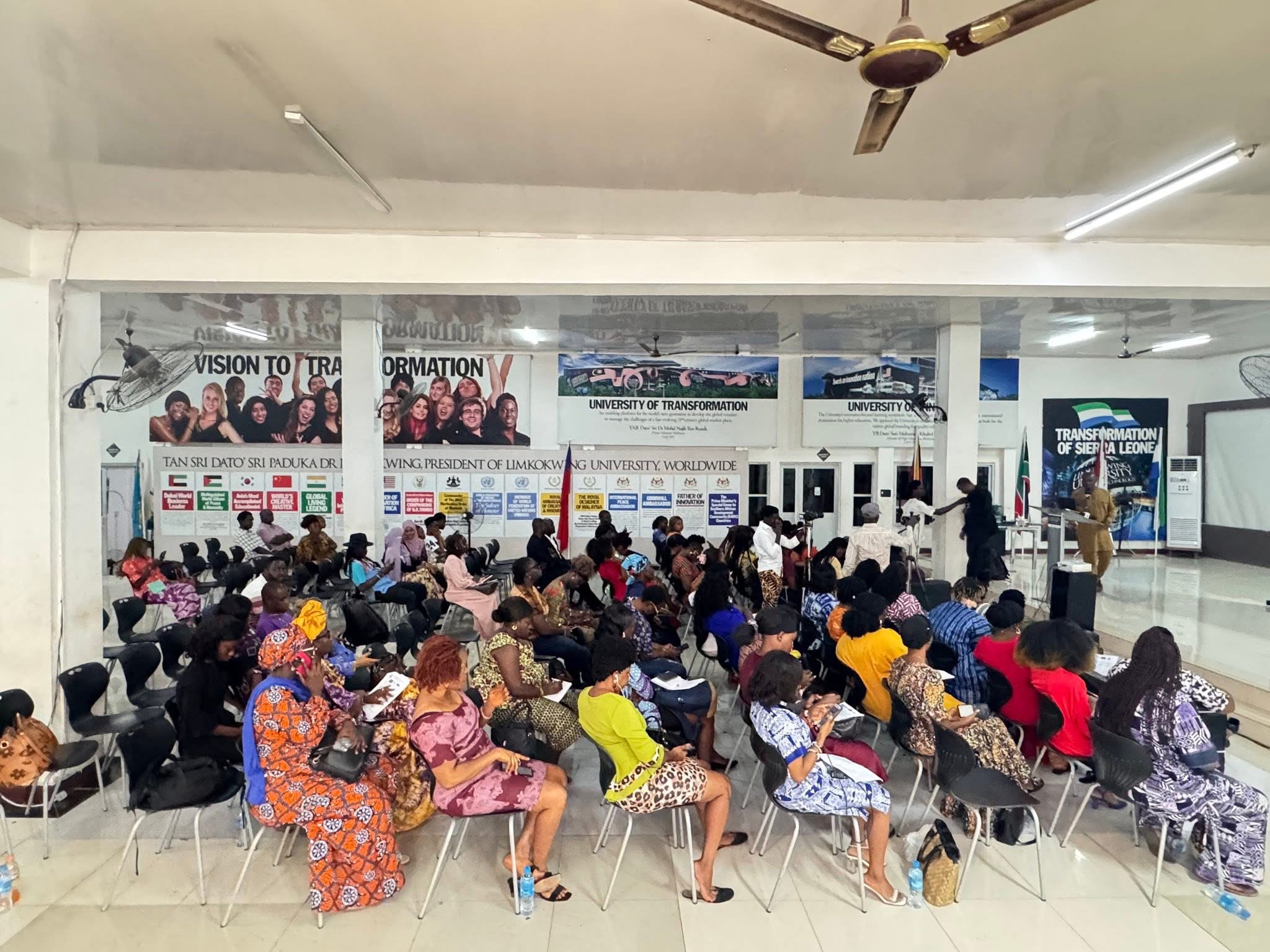
“Digital literacy, multimedia production, online safety, data verification, and ethical digital practice are now core requirements for journalism,” Kamara said. “This training positions you not just to compete, but to lead. SLAJ stands firmly behind you as you do so.”
He further stressed that empowering women in media is not an act of charity but a strategic move. “When women grow, journalism grows. When women lead, society progresses. When women are equipped, newsrooms become stronger, more balanced, and more ethical.”
Kamara concluded by reaffirming SLAJ’s commitment to building a vibrant, inclusive, and technologically resilient media sector, with the focus on one journalist at a time-and today, one woman at a time.