

 Post a comment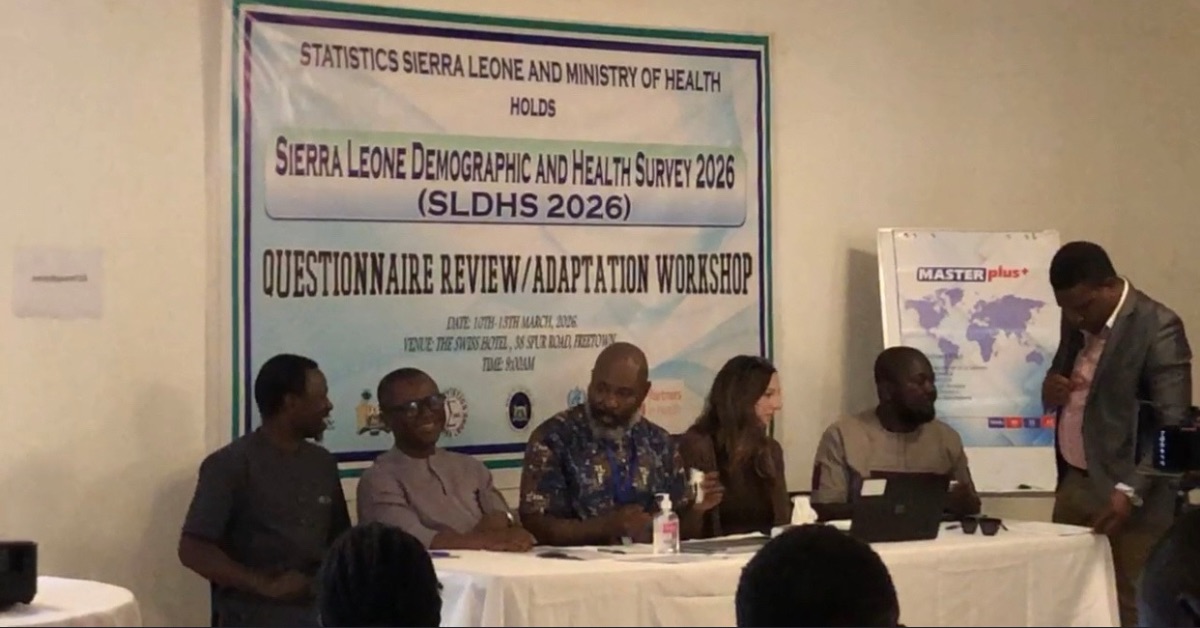
Statistics Sierra Leone (Stats-SL), in partnership with the Ministry of Health, has launched a key technical workshop to refine the questionnaire for the country’s upcoming Demographic and Health Survey (DHS), an exercise expected to generate vital data to guide health policies and development planning across Sierra Leone.
The workshop, held in Freetown, brings together technical experts and stakeholders to review and improve survey questions so they better reflect the country’s realities and provide reliable information on critical health indicators.
Acting Statistician General Lansana K. Kanneh described the exercise as a clear demonstration of Sierra Leone’s commitment to producing reliable and standardised health and demographic data.
Kanneh said that while several surveys have been conducted in the country over the years, the DHS remains unique because of its ability to measure maternal and child mortality and provide deeper insights into household living conditions nationwide.
“We want a questionnaire that reflects Sierra Leone’s realities and ensures the data we collect is both reliable and practical,” Kanneh urged participants. “This survey will guide national policy and programme implementation.”
The DHS, a globally recognised tool for measuring health indicators, nearly stalled after the United States Government withdrew its support earlier in the programme.
According to Dr. Tom Sesay of the Ministry of Health, stakeholders initially feared that the survey might not take place.
However, the situation changed after intervention by the United Nations Population Fund (UNFPA), which helped secure support from ICF International, also known as the Inner City Fund, to provide both technical and financial assistance for the survey.
“ICF’s involvement ensures our data meets international standards and can be used globally,” Dr. Sesay explained.
He added that the survey will focus on maternal and child health, immunisation and contraceptive use, while also helping Sierra Leone assess progress under its National Medium‑Term Development Plan and the United Nations Sustainable Development Goals (SDGs).
Also speaking at the workshop, Dr. Sara Scates, Lead Survey Management Specialist at ICF, acknowledged the difficulties faced by the DHS programme after a stop-work order issued by the United States Agency for International Development (USAID), which resulted in the loss of nearly 80 percent of its staff.
She commended Sierra Leone and development partners, including the Bill & Melinda Gates Foundation, for mobilising resources to keep the programme operational.
“This workshop marks the beginning of a long process,” Dr. Scates said. “Over the next year and a half, we will refine the survey instruments to ensure they reflect local realities while aligning with national priorities.”
Once completed, the DHS is expected to provide a comprehensive picture of Sierra Leone’s health landscape, offering policymakers and development partners credible evidence to strengthen healthcare delivery and improve the well-being of citizens nationwide.


