

Speaker Thomas Faces Legal Battle Over Constitutional Amendment Procedure
 Sahid Bangura
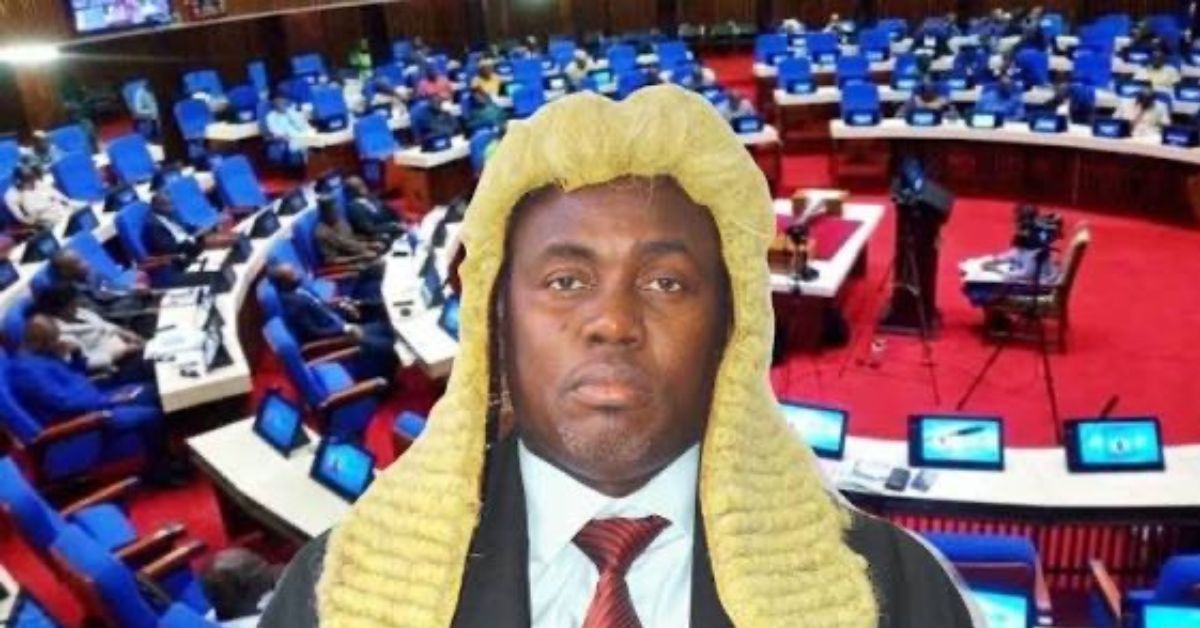
 Speaker of Parliament Segepoh Solomon Thomas is facing a legal challenge over his handling of the parliamentary process that led to the purported passage of the 1991 Constitution (Amendment) Bill 2025, with legal practitioners questioning the constitutional basis on which the vote was conducted.
In a letter dated August 18, 2026, Nicol-Wilson & Co., Malaika Chambers, addressed to Speaker Thomas, expressed concern over the procedure adopted during Parliament’s sitting on August 10, particularly the interpretation and application of constitutional provisions governing parliamentary voting on constitutional amendments.
The law firm’s intervention centres on the proposed amendment to Section 42(2)(e) of the 1991 Constitution, which seeks to change the presidential electoral threshold from 55 percent of valid votes cast to 50 percent plus one.

According to the lawyers, Speaker Thomas relied on Section 91(1) of the Constitution, which provides for decisions in Parliament to be determined by a majority of members present and voting, rather than applying the specific constitutional requirement contained in Section 108(2)(b) for constitutional amendments.


The firm argues that Section 108(2)(b) requires a constitutional amendment Bill to receive the support of not less than two-thirds of all Members of Parliament on its second and third readings.
Nicol-Wilson & Co. maintains that the distinction between the two provisions is significant, stressing that Section 91(1) governs ordinary parliamentary decisions, while Section 108 establishes a higher threshold specifically for altering the Constitution.
The lawyers further contend that the wording of Section 108(2)(b) does not refer to “Members present and voting”, but expressly requires the support of “not less than two-thirds of the Members of Parliament.” They therefore argue that the provision cannot be diluted or replaced by the general voting rule under Section 91(1).
The legal challenge also raises concerns over the withdrawal of most opposition All People’s Congress (APC) MPs from the parliamentary proceedings before the vote. The firm states that, with the required two-thirds threshold calculated against the full membership of Parliament, the constitutional requirement was not met when the vote was conducted.
Another major issue raised in the letter is Speaker Thomas’s reliance on Section 94(2), which protects certain parliamentary decisions concerning the rules of procedure from judicial inquiry.
The lawyers argue that Section 94(2) does not give Parliament or the Speaker immunity from constitutional scrutiny, maintaining that there is a fundamental difference between interpreting Parliament’s internal rules and interpreting the Constitution itself.
They cite previous judicial authorities, including APC & Others v Speaker & Others, to argue that parliamentary autonomy does not amount to parliamentary sovereignty and that Parliament remains subject to the Constitution from which its authority is derived.
The firm further maintains that a decision by the Speaker cannot alter or override the constitutional requirements governing amendments to the supreme law.
While acknowledging Speaker Thomas’s indication that the matter may be referred to the Supreme Court for interpretation, Nicol-Wilson & Co. argues that any constitutional uncertainty should have been resolved before Parliament proceeded with the vote.
The lawyers contend that a subsequent Supreme Court interpretation cannot retrospectively supply votes that were not cast or cure an alleged failure to satisfy the constitutionally prescribed threshold at the time of the vote.
They consequently argue that if the required two-thirds majority was not obtained, the defect would go beyond a mere parliamentary procedural irregularity and would affect Parliament’s constitutional authority to pass the amendment.
The firm has therefore described the Speaker’s decision to proceed on the basis of the lower voting threshold as unconstitutional, null and void, and argues that the purported passage of the amendment consequently has no legal effect.
The lawyers conclude that the Supreme Court, if seized of the matter, should declare the purported constitutional amendment invalid, insisting that neither a literal nor purposive interpretation of the Constitution permits the special threshold under Section 108(2)(b) to be displaced by Section 91(1).
The legal position expressed in the letter comes amid continuing controversy over the parliamentary proceedings of August 10 and growing calls for judicial clarification of the constitutional procedure governing the amendment.
The final legal determination on the validity of the parliamentary process and the amendment, however, rests with the Supreme Court of Sierra Leone.