

A Legacy of Debt and Secrecy – The Fiscal Recklessness of the Lungi Congress Centre, by Mohamed A Warisay
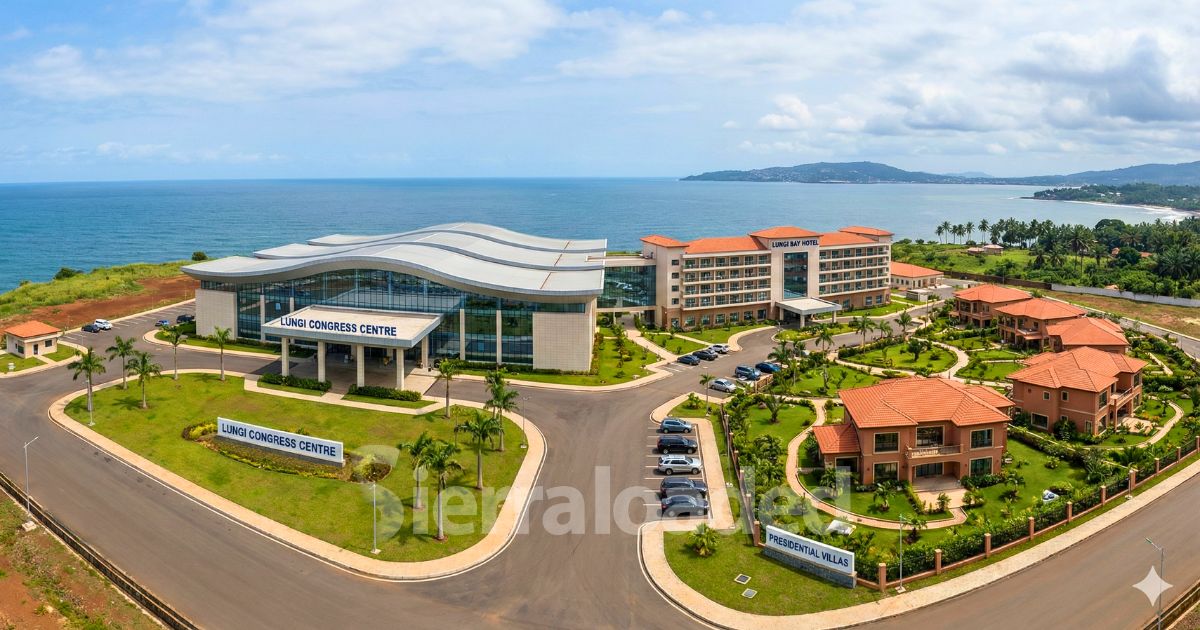
The narco-regime of Illegitimate President Julius Maada Bio is once again under intense scrutiny as its pursuit of the $124 million Lungi Congress Centre project collides with the harsh realities of Sierra Leone’s national balance sheet.
While the regime frames this Public-Private Partnership (PPP) as a visionary “airport city” development, a closer examination reveals a precarious financial gamble that raises urgent questions about transparency, accountability, and the potential for deep-seated corruption.
As the International Monetary Fund (IMF) continues to classify Sierra Leone as being at “high risk of debt distress,” the decision to anchor a massive commercial hospitality project, complete with presidential villas, signals a troubling trend of misplaced priorities and fiscal opacity. Sierra Leone’s current public debt is projected to surpass $2.6 billion.

The Question of Accountability:
One of the most alarming aspects of this deal is the lack of transparency regarding the financing itself. While “irregular” Finance Minister Sheku Ahmed Fantamadi Bangura confirmed in Parliament that the project is essentially a bank-financed loan, the government has been notably reticent about the specifics of this financial institution.
Why has the illegitimate regime failed to publicly disclose the name of the bank providing this $124 million credit facility? The deliberate withholding of such critical information suggests a regime attempting to bypass public scrutiny.
This lack of disclosure effectively silences parliamentary oversight, preventing the citizens of Sierra Leone from understanding the true terms, interest rates, and long-term repayment obligations of the debt they are ultimately expected to service.
Beyond Fiscal Mismanagement:
The concerns surrounding the Lungi project extend far beyond mere budgetary mismanagement. There is growing public suspicion that this “loan” may be a vehicle for more sinister financial activities. Given the documented history of organised crime and illicit drug trafficking transiting through Sierra Leone, critics are questioning whether this capital-intensive project is being used to launder proceeds from illicit drug trafficking.
By utilising opaque, high-value infrastructure contracts, regimes can effectively integrate “dirty” money into the formal economy under the guise of legitimate development. The urgency with which the Bio regime pushed for the ratification of this agreement, coupled with the absence of transparency regarding the project’s financiers, has fueled fears that this complex is less about “national development” and more about providing a facade for the laundering of illicit wealth.
Conclusion: A Crisis of Trust
The Lungi Congress Centre stands as a monument to a government that prioritises prestige and hidden agendas over the basic needs of its people. The combination of high-stakes debt, lack of disclosure regarding the lending institution, and the credible suspicion of involvement in money laundering networks makes this project a litmus test for the Bio regime’s integrity.
Sierra Leoneans deserve to know who is behind the financing of their country’s future and whether their infrastructure is being built with the proceeds of crime. Until the government provides full, transparent documentation regarding the lender and the terms of the $124 million loan, the Lungi Congress Centre will remain a symbol of the very systemic corruption the current administration promised to eliminate. Radio Democracy 98.1 FM Ecowas – Cedeao The Commonwealth AYV News U.S. Embassy Freetown, Sierra Leone David M Sengeh African Union Slaj Sierra Leone Liberty TV Online Advocate for good governance UK in Sierra Leone First Lady Fatima Maada Bio Sierraloaded U.S. Department of State Memunatu Muna Barrie Osman Conteh U.S. European Command (EUCOM)