

 Post a comment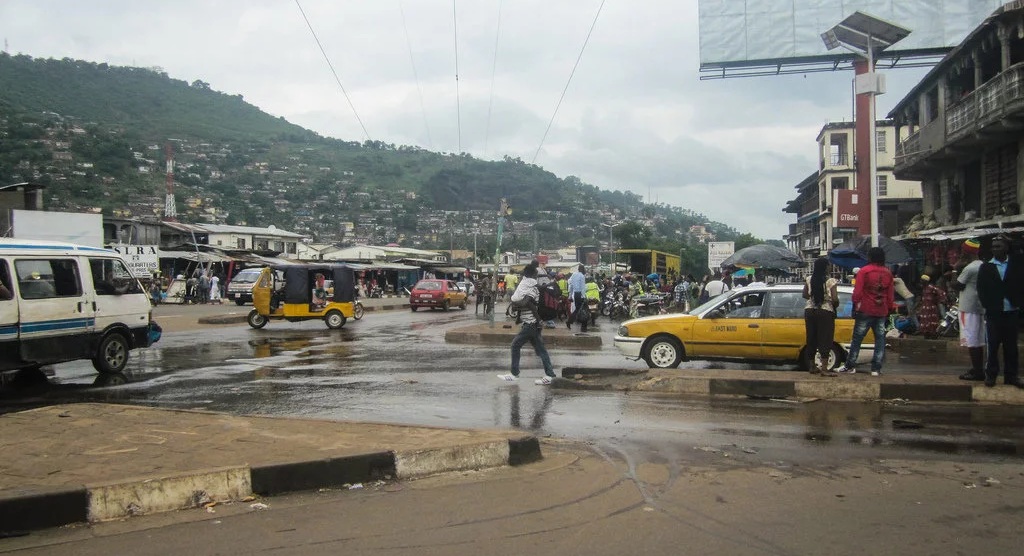
In a Premier Media article, Raymond A. Kamara described Freetown as “not only our capital city but one of Africa’s most significant historical landmarks and a powerful symbol of resilience, freedom, and the African diaspora’s homecoming.” His words stirred pride, showing Freetown as a beacon of hope. Today that pride is dimmed. The city that once offered sanctuary now fails to preserve the dignity of its people, both living and dead.
Freetown’s streets, once symbols of liberation, now reveal neglect. Unidentified corpses are left uncollected for days, abandoned on sidewalks and left to decay. This is not resilience but a harsh reflection of poverty, broken systems, and the widening gap between political promises and daily reality.
The Freetown City Council reports a rise in body collections linked to the Kush epidemic. In a letter to the Minister of Interior, the Mayor wrote that deaths have escalated from occasional to near-daily since 2022. As of 13 August 2025, the Council recorded 142 corpses collected, 136 males and 6 females. By 11 September, another 32 bodies had been retrieved, 31 males and one female. Most were young. Their lives were cut short, their bodies left to the streets.
A local resident words capture the pain: “The way I saw that body transported, I would not treat my dog that way.” His account exposes not only the indignity faced by the dead but also the despair of the living forced to witness it. Social media amplifies this suffering. Corpses are often removed only after public pressure. This is not a city of homecoming. It is a city in humanitarian crisis.
FCC points to legal ambiguity as a major barrier. While not required by law to collect unidentified bodies, it has assumed this task, straining its budget. The Local Government Act 2022 does not explicitly assign this responsibility, though councils have historically provided pauper’s burials. The surge in deaths forced the creation of a burial team, equipped with gloves, disinfectants, masks, and body bags. None of these costs were budgeted.
The 1991 Constitution affirms that the state shall recognise, maintain, and enhance the sanctity of the human person and human dignity. That duty does not end with life. Yet the current legal framework falls short. The Local Government Act 2022 assigns broad environmental health duties to councils but is silent on corpses. The Public Health Act 2023 places burial duties first on relatives, then property owners, and finally on health authorities if public health is at risk. But when bodies are left in public spaces including streets, beaches, or roadsides, neither law clarifies who should act, under what authority, or with what budget. The result is paralysis. Bodies remain unclaimed. Dignity is lost.
This crisis demands systemic change. Temporary fixes will not suffice. The Public Health Act 2023 should be amended to assign responsibility for unidentified bodies in public spaces to local councils, working with health authorities. Health authorities must provide medical oversight and certification, while councils handle logistics and burial. A dedicated funding stream through the Ministry of Health or devolved budgets must be established. As an immediate step, the Ministries of Health and Local Government should issue a joint circular clarifying roles and responsibilities.
Freetown’s legacy is one of resilience and freedom. To honour that legacy, the city must respect the dignity of its people in both life and death. Leaving bodies to decay on the streets betrays that promise. It erodes public trust. It dishonours history.
Leaders must act to end the kush epidemic. Laws must change to clarify roles and responsibilities. Budgets must reflect reality. Compassion must guide policy. Only then can Freetown reclaim its dignity as a place of pride and sanctuary.


