

 Post a comment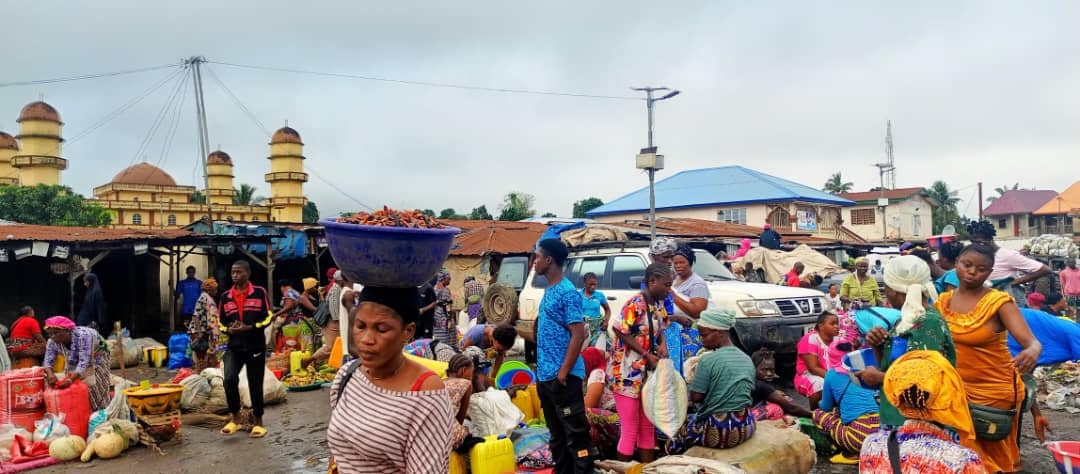
They say the minimum wage has gone up.
From NLE 800 to NLE 1,200.
When the news came out, some people paused and said, “At least dem don try.” Others quickly reached for a pen and paper not to celebrate but to calculate survival.
Because in Sierra Leone, whenever salary goes up small, the cost of living goes up big like it heard the news before we did.
On paper, 1,200 sounds better than 800.
Nobody is arguing that.
But life is not lived on paper; it is lived in the market, in the poda-poda, under the landlord’s roof, and in the darkness when EDSA decides to “take light.”
And in all those places, 1,200 does not go very far.
Let’s be honest, a family of ten, one working father and a salary of 1,200.
That money must buy rice, pay transport, settle rent, handle school needs, buy soap, oil, pepper and somehow still find money for EDSA tokens.
By the second week of the month, the salary is already tired.
By the third week, it has given up completely.
Go to the market with hope and a shopping list and see reality waiting for you.
You ask for rice, the price has changed.
You ask for oil, it has climbed again.
You complain small and the market woman looks at you, shrugs and says, “Na so the price dae, if yu want you buy.” No apology. No negotiation.
Hunger does not understand explanation.
Transport alone can finish a good portion of that wage. Rent does not care that minimum wage has increased; it only knows that dollars exist.
School does not wait for next month.
Hospital does not accept stories.
And when EDSA brings light, you must buy units quickly because you want comfort.
So yes, the wage increased but the cost of living has been increasing every day, quietly and confidently. Prices don’t wait for announcements.
They move ahead of time. The result is that the increase feels more like encouragement than relief. It is like telling a man drowning, “Try your best.”
Government will say it is a step in the right direction. Maybe it is.
But a step that does not match the speed of hunger is a slow step.
People are not asking to be rich.
They are asking to breathe. To eat without borrowing. To reach the end of the month without selling dignity.
A minimum wage should guarantee minimum comfort.
Not luxury — just comfort. The kind where a father can come home and not pretend to be asleep because there is no food. The kind where a mother does not have to divide one cup of rice like it is gold dust.
So congratulations to the new minimum wage.
We see the effort.
But until the price of everyday life stops rising faster than salaries, this increase will remain good news that sounds better on radio than it feels in the home.
Because in Sierra Leone, survival is not about how much you earn it is about how far it can go.
And right now, 1,200 is still walking a very long road.


