

 1 Comment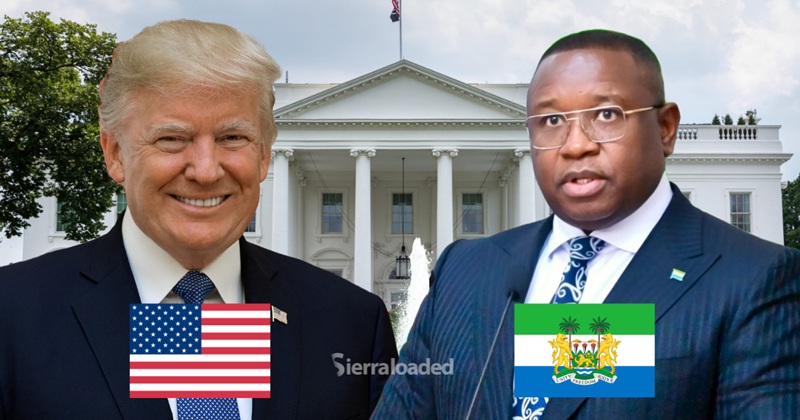
On December 16, 2025, Sierra Leoneans heard the news: a US travel ban, starting January 1, 2026. While this might worry people, it’s important to see it not as a sign of our country’s weakness. Instead, it shows how seriously our government takes protecting our national security and our right to be an independent sovereign nation.
The United States says we have “poor screening” and “fail to take back our citizens.” But this “failure” is actually a planned choice. It’s meant to prevent Sierra Leone from becoming a destination for other countries to send criminals who might pose a threat to our national security.
For too long, powerful countries have pushed developing nations to accept people they deport, often those with criminal records. They do this by threatening to limit visas. Look at what happened recently in Ghana: Ms. Fatmata Conteh was publicly shamed after being sent back from the US. This shows how unfair these situations can be.
Sierra Leone will not allow its airports to become processing centers for people other countries don’t want. Our choice not to accept deportees without proper checks is not a weakness. It’s a key step to keep our country safe and control who comes in, just like the “Put America First” agenda.
This ban also connects to bigger global tensions. Sierra Leone has always pursued its own foreign policy, putting our country’s needs first and not siding completely with any one superpower. Our partnerships, for example, with China in trade and infrastructure projects, have brought tangible benefits, such as new roads and better schools, just as the US MCC projects have.
While the US wants African nations to pick sides, Sierra Leone insists on working with any country that respects our independence. Our refusal to give in to US demands about deportations is part of this bigger idea: Sierra Leone decides its own foreign policy. This stance is important for several reasons.
First, national safety: taking in people without proper checks, especially those with criminal pasts (the US deported over 250,000 people globally in 2024, many with serious criminal records), could put our hard-won peace at risk.
Second, our right as an independent country: every nation, including the US with its strict border rules, has the right to decide who enters its land.
Third, setting a bad example: if we give in to US demands, it could encourage other countries to pressure us on similar issues. Fourth, dignity: we must not let Sierra Leoneans living abroad be treated like throwaways by other countries’ immigration systems.
As one Senior Official from the Foreign Ministry recently said, “Our Ministry is actively negotiating with the United States, but let me be clear, we are doing this from a position of strength.
Any solution must fully respect Sierra Leone’s right to properly check returning citizens, to refuse to send people from the US or other countries through us, and to maintain our strong partnerships with all nations. We are sure that by talking carefully and sticking to our principles, we can both protect our country and make it easier for our people to travel when needed.”
In the end, this situation calls for calm and unity among Sierra Leoneans. The travel ban, rather than showing weak leadership, actually highlights a strong commitment to keeping our country safe and independent, even when big global powers are involved. Many Sierra Leoneans already find it hard to get US visas.
Let’s negotiate with the United States from a position of strength and not weakness. Giving up our country’s main principles for a privilege that only a few can get would be a huge mistake.
It seems our way forward is clear: Sierra Leone will continue to deal with the world as an independent nation, building relationships based on mutual respect, not by being forced. Our independence comes first, always.


The United States will not deport anyone to Sierra Leone unless that person is genuinely associated with Sierra Leone or holds a valid Sierra Leonean passport. If that is the case, then the real security breach is not the deportation itself, but our own failure in issuing passports and official documents to people who are not Sierra Leoneans.
It cannot be a security breach only after the United States decides to deport these individuals. If passports were lawfully issued, then responsibility lies with those who approved and facilitated that process. If they were issued unlawfully, then the breach occurred at the point of issuance not at the point of deportation.
Accepting such individuals into Sierra Leone is portrayed as a weakness and a loss of sovereignty. Yet the same voices remain silent when we repeatedly go to the United States and other foreign powers begging for aid, or asking them to act as referees in our internal disputes. Sovereignty suddenly becomes flexible when it benefits the ruling class, but rigid when it concerns the ordinary citizen.
Why is sovereignty only invoked when policies affect the common man, but conveniently ignored when elites profit from foreign dependence?
The real question we should be asking is this: Why were Sierra Leonean passports distributed to foreigners in the first place? Until that question is honestly answered, blaming deportation policies is nothing more than political deflection.