

How WASSCE Examinations Are Sold to the Highest Bidder Across Sierra Leone
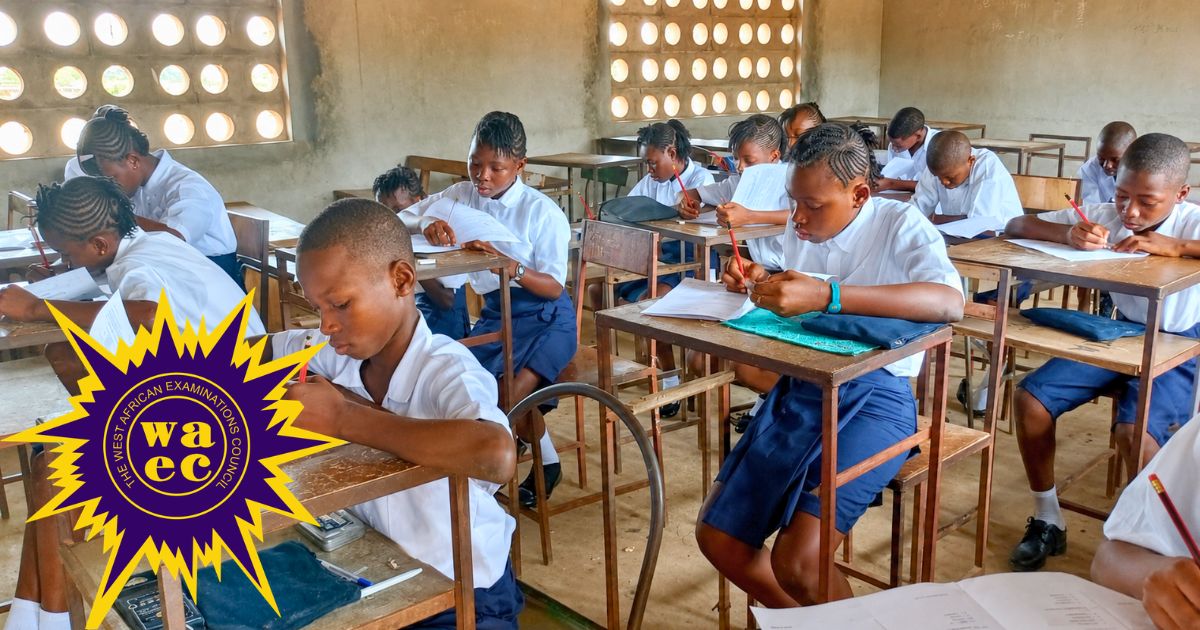
There is a quiet transaction taking place in examination halls across Sierra Leone. It does not involve pen and paper. It does not involve critical thinking. It involves a smartphone, a WhatsApp group, and a fee paid to the right person at the right time.
We call it the West African Senior School Certificate Examination (WASSCE). The students call it something else. They call it the “phone exam.” And the silence around it is slowly killing our educational system.
A few weeks ago, I spoke with a secondary school teacher in Freetown who asked not to be named. She has been teaching for over a decade. She has watched the transformation happen in real time, and what she described was not education. It was a performance. “The students know they do not need to study,” she told me. “They tell me openly: ‘Madam, why are you stressing? On the exam day, we will get the answers on our phones.’ They say it without shame. They say it as if it is normal.”

The Normalization of Malpractice
It has become normal. According to data from the West African Examinations Council (WAEC), Sierra Leone consistently records some of the highest rates of examination malpractice in the sub-region. In the 2023 WASSCE, WAEC withheld the results of hundreds of candidates across multiple schools pending investigations into malpractice. In some schools, the majority of candidates were flagged. The 2024 results were not significantly better.



In 2023, WAEC Nigeria reported that over 13,000 candidates had their results withheld due to examination malpractice. Ghana recorded similarly alarming figures. In Sierra Leone, WAEC does not always publicly release full malpractice data, but media investigations by Politico SL and the Sierra Leone Telegraph in 2023 and 2024 confirmed multiple cases of leaked papers, mass cheating rings, and schools where malpractice had become institutionalized. One report described a “mafia” that included teachers, invigilators, and external syndicates operating with near impunity.
WAEC itself is caught in an impossible position. The council has introduced measures to combat malpractice: biometric verification of candidates, enhanced invigilator training, and the withholding of results from suspected schools. But the syndicates adapt faster than the regulators. And the political will to enforce consequences, including the prosecution of teachers, supervisors, and school proprietors involved in organized cheating, remains weak.
Devastatingly Simple
The most common method is devastatingly simple. Question papers are photographed and leaked to WhatsApp groups before or during the examination. Answers are crowdsourced from paid collaborators—sometimes teachers, sometimes university students, sometimes organized syndicates—and distributed back to candidates in real time. The invigilator is either complicit, intimidated, or simply outnumbered. The student with the phone has access to answers that the honest student sitting next to them spent months preparing for and will never receive.
This is not an occasional lapse. This is an industry.
Let me be blunt about what is happening. The WASSCE has been commodified. It is no longer a test of knowledge. It is a test of who can pay.
The Minister of Basic and Senior Secondary Education, Conrad Sackey, has publicly condemned the practice and warned that schools caught facilitating malpractice would face sanctions. But teachers and students report that the phone exam continues. The gap between official statements and classroom reality is wide, and it is filled with the quiet desperation of students who believe that cheating is their only option.
The cost varies. In some schools, it is built into an informal “examination fee” collected before the exams begin. In others, it is organized by student leaders who collect contributions and pay the syndicates directly. The price depends on the subject, the school, and the network. But the principle is the same: if you have money and a phone, you can pass. If you do not, you take your chances.
A Cycle of Fraud
The victims are multiple. The honest student who studied and is outperformed by a classmate who cheated. The teacher whose efforts are rendered meaningless. The parent who sacrificed to pay school fees, believing their child was receiving an education, when in fact they were receiving answers on a screen. The employer who hires a graduate with five credits, unaware that those credits were purchased, not earned. The nation that believes it is building a skilled workforce, when in fact it is printing certificates for a generation that cannot read them.
Here is the deeper tragedy: The phone exam does not only inflate grades; it inflates expectations. A student who passes WASSCE through malpractice gains a certificate that says they are prepared for university. But when they arrive on campus, they discover the truth. They cannot write. They cannot reason. They cannot pass a university examination without the same phone and the same network that carried them through secondary school.
And so the cycle continues, climbing the educational ladder, until it deposits a graduate into the job market with a degree that represents nothing but years of successful fraud. The employer who hired that graduate discovers that the credentials are hollow. The patient treated by a nurse who cheated through her examinations suffers the consequences. The bridge designed by an engineer who never learned the calculations becomes a danger to the public.
This is the lie at the heart of our educational crisis. We are not only failing to educate our children. We are certifying their ignorance and calling it achievement. And we are doing it in silence, because confronting the phone exam means confronting uncomfortable truths about complicity, about corruption, and about our collective refusal to demand integrity from the institutions we have built.
Breaking the Silence
Why is no one talking about this? Why is the phone exam treated as an open secret, something everyone knows but no one names?
Part of the answer is fear. Teachers who speak out risk their jobs. Students who refuse to participate risk being ostracized or failing while their peers pass. Parents who paid for the phone exam are not going to report it. And the syndicates that run these operations are organized, connected, and protected.
Part of the answer is shame. To admit that the WASSCE has been compromised is to admit that our educational system has failed at its most basic function. It is easier to look at the pass rates and celebrate the “improvement” than to investigate how those passes were achieved.
But the silence is not neutral. Every year we refuse to confront the phone exam is another year of graduates who cannot read, cannot write, and cannot think. It is another year of honest students being punished for their integrity. It is another year of the future being sold to the highest bidder while the rest of us pretend not to notice.
(Look out for Part Two: “How We Take It Back: A Four-Step Plan to Rescue Our Examinations and Our Future”)
About the Author:
Christopher Ahmed Kamara is an internationally published author, Founder of Transcend Narrative St., and Board Chairman of Winners’ Chapel International, Calaba Town. www.christopherahmedkamara.org
That is the quality education they had introduced. They know exactly what is happening in examination halls is not a hidden secret. Quality Education.
Who is to blame
A country known for it educational success is now a hub for examination malpractice poor we…….