

University of Sierra Leone Announces One-Off Entry Requirement Dispensation For Diploma And Certificate Programs
 Julius Mustapha Harding
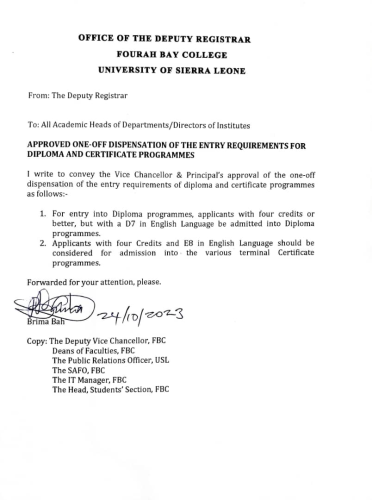
 The University of Sierra Leone has announced a one-off dispensation of entry requirements for diploma and certificate programs. The Deputy Registrar, on behalf of the Vice Chancellor and principal, conveyed this development to all Academic Heads of Departments and Directors of Institutes.
The approved dispensation is as follows:
Diploma Programs: Applicants who possess four credits or better but have a D7 in English Language will now be eligible for admission into diploma programs. This represents a significant easing of the entry requirements for prospective diploma students.

Certificate Programs: For applicants with four credits and an E8 in English Language, they will now be considered for admission into various terminal certificate programs.



This one-off change in entry requirements is expected to open doors for a wider range of students, providing them with opportunities to pursue diploma and certificate programs at the University of Sierra Leone, even if they have faced challenges in the English Language component of their qualifications.
Prospective students are encouraged to take advantage of this unique opportunity, and academic departments and institutes are urged to consider applicants with the specified qualifications for admission.
This decision showcases the University of Sierra Leone’s commitment to inclusivity and providing educational opportunities for a broader spectrum of students. It is a testament to the institution’s dedication to nurturing academic excellence and diversity within its programs.
For further details and inquiries, applicants and academic heads can contact the University of Sierra Leone’s admissions office.
The University’s administration believes that this one-off dispensation will not only enhance accessibility to education but also foster a more diverse and enriched academic community within the institution.