


 Post a comment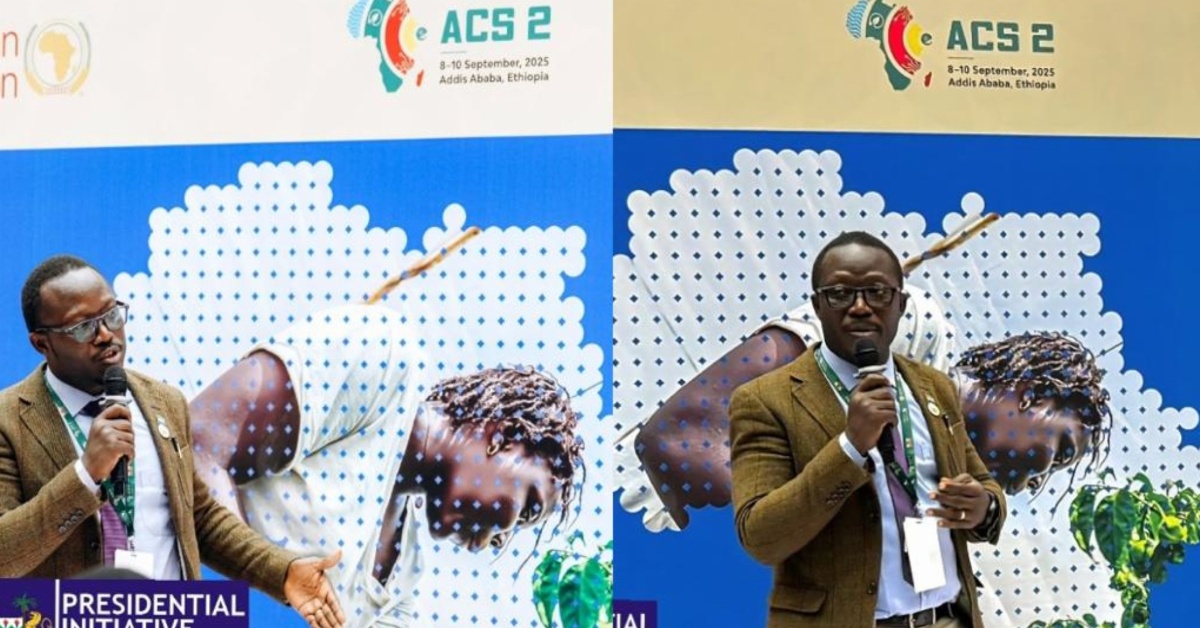
Speaking at the Second Africa Climate Summit in Addis Ababa, Ethiopia, Fuad Yusuf Bangura, Sierra Leone’s Director of Climate Change in the Office of the President, delivered a powerful reminder that environmental challenges ignore man-made boundaries.
“Nature and biodiversity know no borders,” he told delegates. “Trees, wildlife, and marine life do not require passports or immigration protocols to grow or move across countries. Likewise, the disasters resulting from their destruction are not confined to political boundaries. They can be regional and cumulatively global.”
Bangura stressed that Africa’s ecosystems, watersheds, and forests stretch far beyond national lines, making regional collaboration essential. He argued that without collective action, no single government can effectively restore or safeguard these shared natural systems.

Linking his call for unity to global financing efforts, Bangura pointed to Brazil’s proposed Tropical Forest Forever Facility (TFFF), set to be launched at COP30 in Belém. He welcomed its ambition but urged Africa to adopt a clear stance: financing models must address more than deforestation. They must also strengthen regional conservation priorities, guarantee equity for Indigenous Peoples and Local Communities, and provide predictable support to governments already making sacrifices to protect natural resources.
For Sierra Leone and the wider ECOWAS region, Bangura underscored the urgency of aligning regional strategies with such mechanisms. The Upper Guinea forest, the last significant remnant of its kind in the sub-region, remains under pressure, and its preservation cannot be secured by Sierra Leone alone.
He urged ECOWAS governments to coordinate their positions so that West Africa speaks with one voice in Belém and beyond, ensuring the region is not a passive recipient but an active shaper of global forest finance frameworks. He furthered that, “President Julius Maada Bio has been providing hands-on leadership on climate change and environmental governance which also emphasizes his call for regional integration and concrete action in climate adaptation and mitigation strategies.”
As COP30 approaches, Bangura cautioned that new funds and facilities should not be seen as charity schemes. Rather, they must be seen and treated as investments in humanity’s survival that will also generate real economic returns.
For communities, these mechanisms can provide direct financial benefits and create a sense of ownership that strengthens their role as custodians of conservation. He reaffirmed that Africa’s strength lies in solidarity and collective ambition, making the case that regional unity is essential for influencing how these initiatives are designed and implemented.
“Africa’s strength will lie greatly in solidarity and collective bargaining,” Bangura noted, affirming that, “Nature knows no borders, and neither should the responsibility to protect it.”


