

Standards Bureau Warns Water Companies, Fuel Dealers Over Non-Compliance
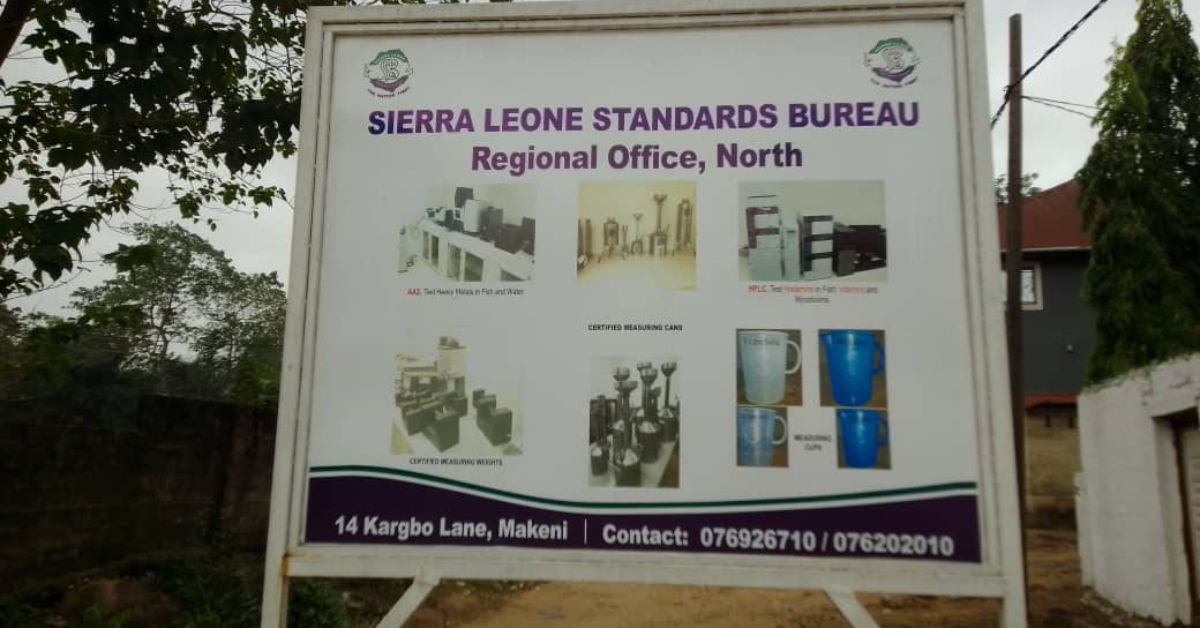
The Regional Manager of the Sierra Leone Standards Bureau for the Northeast and Northwest Regions, Mr. Abdul Aziz Kamara, has raised serious concerns over the operations of water companies, fuel dealers, and sellers of electronic appliances, warning that strict enforcement measures will be implemented against defaulters.
Speaking in an exclusive interview with this medium, Mr. Kamara described the operations of several water companies in Makeni as unsatisfactory, citing poor hygiene practices, questionable sachet sizes, and public complaints about fluctuating prices of sachet and bottled water.
He explained that the Standards Bureau, as the government institution mandated to develop, monitor, and enforce national standards, oversees production processes to ensure that consumers receive quality goods and services. This includes providing guidelines to water companies at every stage of production — from water sourcing and processing to packaging, transportation, and marketing.

However, he clarified that the Bureau does not regulate or determine the prices of water products.


Mr. Kamara revealed that many water production companies in Makeni lack proper standards documentation, water testing certificates, and machine verification to confirm correct sachet measurements. According to him, this has led to instances of consumers being shortchanged.
“If water is not properly treated and monitored, it can lead to serious health problems for families,” he warned.
The Regional Manager reaffirmed his commitment to intensify monitoring visits to water factories once the Bureau’s operational vehicle arrives in June. He disclosed that frequent inspections will resume, and verification stickers and testing certificates will be issued to compliant businesses.
“We will take strict disciplinary action against defaulters without proper documentation or who fail to meet required standards,” he stated, adding that the Bureau is working closely with stakeholders including MCC, BDC, AIG, LUC, and other institutions to strengthen enforcement efforts.
Addressing the growing number of water companies in the region, Mr. Kamara alleged that some operators deliberately tamper with sealed machines to reduce sachet sizes. He warned that factory owners found guilty of such practices would face severe punishment in accordance with the law.
He stressed that the Bureau does not discourage businesses but facilitates lawful operations, provided they comply with established benchmarks and standards.
On fuel stations, Mr. Kamara explained that the Bureau verifies and calibrates fuel pumps to prevent cheating of both dealers and customers. He noted that fuel station operators must first notify the Standards Bureau before commencing operations.
Calibration, he said, ensures accurate fuel measurement. However, he acknowledged that mechanical breakdowns over time can lead to measurement fluctuations — sometimes causing losses for dealers and, in other cases, for customers.
He disclosed that a comprehensive verification exercise for all filling stations in the Northern Region is scheduled for June. He emphasized that no station is permitted to tamper with fuel pumps without the Bureau’s knowledge, and any breakdown must be formally reported for corrective action.
Mr. Kamara also issued a strong warning to traders selling electronic appliances and electrical materials, noting that substandard cables and devices are major causes of fire outbreaks in homes, offices, and businesses.
He stated that the Bureau operates both food and non-food testing laboratories, including Microbiology and Chemistry Labs, as well as a Petroleum Laboratory for testing imported petroleum products before they are discharged into the country.
However, he acknowledged that the Bureau is yet to secure a Materials Science Laboratory needed to test cement, iron rods, and certain electrical materials locally, though efforts are underway to establish one.
Mr. Kamara pledged his continued commitment to strengthening standards enforcement across the seven districts under his jurisdiction as part of the government’s decentralization drive. He called on the public to collaborate with the Bureau in ensuring compliance, noting that adherence to standards ultimately improves public health, safety, and quality of life.