
A Dangerous Precedent – Why CAF’s Decision Against Senegal Threatens African Football
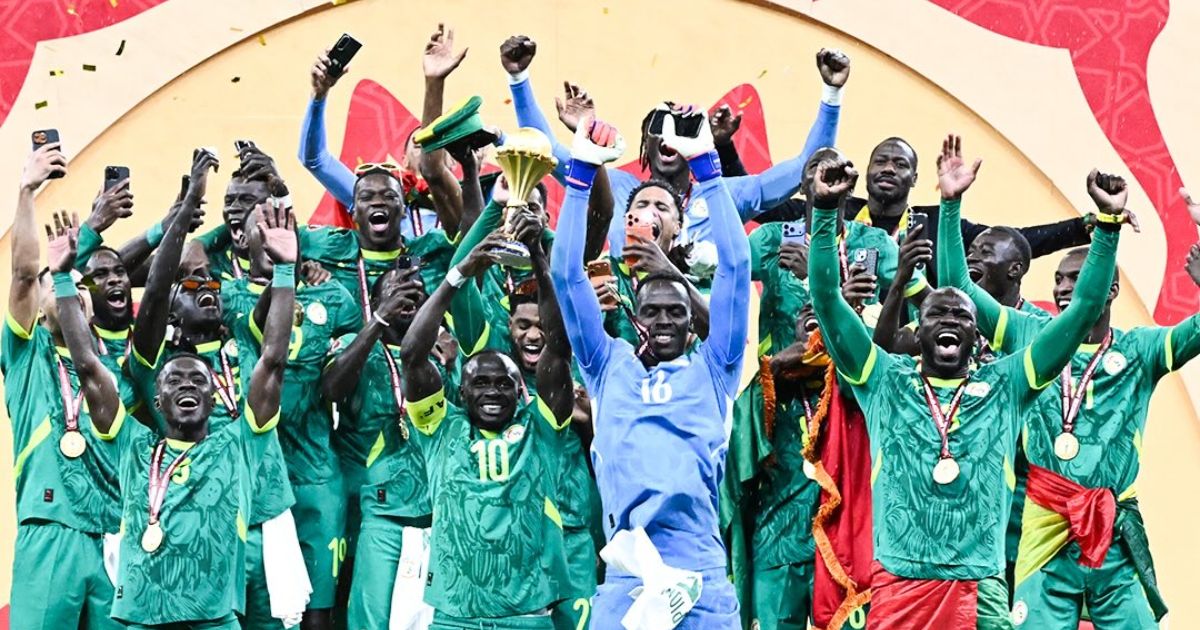
On January 18, 2026, Senegal’s national football team won the Africa Cup of Nations final against #morocco in Rabat, a moment of genuine sporting triumph earned on the pitch with a 1-0 victory in extra time. The trophy was lifted. The celebrations were real. Two months passed with the world accepting this result as fact.
Then, on March 17, 2026, the Confederation of African Football announced that none of it counted. Senegal, the Appeal Board declared, had forfeited the match. The result was overturned and recorded as a 3-0 loss. Morocco was now champion.
This ruling should trouble us deeply. It is not just about Senegal. It is about whether African football governance has abandoned basic principles of fairness, finality, and the rule of law.
Let’s be clear about what happened. During stoppage time in normal play, Morocco was awarded a penalty following a VAR review. Senegal’s players, led by coach Pape Bouna Thiaw, walked off the pitch in protest. This lasted approximately 15 minutes, a serious breach of protocol, certainly.

But then, and this is crucial the players returned. The referee allowed play to resume. The penalty was missed. Extra time was completed. Senegal held on and won 1-0.
The match was not abandoned. It was not forfeited on the night. The referee made the decision to allow play to continue, and the match ended with a completed result.
This is not a detail. It is the foundation of everything that follows.

CAF’s Appeal Board relied on Article 84 of the AFCON regulations, which provides that a team that “leaves the ground before the regular end of the match without the authorisation of the referee” shall forfeit 3-0. The problem is layered
First, the referee did authorise resumption. Under FIFA Laws of the Game, the referee is the sole judge of whether a match continues or ends. Referee Jean-Jacques Ndala (Ngambo Ndala) allowed the players back on. That decision is final. A boardroom cannot, months later, retroactively unauthorise what the referee permitted on the pitch.
First, the referee did authorise resumption. Under FIFA Laws of the Game, the referee is the sole judge of whether a match continues or ends. Referee Jean-Jacques Ndala (Ngambo Ndala) allowed the players back on. That decision is final. A boardroom cannot, months later, retroactively unauthorise what the referee permitted on the pitch.
Second, the match was not abandoned, it was completed. These regulations are designed for matches that never finish teams that don’t show up, players who storm off and never return. Senegal’s temporary walk-off, followed by resumption and a full 120 minutes of play, is not the scenario these rules contemplate. No serious interpretation of “leaves the ground before the regular end” can mean a 15-minute protest in a match that ultimately finished with two full halves of extra time.
Third, the timing is procedurally outrageous. The CAF Disciplinary Board reviewed this exact incident in late January 2026 and imposed fines and suspensions but left the result intact. Senegal accepted this decision. Two months later, after the trophy was presented, after celebrations, after prize money was distributed, after the world had moved on, the Appeal Board reversed everything. This is not justice. This is chaos masquerading as regulation.
When Senegal’s government formally called for an “independent international investigation into suspected corruption within CAF’s governing bodies,” it was not merely venting frustration. It was pointing at something real: the implausibility of this sequence of events.
Why would a Disciplinary Board leave the result standing if the breach was so clear? Why would the same body not raise it if it warranted reversal? Why wait 57 days, conveniently after trophy celebrations were complete, to overturn a decision that the very same confederation had already reviewed and ruled on?
These questions don’t require proof of bribery to be legitimate. They require explanation. CAF has not provided one.
CAF’s decision now sends a message, your on-field result doesn’t matter. Your referee’s authority doesn’t matter. Your trophy celebrations don’t matter. Months later, in a boardroom, we can decide it never happened. We can reverse ourselves without explaining why. We can punish you in ways never seen before in African football history because we can.
This is not governance. This is power exercised arbitrarily.
Senegal has announced it will appeal to the Court of Arbitration for Sport (CAS) in Lausanne, an independent body respected globally. Legal experts have assessed Senegal’s case as strong, citing referee authority, the completed match, and procedural flaws. The appeal could take 6 to 12 months and will be binding.
But the damage to CAF’s credibility is immediate and severe.
Many observers have called the decision unprecedented, extraordinary, and embarrassing. African football journalists have used words like “disgrace.” The institution that should be the steward of our continental sport has instead given the world another lesson in why African governance struggles to inspire confidence.
Morocco earned the right to play in that final. By all accounts, they played well. If they believe they were wronged, and there were controversial moments in the match, there are proper channels and proper times to address those concerns. Immediately, on the night, through the referee and his authority. Not 57 days later through a reversal that contradicts its own Disciplinary Board.
We stand with Senegal not because we love them more than Morocco, but because we understand that if this is allowed to stand, any of us could be next.
The pitch must remain the final arbiter. The referee’s authority must be inviolable. Decisions, once made and accepted, must have finality.
CAF needs to either explain this decision convincingly, and so far, it has not, or reverse it. African football’s credibility depends on it.
Read the section 82-&84 of CAF regulations, stated that any team that quit the pitch with out the refere instructions will loose the match 3-0- CAF is not backing anyone but to protect the rules
Criticising the decision of CAF because the Ref recalled the match leading to its conclusion illustrates a misunderstanding of the differences in the roles of the referees and CAF, on and off the pitch. Referees’ errors during the match do not bar the right to appeal or petition, nor can CAF interfere during the match.
Short piece